Monitoring gaps cited after Ranchi placed 27th in national clean-air survey
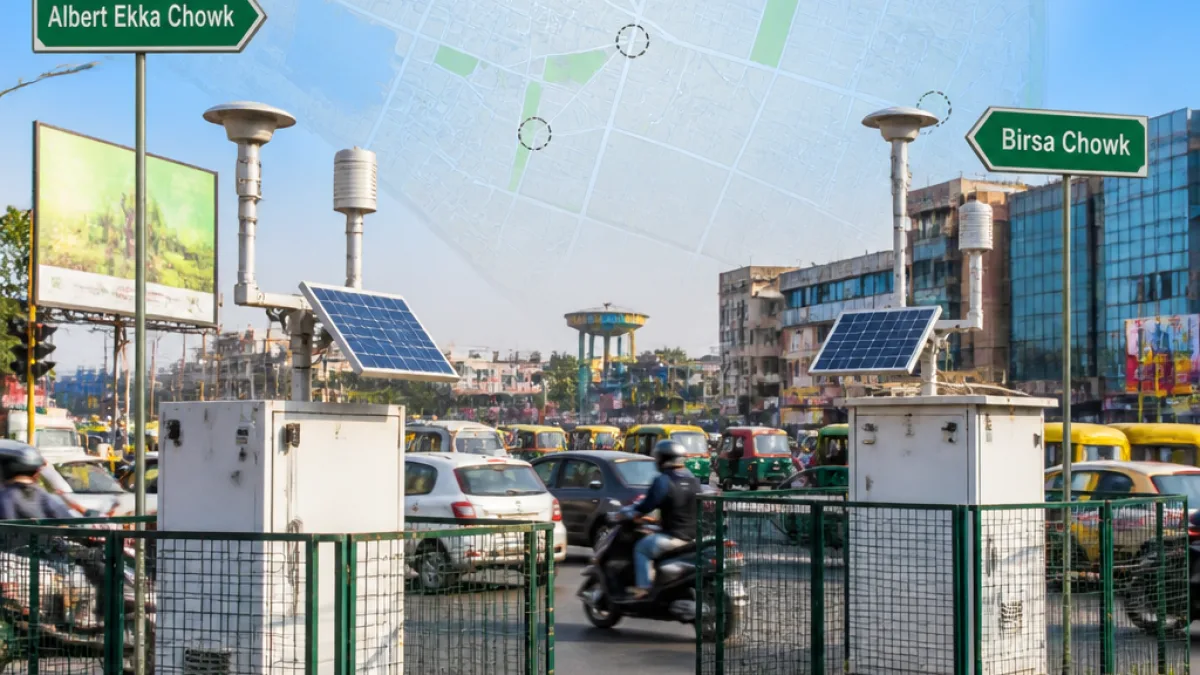
Ranchi’s position at 27th in the Swachh Vayu Survekshan 2026 national ranking may be a reflection of a limited monitoring network, Jharkhand State Pollution Control Board (JSPCB) officials said, noting that air quality is currently reported from just two locations in the city.
The board confirmed that continuous ambient air-quality readings for the city are recorded at Albert Ekka Chowk and Birsa Chowk, both busy traffic junctions. Officials emphasised that stations situated at congestion points tend to record higher pollutant concentrations and might not present a representative picture of overall urban air quality.
- Ranchi ranked 27th in Swachh Vayu Survekshan 2026, up from 30th in 2025.
- Delhi was placed 21st in the 2026 assessment.
- JSPCB plans to expand the monitoring network to cover wider zones across the city.
“Ranchi was historically known for its pristine air. Urban expansion, deforestation, industrial emissions, construction and traffic have degraded its air quality, but it is difficult to accept that Ranchi fares worse than Delhi and several other major cities,”
said environmentalist Nitish Priyadarshi, urging a closer examination of the survey framework and the spatial distribution of monitoring stations.
JSPCB officials said a broader network of monitoring devices would provide a more balanced dataset and could moderate the city’s average pollution readings in future national assessments. They indicated plans to install additional monitors across different zones but did not provide a timetable for deployment.
The ranking improvement of three places over last year was credited in part by Ranchi Municipal Corporation (RMC) to targeted anti-pollution measures carried out over the past year. The corporation highlighted a set of interventions it says contributed to the marginal rise.
RMC commissioner Sushant Gaurav listed actions implemented to control dust and solid-waste-related emissions, including identifying and clearing open garbage vulnerable points, tightening dust control norms during transportation of waste, monitoring mechanical road sweepers, undertaking anti-smog mist spraying and expanding urban afforestation. He also said compactors are being used while transporting waste to the Jhiri dumping ground to ensure refuse remains covered.
Public-health and urban-planning implications hinge on accurate exposure assessment. Experts note that monitoring stations located primarily at high-traffic intersections are prone to recording peak roadside pollutant levels — useful for understanding commuter exposure but less informative about neighbourhood- or city-wide background concentrations.
| City | Swachh Vayu 2026 Rank | Swachh Vayu 2025 Rank |
|---|---|---|
| Ranchi | 27 | 30 |
| Delhi | 21 |
Environmentalists called for transparency in how the survey aggregates station-level data into a single city score, and some urged deployment of monitors in residential, industrial and peri-urban areas to capture spatial variability. JSPCB officials said expanded coverage would aid both policymaking and public communication about where pollution sources are most intense.
For residents, a wider monitoring grid could change the narrative on Ranchi’s air quality by capturing lower background values outside heavily trafficked corridors, while also identifying hotspots that need targeted mitigation. The JSPCB and RMC said co‑ordination between agencies will be necessary to roll out new devices and to use the data for planning traffic management, construction controls and urban green cover expansion.
Officials have not provided a date for the deployment of the additional monitors or the expected cost of the expansion. They said the next phases would be planned after internal reviews and budget clearances.