State plans specialised facility in Bokaro to respond to rising man‑elephant conflict
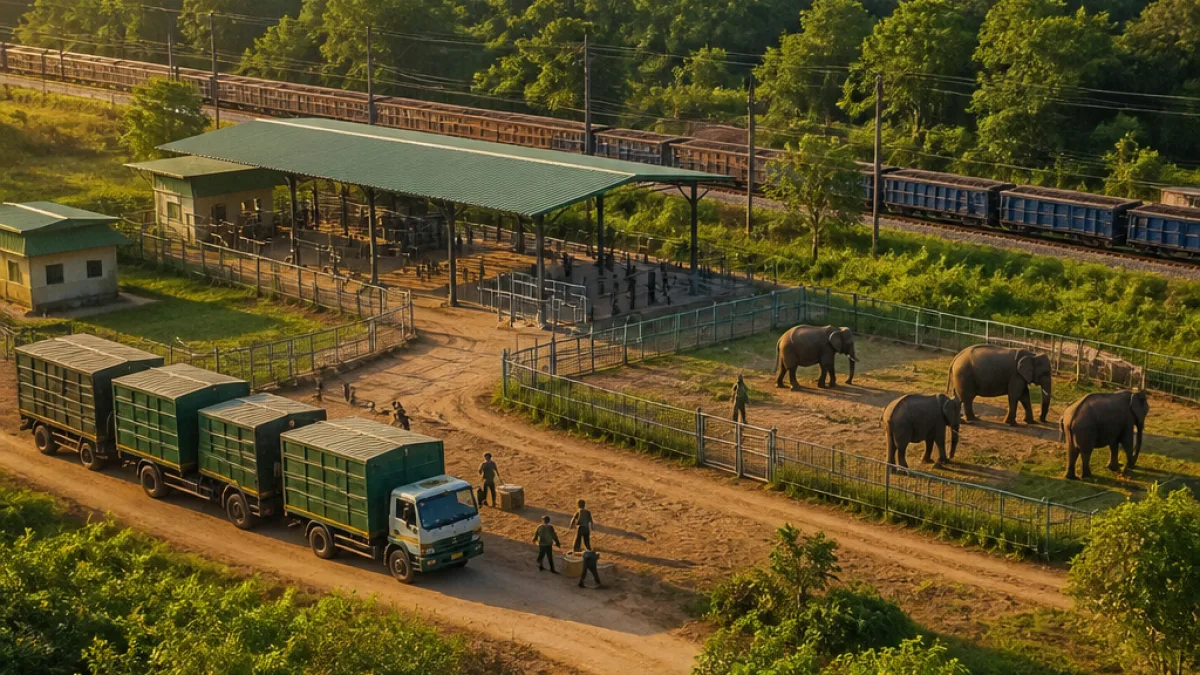
The Jharkhand Forest Department has initiated work on a detailed project report (DPR) for a specialised elephant transit and treatment centre in Bokaro, aiming to rescue, treat and rehabilitate distressed animals before returning them to forest habitats, officials said.
The proposed facility is part of a wider state-level strategy that envisages similar centres in Ranchi, Hazaribag and Ramgarh to improve emergency response across important conflict zones. Work on planning, design, cost estimation and monitoring is already under way as the department seeks an expert agency for the DPR, the forest division reported.
"Bokaro, Ramgarh, Hazaribag and adjoining areas sit on the traditional elephant corridors. However, expanding open-cast coal mining, railway infrastructure and road construction have increased pressure on forests and elephant corridors," said Sundeep Shinde, forest officer of Bokaro Division.
Officials said shrinking connectivity between forest patches has disrupted corridors and pushed herds closer to villages and farms, increasing the likelihood of conflict. The proposed Bokaro centre is intended to provide a rapid, humane response to such incidents and to reduce risks to both people and elephants.
Planned functions and facilities
The transit and treatment centre will be designed to temporarily house elephants that are injured, sick, orphaned, distressed or aggressive. It will offer rescue support, veterinary care and rehabilitation services, and enable safe transportation of animals to the facility for treatment under trained personnel before release back into the wild.
- Elephant holding areas for short‑term care and observation
- Food storage units to maintain diet requirements during rehabilitation
- Facilities for veterinarians, para‑veterinary staff and support personnel
- Vehicle parking and logistics support for rescue operations
- A soft‑release system to allow gradual reintegration into forest areas
The department is also planning specialised equipment for rescue and transport. The proposed rescue vehicle will include ventilation slots and leg‑securing provisions to ensure safer movement of elephants to the centre, officials said.
Longer term goals and regulatory pathway
Officials indicated that the centre could later be developed into an elephant camp and that the department is considering applying for a Central Zoo Authority licence in the future. The state plan seeks to create a network of similar facilities across corridor areas to improve the overall emergency response capacity.
| Location | Role |
|---|---|
| Bokaro | Transit and treatment centre (DPR under preparation) |
| Ranchi | Planned centre to strengthen response |
| Hazaribag | Planned centre to strengthen response |
| Ramgarh | Planned centre to strengthen response |
Forest officials emphasised that the new centres are being located to cover traditional elephant corridors that have been affected by development activities.
Local context and implications
Bokaro and adjoining districts lie along recognised migration routes used by elephant herds. According to the forest division, open‑cast coal mining, railway lines and road construction have intensified pressure on habitat connectivity in recent years. Reduced linkage between forest patches forces animals into human habitations, raising the incidence of crop damage, property loss and potentially dangerous encounters.
Establishing a transit and treatment centre in Bokaro aims to provide a centralised hub for coordinated rescues and medical care, expected to shorten response times and improve outcomes for affected elephants. The department has not yet disclosed a timeline for completion of the DPR or for construction of the facility.
Officials said the next steps include selecting an expert agency to prepare the DPR and designing the facility to meet veterinary and welfare standards for large mammals.