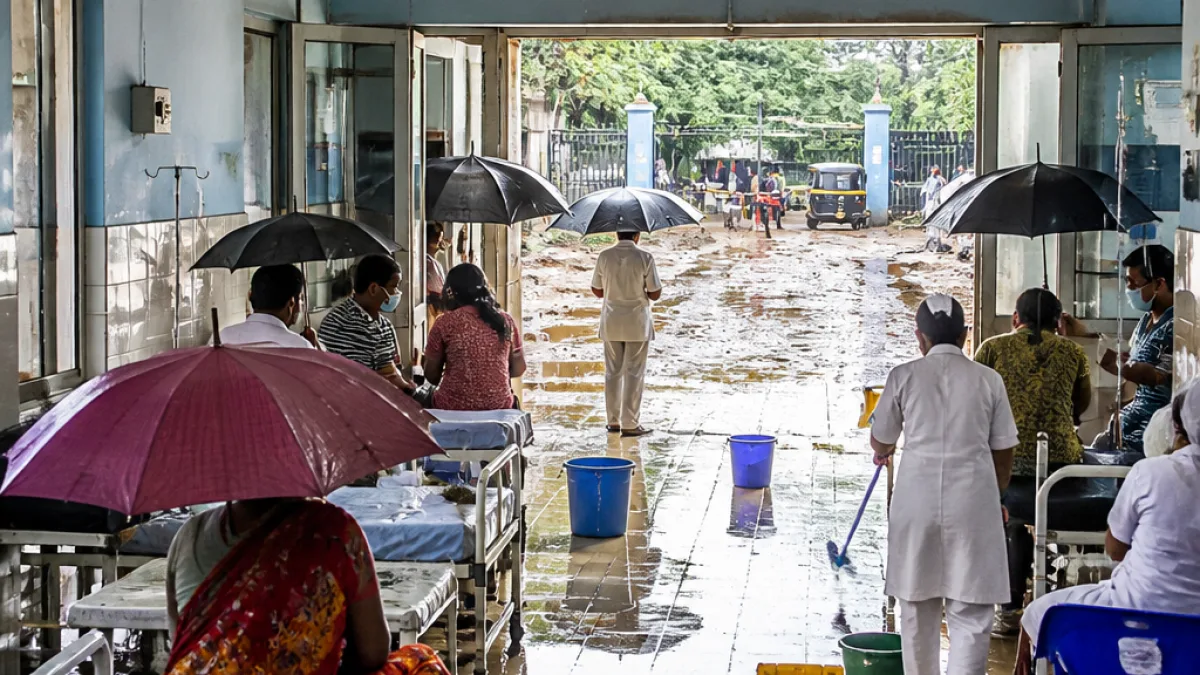
Monsoon seepage, puddles and damaged gate compound patient care at SNMMCH
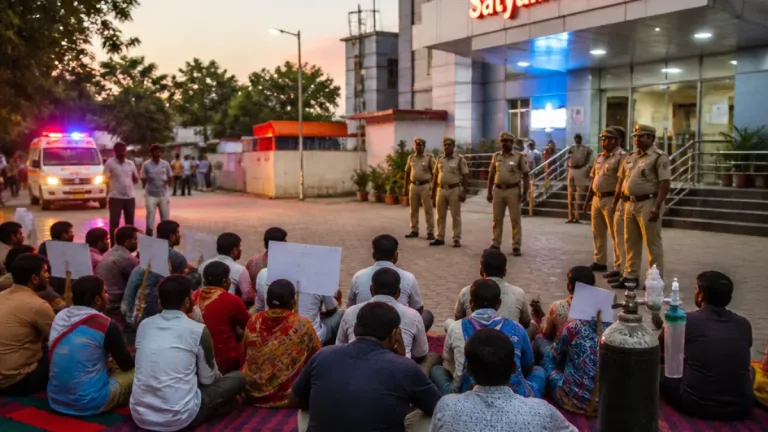
Leaking ceilings, waterlogged wards and pothole-riddled access roads at Shahid Nirmal Mahato Medical College and Hospital (SNMMCH), Dhanbad’s largest government hospital, have forced patients and their attendants to use umbrellas indoors and raised concerns about hygiene and safety during the ongoing monsoon, according to a local report.
Visitors and relatives said seepage and stagnation of water have been observed in multiple areas of the hospital, making movement difficult and increasing the risk of slips, falls and infections. Several wards, including the gynaecology ward, were described as among the worst affected — a worrying situation, patient advocates said, because of the vulnerability of pregnant women, mothers and newborns.
- Patients reported having to use umbrellas inside to shield themselves from dripping ceilings.
- Water accumulation on floors hampered walking and soiled footwear, attendants said.
- Doctors’ chambers were also affected, potentially disrupting clinical work.
“Poor patients come here because they cannot afford treatment at private hospitals. The hospital’s condition only increases their difficulties and the risk of infection,”
said Rupali Karmkar, a resident of Sindri, as reported in the original coverage. Another attendant, Kunti Devi, told reporters that families had to sit indoors with umbrellas because floors were wet and walking was difficult.
Hospital superintendent Dr Dinesh Kumar Gindoriya acknowledged that seepage occurs in some sections that are low-lying or located below ground level and said the relevant department had been informed. He indicated that repair work would begin soon. The superintendent also attributed some delays in fixing the main gate and the adjoining road to actions by the buildings division.
Chandan Kumar, executive engineer of the buildings division, provided a timeline for the gate work, saying it had been completed in phases to maintain access for patients and ambulances. He added that technical problems had delayed final opening but expected the gate to be fully functional within two to three days, according to the report.
Local anger grew after an attendant reportedly fell near the main gate on Monday evening and fractured a hand, underlining safety concerns on the hospital campus. Patients and relatives have demanded prompt repairs and improved cleanliness.
Immediate risks and operational impact
The combination of seepage and stagnant water in treatment areas presents several immediate risks for a tertiary-care public hospital that caters largely to low-income patients:
- Higher risk of hospital-acquired infections where water and damp surfaces persist.
- Potential disruption of clinical services if doctors’ chambers and treatment spaces remain affected.
- Compromised emergency access or delays if the main gate or approach roads are not fully operational.
Hospital administrators have signalled remedial action but did not provide a detailed repair schedule beyond the buildings division timeline for the gate. The report did not include an estimated cost for the repairs or specify which contractor or department would carry out the work.
| Issue | Reported status |
|---|---|
| Leaking ceilings | Observed in multiple wards and corridors |
| Waterlogged floors | Accumulation causing slippery surfaces |
| Main gate and access road | Repairs in phases; full opening expected in 2–3 days |
The situation highlights the operational challenges public hospitals face during monsoon season, when infrastructure weaknesses become acute. Patients said they rely on the facility because private care is unaffordable, increasing the public-health imperative for timely repairs and hygiene measures.
Hospital management and the buildings division provided the primary on-record responses in the original report, confirming awareness of the problems and promising corrective work. The account did not include comments from state health department officials or details of longer-term measures to prevent recurrence.
Residents and patient groups in Dhanbad have called for accelerated repair work, clearer timelines and interim arrangements to protect vulnerable inpatients while permanent fixes are carried out.