Pune, Maharashtra: Union Road Transport and Highways Minister Nitin Gadkari on Monday defended the condition of the Mumbai–Pune Expressway, saying the 27-year-old corridor has remained pothole-free since its construction while reacting to criticism after a structural collapse at the new missing-link project.
Minister stresses long-term planning, technology for inspections
Gadkari made the remarks at the Festival of Thinkers organised by Symbiosis International University in Pune. He noted that although the expressway has served commuters without pothole complaints for nearly three decades, public attention sharpened only after the collapse at the missing-link structure.
“I built the Mumbai–Pune Expressway 27 years ago. It's still pothole-free, but nobody writes about it. However, when a structure at the missing link collapsed recently, I got trolled on social media, despite it being a state government project,”
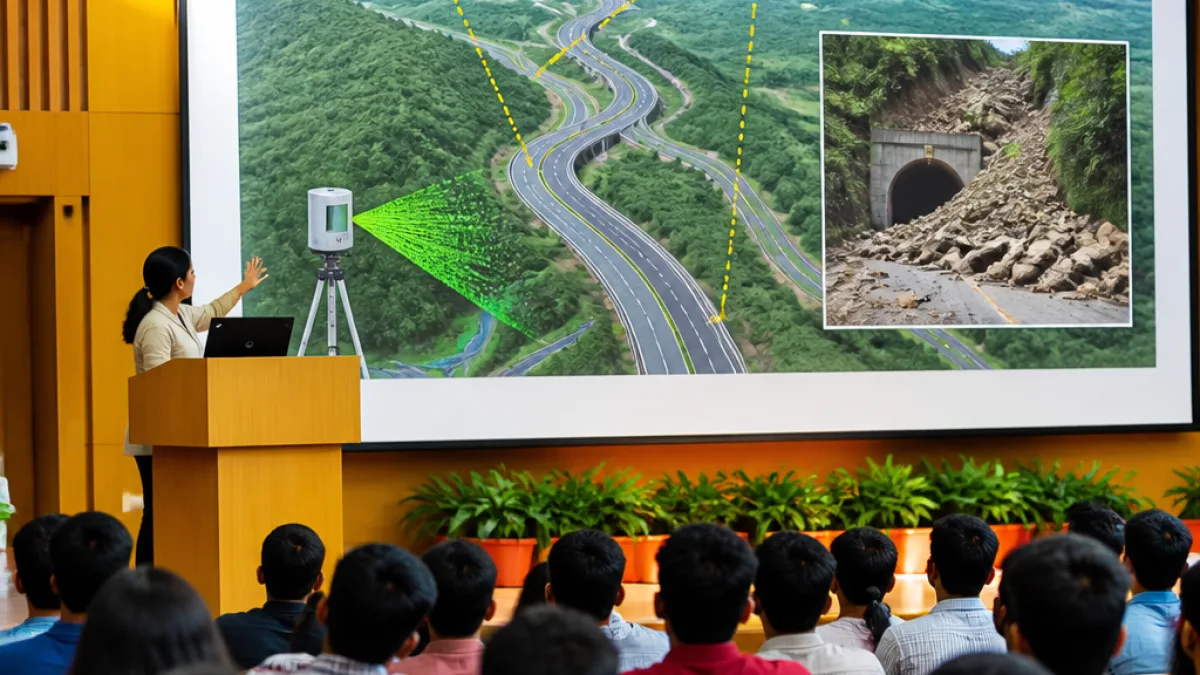
The minister also observed that regulatory clearances played a role in project delays, saying the forest department had not granted permission for construction at the time. He recommended wider adoption of technology to detect defects early, citing drones, artificial intelligence, LiDAR and satellite systems as tools for routine road inspections and predictive maintenance.
Missing link, landslide and current status
The 13.3-km missing-link project — intended to bypass the steep mountain-pass section and improve safety and travel time between Mumbai and Pune — was inaugurated by Maharashtra Chief Minister Devendra Fadnavis in May.
In July, heavy rain triggered a landslide near the entrance of Tunnel 2 on the missing-link alignment. The incident prompted scrutiny of construction and safety practices on the new section and drew social media attention, which Gadkari said led to criticism directed at him despite the project being executed by the state.
| Item | Detail |
|---|---|
| Expressway age | 27 years |
| Missing-link length | 13.3 km |
| Inauguration | May (by CM Devendra Fadnavis) |
| Recent incident | Landslide near entrance of Tunnel 2 following heavy rain (July) |
Local implications and expert-suggested measures
Gadkari argued that infrastructure must be planned for horizons of 25–50 years rather than merely for present needs, recalling that he had originally pushed for an eight-lane design when the Mumbai–Pune Expressway was conceived. He said superior infrastructure reduces transportation costs, helps industry and tourism, and improves farmers' market access.
On monitoring, the minister urged deploying modern survey and sensing technologies to detect defects before they escalate into serious failures. His suggestions included:
- Regular drone surveys for visual inspections of slopes, retaining walls and tunnel portals;
- Use of artificial intelligence to analyse sensor and imagery data for early-warning signs;
- LiDAR and satellite-based remote sensing for large-scale condition assessment and change detection.
Officials from the state government oversee execution of expressway projects, including the new missing-link section. Gadkari highlighted the federative division of responsibilities while responding to social-media criticism aimed at his ministry.
The minister's call for technology-led monitoring comes at a time when heavy monsoon downpours have repeatedly tested hill-tract engineering across the Western Ghats, and Pune commuters continue to watch developments on the vital Mumbai–Pune corridor. Local authorities and highway agencies will now be under pressure to adopt more frequent inspections and transparent reporting on safety and remedial works.
Further technical assessments and official updates on the missing-link's structural repairs or reopening timelines are awaited from the state road agencies and project contractors.