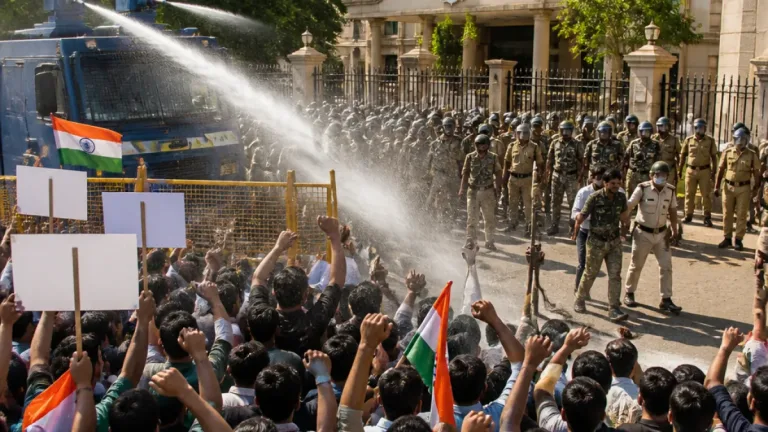
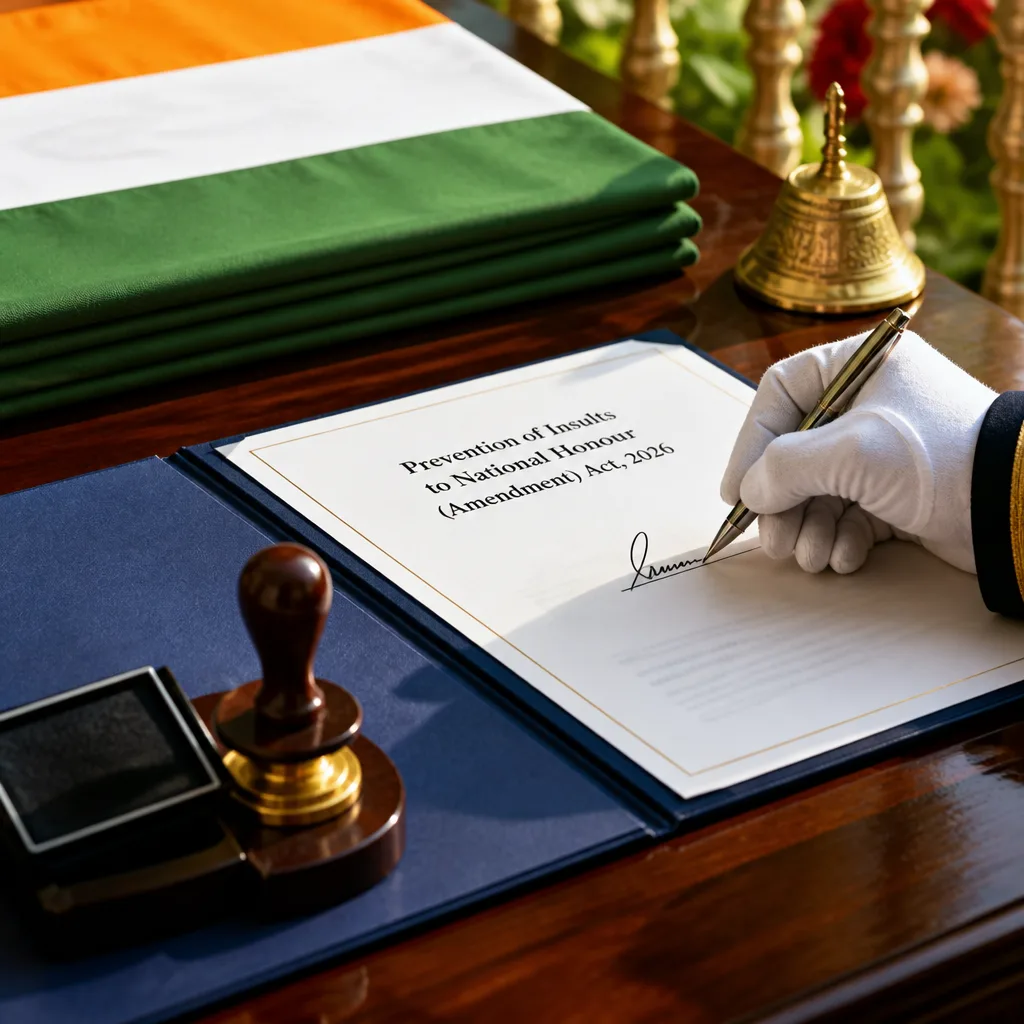
The President has given assent to legislation that makes it a punishable offence to intentionally disrupt or prevent the singing of the national song 'Vande Mataram', the government said on Tuesday. The measure amends the Prevention of Insults to National Honour Act and places the national song on the same legal footing as the national anthem, 'Jana Gana Mana'.
Parliamentary approvals and timing
The Bill was cleared by both Houses of Parliament before being presented to the President. The Lok Sabha passed the measure on July 30 and the Rajya Sabha approved it a day earlier, according to the government statement. With presidential assent the amendment has become law.
Key provisions and penalties
The amendment criminalises the deliberate obstruction of the singing of 'Vande Mataram' at public functions, aligning penalties with those already prescribed for disrupting the national anthem. Offenders can now face imprisonment, fines or both.
- Maximum imprisonment: Up to three years.
- Enhanced punishment for repeat offenders: Stricter terms apply to subsequent convictions.
- Official protocol: The Home Ministry has specified that all six stanzas of 'Vande Mataram' will be sung first at official functions, with attendees expected to stand at attention.
| Offence | Penalty |
|---|---|
| Intentional prevention/disruption of singing Vande Mataram | Up to 3 years imprisonment, fine, or both |
| Second or subsequent conviction | Increased penalty, including a minimum term of imprisonment |
Implementation at national events
The Union Home Ministry has directed that all six stanzas of the national song be rendered first at official gatherings, and that assemblies stand in attention during the performance. The ministry also stated that for the first time 'Vande Mataram' will be sung from the ramparts of the Red Fort during the upcoming Independence Day ceremony on 15 August 2026.
Until now, the existing statute dealt specifically with deliberate obstruction of the national anthem and disturbance of an assembly engaged in its singing. The amendment fills a perceived gap by explicitly extending similar legal protections to the national song, which the government says holds historical significance from the freedom movement.
Legal and social implications
The change brings behavioural and enforcement consequences for public events, educational institutions and state ceremonies where the national song is prescribed. Police and administrative authorities will be able to invoke the amended provisions in cases of deliberate interruption, and courts will determine sentences within the revised statutory framework.
Legal commentators and civil-society groups may weigh in on the contours of what constitutes an intention to prevent or disrupt singing, and on the balance between expressive freedoms and prescribed ceremonial conduct. The legislation sets penal consequences but leaves interpretive questions for law enforcement and the judiciary.
Parliamentary records show the government moved the amendment to give the national song the same statutory shield as the anthem. The measure will now be implemented in accordance with directions issued by the Home Ministry and applicable criminal procedure.
“Presently, there is no specific legal provision to prevent insults to the singing of 'Vande Mataram', which is honoured as the national song,” the government said in its statement regarding the need for the amendment.
The law takes effect under the terms set out in the amended Act and will be enforced by the appropriate civil and police authorities across the country.