
Mumbai moves to tighten safety for heavy Ganesh idols after fatal collapse
MUMBAI: The Brihanmumbai Municipal Corporation (BMC) has decided to make fitness certificates mandatory for large Ganesh idols weighing more than one tonne, and to institute dedicated monitoring and documentation throughout an idol's manufacture and movement, NDTV reported on Wednesday. The measure follows a deadly accident in Bhuleshwar in which a large idol collapsed during an arrival procession, leaving two people dead and several injured, according to media reports.
The idea, as set out at a meeting chaired by DMC Zone 2 official Prashant Sapkale, is to create a Standard Operating Procedure (SOP) that will cover the structural safety of large idols, issuance of fitness certificates and arrangements for safe transportation and arrival at pandals, NDTV reported. The civic administration plans to maintain a record of detailed information about a large idol from the time it is ordered and manufactured until it reaches the designated pandal.
NDTV reported that the BMC's certification and monitoring system are expected to provide greater oversight of heavy idols from their construction stage through transportation and eventual arrival at pandals.
BMC Additional Commissioner Abhijit Bangar has also asked the Roads Department and ward-level officials to ensure that routes used for the arrival and immersion of Ganesh idols are free of potholes, NDTV reported. The instruction is intended to reduce the possibility of accidents during movement of heavy idols across Mumbai during Ganeshotsav.
Key components of the proposed system
- Fitness certificates for idols weighing more than one tonne, based on structural safety checks;
- Continuous documentation from manufacture to installation — records of ordering, fabrication and transit;
- Special monitoring during transportation and arrival to prevent mishaps;
- Route checks by Roads Department and ward officials to eliminate hazards such as potholes;
- Dedicated SOP to standardise certification, transportation and safety practices for heavy idols.
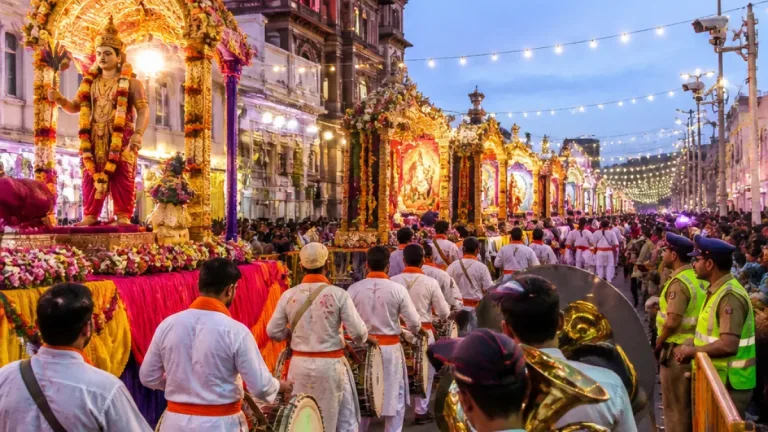
The BMC move comes as Mumbai prepares for one of the city's biggest festivals. Thousands of idols — ranging from small household murtis to massive installations — are transported across the metropolis during Ganeshotsav. While many processions are routine, the Bhuleshwar incident has prompted civic officials to review safety protocols specifically for very heavy structures.
Operational challenges and municipal oversight
Implementation will require coordination between multiple wings of the BMC. The fitness-certification process implies involvement of structural experts or engineers to assess load-bearing components and anchoring arrangements for large idols. Road inspections and monitoring of transport convoys will involve ward-level officers, the Roads Department and possibly police traffic units to manage routes and crowd control during arrival processions.
NDTV reported that the meeting chaired by Prashant Sapkale aimed to formulate the SOP ahead of Ganeshotsav so that the rules can be applied during the peak movement of large idols. The BMC's stated intention is to ensure that heavy installations are certified safe at the construction stage itself and that their transit is tightly monitored to prevent repeat incidents.
The BMC did not release a public timeline for when the SOP and certification regime will be finalised. NDTV's reporting indicates officials are prioritising the measure in the wake of the Bhuleshwar deaths.
| Issue | Action proposed |
|---|---|
| Heavy idols (>1 tonne) | Mandatory fitness certificate; structural checks |
| Transportation risks | Special monitoring during transit; route inspections |
| Record-keeping | Documentation from order to pandal |
Local festival organisers and sarvajanik mandals will need to factor the new requirements into their planning if the BMC's SOP is finalised before Ganeshotsav. The certification process could affect timelines for fabrication and transport, especially for large custom-built idols, and may require engagement with qualified structural assessors.
The Bhuleshwar collapse that led to the municipal review has highlighted the risks posed by very large, heavy installations when structural integrity, anchoring and transport conditions are not adequately assessed. The BMC's initiative, as reported by NDTV, aims to reduce those risks by introducing an administrative and technical framework for heavy idols across Mumbai.