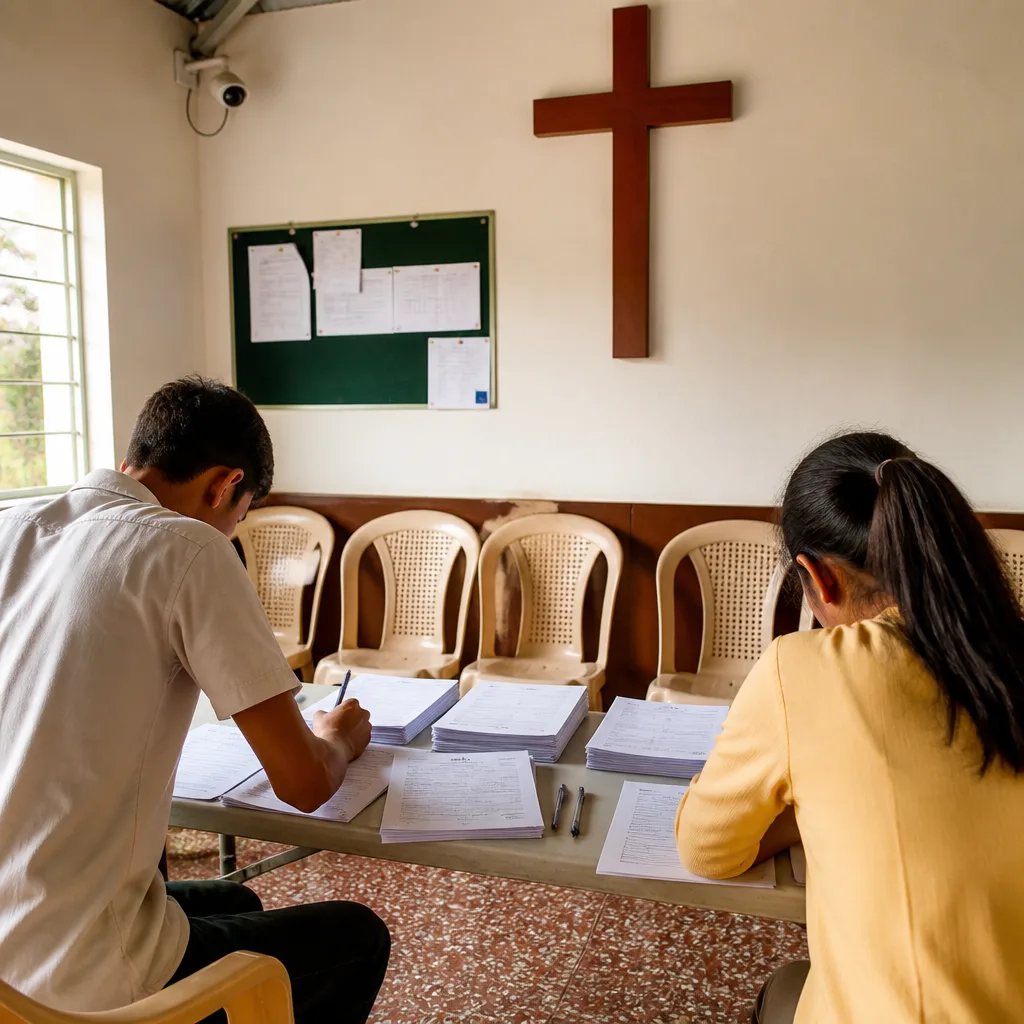
Mumbai, 3 September: Maharashtra’s new Freedom of Religion Act, which came into force on 28 August, has prompted concern among Christian communities and raised questions about enforcement of anti‑conversion provisions that shift the legal burden onto the accused.
"Under India’s newest anti‑conversion law, the person accused of facilitating a conversion must prove it was voluntary," Rev Richard Howell asked, "who gets to decide where compassion ends and coercion?"
Law and its immediate effects
The Act prohibits conversion by coercion, force, fraud, misrepresentation, inducement, threats or undue influence. While the stated aim is to prevent forced conversions, the law places the onus on the person alleged to have facilitated a conversion to establish that the change of faith was voluntary.
According to reporting on the law’s immediate aftermath, several small Christian congregations in Maharashtra have adopted precautionary measures. These include asking attendees at prayer meetings to sign declarations confirming voluntary participation and installing CCTV in places of worship. Churches have also reportedly taken other unspecified steps after some prayer gatherings were disrupted and accusations of unlawful conversion were levelled.
Practices now under scrutiny
Observers and members of Christian communities say routine acts long regarded as pastoral or charitable could be treated as evidence of inducement. Examples cited in reports include giving food to the hungry, providing education, praying for the sick and offering material assistance. Such acts, when occurring in the context of religious outreach, may now be examined for any hint of undue influence or inducement, the reports suggest.
- More than 1 million Christians live in Maharashtra, the state that includes Mumbai.
- Churches have been reported asking attendees to sign voluntary attendance declarations.
- CCTV and other precautions are reportedly being adopted after disruptions and accusations.
Legal and civil liberty concerns
Legal analysts and civil‑liberties advocates have argued that placing the burden of proof on an accused individual represents a significant change in the procedural balance in criminal matters. Traditionally, the prosecution must establish guilt beyond reasonable doubt. Under the new provision, those accused of facilitating conversion must produce evidence to demonstrate voluntariness.
Critics say the shift could have a chilling effect on religious practice and charitable activity, as ordinary expressions of faith and compassion might be reinterpreted as criminal acts if they occur in a context that raises suspicion of inducement. Churches reporting the adoption of formal safeguards indicate a precautionary response to that risk.
Practical implications for clergy and institutions
Reports indicate that some religious institutions have begun to document activities that could be questioned under the Act. Measures described include:
- Collecting written confirmations from attendees at religious events to establish voluntariness.
- Installing CCTV cameras to create records of gatherings.
- Altering the way charitable services are provided to avoid allegations of material inducement.
Such steps reflect a desire among some in the Christian community to reduce legal vulnerability, but they also illustrate how ordinary pastoral care and social service work may be affected by heightened scrutiny.
| Item | Detail |
|---|---|
| Law | Freedom of Religion Act (Maharashtra) |
| Effective date | 28 August |
| Population affected | More than 1 million Christians in Maharashtra (reported) |
The debate over the Act touches on broader questions of how the state balances prevention of coercion with protection of religious liberty and the right to carry out charitable work. Reporting on responses within Maharashtra indicates immediate practical changes by faith communities; the longer‑term legal and social consequences will depend on how authorities apply the law and how courts interpret its provisions in future cases.