New screening approach could reduce reliance on biopsy
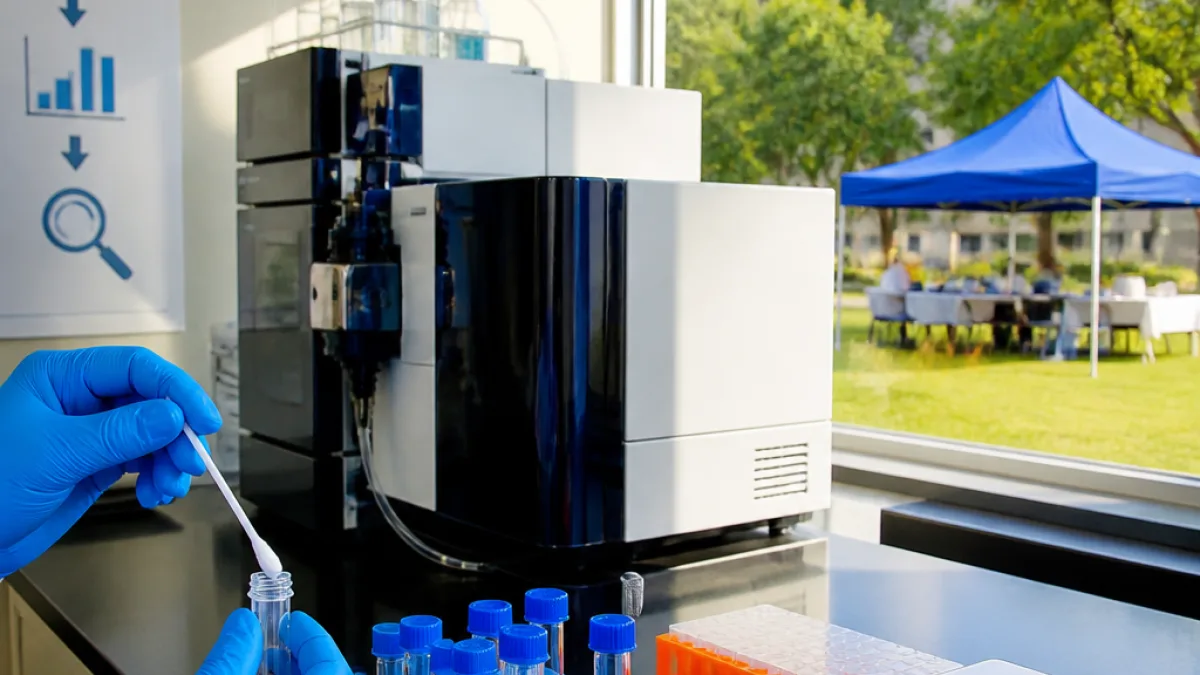
Researchers at the Indian Institute of Technology (IIT) Indore have reported a non-invasive technique that can detect early biochemical changes associated with oral cancer using only saliva and a soft swab from the inner surface of the mouth. The team said the method is point-of-care, economical, quick and avoids the pain and limitations of repeated tissue biopsy, which is currently required to confirm oral cancer.
The study compared samples from healthy individuals, patients with oral submucous fibrosis (a precancerous condition often linked to chewing areca nut, gutkha or tobacco) and those with oral squamous cell carcinoma, the commonest form of oral cancer. Using liquid chromatography–mass spectrometry, the researchers identified distinctive changes in metabolic pathways related to fat and energy metabolism, oxidative stress responses, tissue repair and immune activity that appeared before disease became clinically obvious.
"saliva carries chemical signals from everything happening inside the mouth, and a soft swab of the oral lining picks up cells and proteins directly from the tissue itself"
Advantages for rural and resource-constrained settings
According to the research team, the technique's non-invasive nature and potential for rapid, low-cost screening make it particularly suitable for areas where access to specialist cancer diagnostics is limited. The investigators emphasised that a saliva-and-swab approach could facilitate wider screening in remote and rural communities, where repeated invasive biopsies are impractical and specialist pathology services are scarce.
The researchers plan further validation of their findings in larger and more diverse groups of patients before developing targeted, easy-to-use tests suitable for routine clinical practice. A patent application for the technology has been filed and is currently under process, the team reported.
What the method found and why it matters
The analysis revealed biochemical signatures that reflect early shifts in cellular processes as healthy oral tissue progresses to a precancerous and then cancerous state. The study focused on two clinically important conditions:
- Oral submucous fibrosis — a condition commonly associated with chewing areca nut, gutkha or tobacco and known to have malignant potential.
- Oral squamous cell carcinoma — the most common form of oral cancer.
By combining molecular information from saliva (which captures a broad range of chemical signals) with proteins and cells obtained from a swab of the mucosal lining, the team said they could build a fuller picture of how tissue changes during disease progression. This dual-sample strategy is presented as a means to increase sensitivity to early, preclinical changes.
Potential impact and next steps
If validated in larger cohorts, the approach could change the screening landscape for oral cancer by enabling:
- Rapid, non-invasive screening at the point of care.
- Lower-cost tests that could be deployed in district hospitals, primary health centres and outreach camps.
- Earlier detection of precancerous changes, allowing timely intervention and surveillance without immediate resort to biopsy.
| Aspect | Current practice | Proposed IIT Indore approach |
|---|---|---|
| Sample | Tissue biopsy | Saliva and oral swab |
| Invasiveness | Invasive, can be painful | Non-invasive, simple |
| Settings | Specialist centres/pathology labs | Point-of-care, outreach |
The investigators have stated their intention to validate the biomarkers across broader, more heterogeneous patient groups and to translate the laboratory protocol into targeted, user-friendly diagnostic tests that can be integrated into routine practice. Such translation will require further clinical trials, regulatory clearances and demonstration of reproducibility across laboratories and populations.
Public-health experts in Madhya Pradesh have long highlighted the burden of oral cancers linked to tobacco and areca-nut use, particularly in rural and semi-urban populations. A low-cost, non-invasive screening tool emerging from a local research institution could align with state-level prevention and early-detection programmes, provided performance is confirmed in larger studies.
The development underscores growing research capacity at IIT Indore in biomedical analytics and diagnostics. The team’s next steps — larger clinical validation and assay development — will determine whether the method can be operationalised for community-level screening, potentially reducing diagnostic delays and improving outcomes for patients across the region.