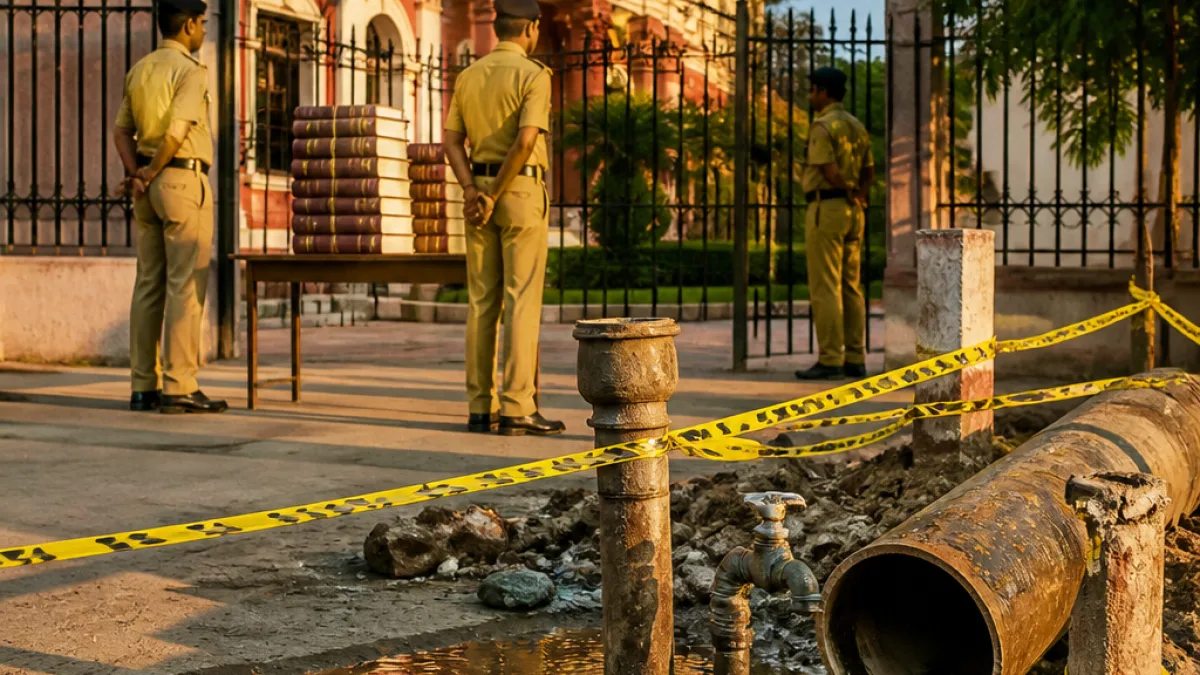
Judicial inquiry blames contaminated municipal supply for most deaths in Bhagirathpura
A one‑member judicial commission headed by retired Madhya Pradesh High Court judge Justice Sushil Kumar Gupta has completed its probe into the Bhagirathpura contaminated‑water episode, submitting a detailed report to the Indore Bench of the Madhya Pradesh High Court last week, NDTV reported. The report itself has not been released publicly, but lawyers permitted to inspect it have begun disclosing key findings.
Of the 36 deaths examined by the commission, the inquiry has reportedly directly linked 24 deaths to the consumption of sewage‑contaminated water supplied through municipal pipelines. In the remaining 12 cases, the commission said a causal connection to contaminated water could not be conclusively established, according to lawyers who reviewed the document.
"sewage‑contaminated water supplied through municipal pipelines"
The emerging findings, as disclosed by counsel who inspected the file, point to a chain of administrative failures. The commission reportedly identified delays in replacing an ageing pipeline and delays in completing the tendering process for a new Narmada‑water line as critical factors that preceded the contamination event. Sewage is said to have entered the drinking supply being delivered to homes in Bhagirathpura.
- The commission examined 36 deaths linked to the episode.
- 24 deaths were found to have a direct connection to contaminated drinking water.
- About 8–10 officials were reportedly fixed with responsibility by the inquiry.
Advocates representing petitioners who sought the inquiry said the report has attributed responsibility to around eight to 10 officials whose roles were scrutinised. Those lawyers also said the commission did not find some senior officials and elected representatives, including members of the Mayor‑in‑Council, to be culpable.
| Item | Reported figure |
|---|---|
| Deaths examined by commission | 36 |
| Deaths directly linked to contaminated water | 24 |
| Deaths not conclusively linked | 12 |
| Officials held responsible (approx.) | 8–10 |
The report's preliminary conclusions underscore long‑standing problems that bridge public health, urban planning and municipal governance. If the findings are confirmed by the public release of the commission's report, they will focus attention on two interlocking issues: the physical condition of water supply infrastructure and procedural delays in contracting replacement works for essential pipelines.
For residents of Indore, and particularly for those in peri‑urban and densely populated neighbourhoods such as Bhagirathpura, the inquiry highlights vulnerabilities faced by communities dependent on municipal pipelines. Delays in routine maintenance and replacement of ageing distribution lines can allow contaminants—especially where sewer and water lines are in close proximity—to enter the potable supply if breaches occur or pressure conditions change.
Legal representatives of petitioners said the commission's report runs into several hundred pages and contains both factual findings and assessments of administrative conduct. The document was handed to the Indore Bench last week, but there has been no formal public release. The disclosure to lawyers came under terms that permitted inspection but not publication of the full text, NDTV reported.
Once the court publishes the report or allows wider access, the findings could prompt a range of responses: formal departmental action against the officials named, rehabilitation and compensation measures for affected families if liability is established, and accelerated works to replace the damaged pipeline and complete the tendering for the new Narmada line.
In the short term, the report adds urgency to calls for stricter monitoring of water quality, rapid remediation of damaged supply mains and greater transparency in tendering and project management processes that affect civic services. For Indore's municipal authorities and state departments responsible for water and sanitation, the inquiry's conclusions will be a central reference point for policy and administrative reform related to piping, water sourcing and emergency response.
Further reporting is likely once the full judicial commission report is made public or placed on record before the Indore Bench.