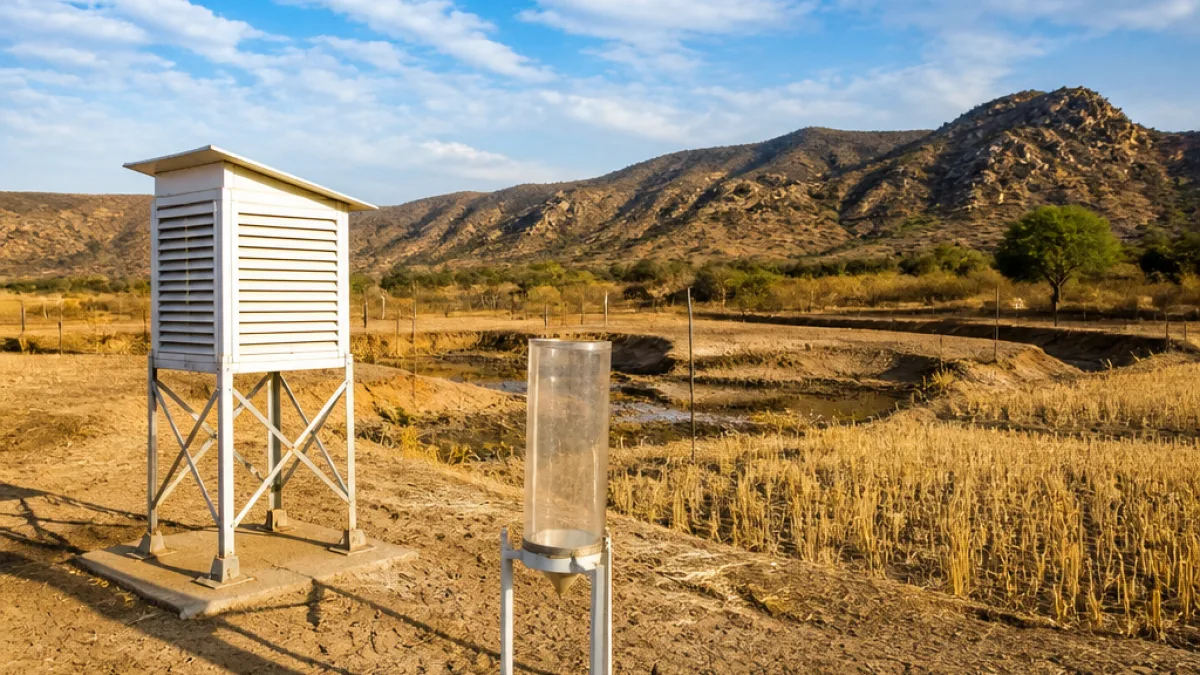
New Delhi / Jaipur: The India Meteorological Department (IMD) on Saturday reported that the southwest monsoon has withdrawn from some parts of West Rajasthan as of 19 September, slightly later than the climatological date for withdrawal in the region.
What the IMD said
In its advisory, the IMD noted that the withdrawal from parts of West Rajasthan came on the 19th of September, against the normal withdrawal date of the 17th of September. The agency added that conditions are favourable for further withdrawal from some more parts of Rajasthan, as well as parts of Punjab, Saurashtra and Kutch, during the next three to four days.
“The southwest monsoon has withdrawn from some parts of West Rajasthan today, the 19th September, 2026, against the normal date of 17th September,” the IMD said.
Monsoon season so far: a deficit across India
The IMD's broader data show India remained fully covered by the southwest monsoon on 9 July after its onset over Kerala on 4 June. However, the season has not delivered uniformly. The country is facing an overall rainfall deficit of 15 per cent between 4 June and 19 September.
The Southern Peninsula is the worst-affected region, reporting a 29 per cent rainfall deficit for the period.
- India remained fully under monsoon on 9 July after onset on 4 June.
- Overall rainfall deficit between 4 June and 19 September: 15%.
- Southern Peninsula deficit during this period: 29%.
Month-by-month highlights
Monthly IMD observations referenced in the advisory underline how the deficit evolved:
| Month | Average (mm) | Observed (mm) | Note |
|---|---|---|---|
| June | 165 | 106.8 | Overall deficit of 35% |
| July | 280.5 | 283.3 | Only month with a marginal surplus |
| August | Monthly total 213.3 mm (seventh lowest for August since 2001) | Recorded as poor compared with climatology | |
Why rainfall remained below normal
The IMD highlighted the emergence of El Niño conditions over the equatorial Pacific in June as a key factor linked to the rainfall shortfall. El Niño, a phase of the El Niño–Southern Oscillation (ENSO), involves warming of sea-surface temperatures in the central and eastern tropical Pacific and is associated with atmospheric changes that can reduce rainfall over India.
By contrast, the opposite ENSO phase — La Niña — tends to have a cooling influence and usually correlates with enhanced rainfall over the subcontinent. ENSO also has a neutral phase between these two states.
Local implications for Rajasthan
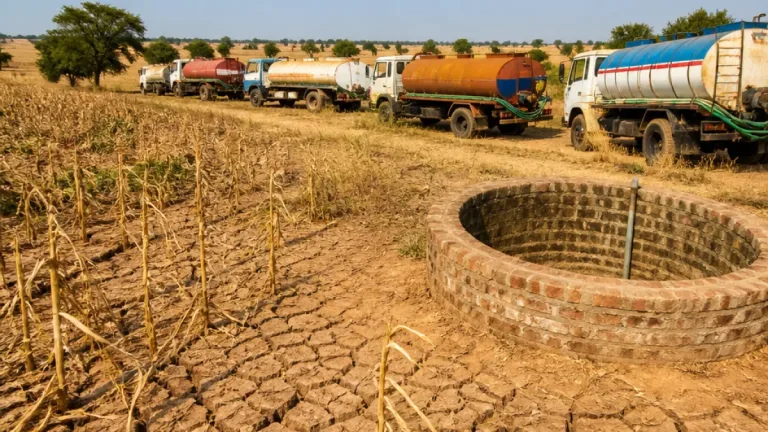
Withdrawal of the monsoon from parts of West Rajasthan signals the approaching end of the active southwest monsoon season for those districts. For farmers, water managers and local administrations, the timing of withdrawal affects sowing and irrigation decisions, groundwater recharge expectations and contingency planning for rabi crops and drinking water.
State agencies typically use the IMD's withdrawal advisories to calibrate water releases from reservoirs, prioritise fodder and feed distribution in drought-prone areas, and guide sowing schedules for winter crops. Given the season's overall deficit nationally, districts that depend on monsoon rains for agriculture and recharge will likely face tighter water budgets as the season draws to a close.
Outlook over the coming days
The IMD has flagged conditions supportive of further withdrawal from additional pockets of Rajasthan over the next three to four days. That suggests diminishing widespread monsoon activity in the state in the short term, although isolated pre-monsoon or post-monsoon showers cannot be ruled out in localised pockets until the withdrawal is complete.
Officials and farmers across Rajasthan are advised to follow subsequent IMD statements and local agricultural advisories for district-specific guidance on cropping and water management as the season ends.
Reporting from the state capital and national weather bureau dispatches were used in compiling this update.