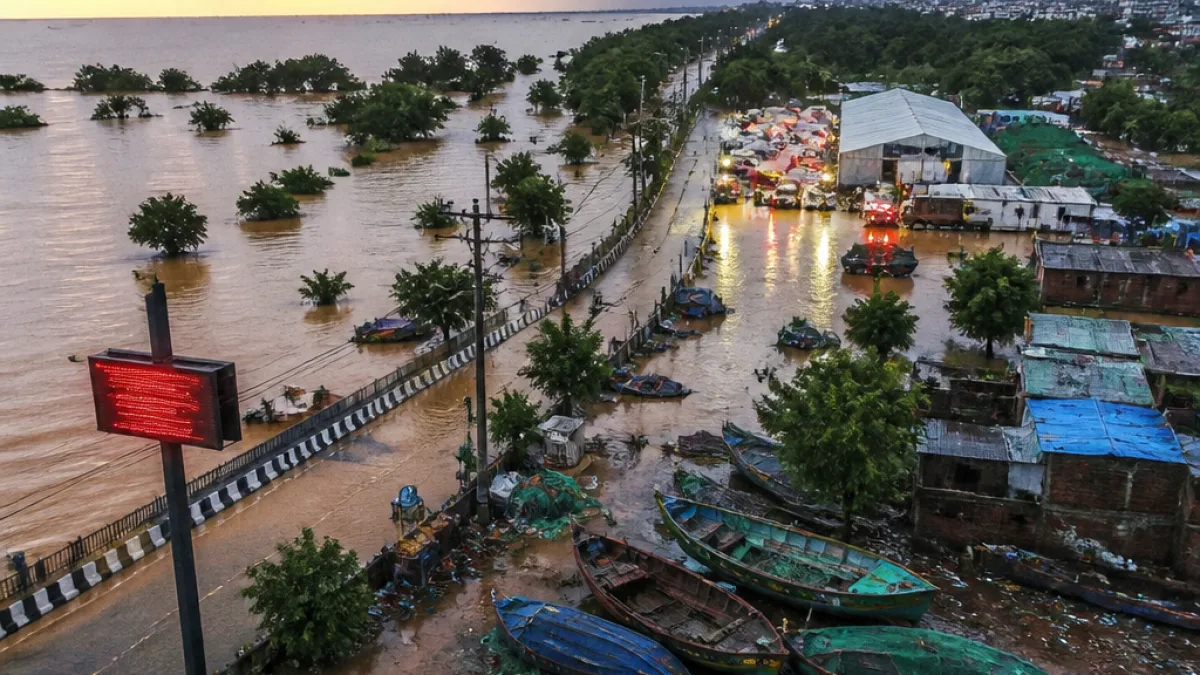
Bhubaneswar: The India Meteorological Department (IMD) on Thursday issued a red warning for parts of Odisha after a low‑pressure area over the Bay of Bengal became well‑marked and moved north‑westwards, bringing very heavy to extremely heavy rainfall to several districts over the past 24 hours.
System expected to move into Gangetic West Bengal, Jharkhand
The IMD said the low‑pressure area over the North Bay of Bengal and adjoining Bangladesh‑West Bengal coast moved northwestwards and is likely to continue in that direction across Gangetic West Bengal towards Jharkhand, with a chance of concentrating into a depression within 12 hours. A depression is stronger than a low‑pressure area but less intense than a tropical cyclone.
"The well‑marked low‑pressure area over North Bay of Bengal and adjoining Bangladesh‑West Bengal coast moved northwestwards. It is likely to continue to move northwestwards across Gangetic West Bengal towards Jharkhand and may concentrate into a depression during the next 12 hours." — IMD morning bulletin
Districts report heavy rainfall, waterlogging
According to the Meteorological Centre, Bhubaneswar, several locations recorded very high rainfall totals in the 24‑hour period. The highest reported figures included 236 mm at Bhograi in Balasore district, 230 mm at Shyamakhuntam, 215 mm at Baripada in Mayurbhanj district and 204 mm at Rajghat in Balasore district. PTI reported that Balasore town recorded 137 mm of rain by 5.30 am on Thursday.
| Location | Rainfall (mm) |
|---|---|
| Bhograi (Balasore) | 236 |
| Shyamakhuntam | 230 |
| Baripada (Mayurbhanj) | 215 |
| Rajghat (Balasore) | 204 |
| Balasore town | 137 |
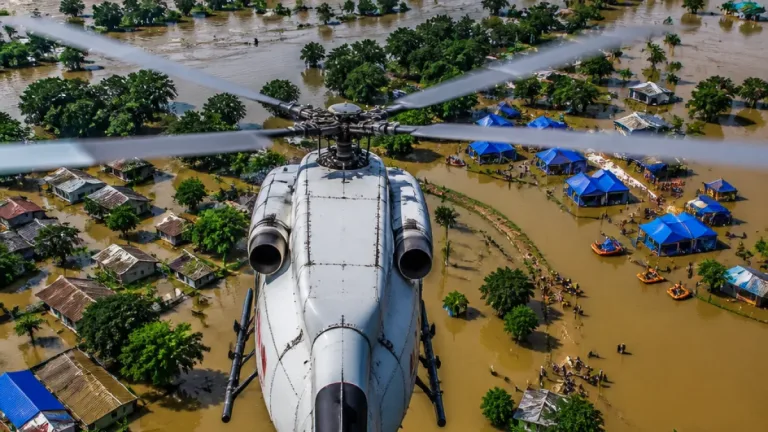
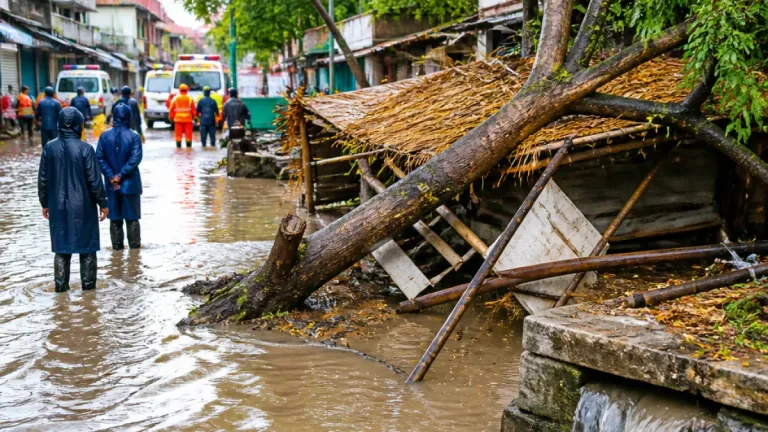
News reports and district officials said very heavy rainfall was also recorded in the Similipal Hills of Mayurbhanj. The downpour has caused a rise in water levels of the Budhabalanga and Jalaka rivers in Balasore district, and large parts of Balasore town are experiencing waterlogging, an official said.
Advisories and immediate precautions
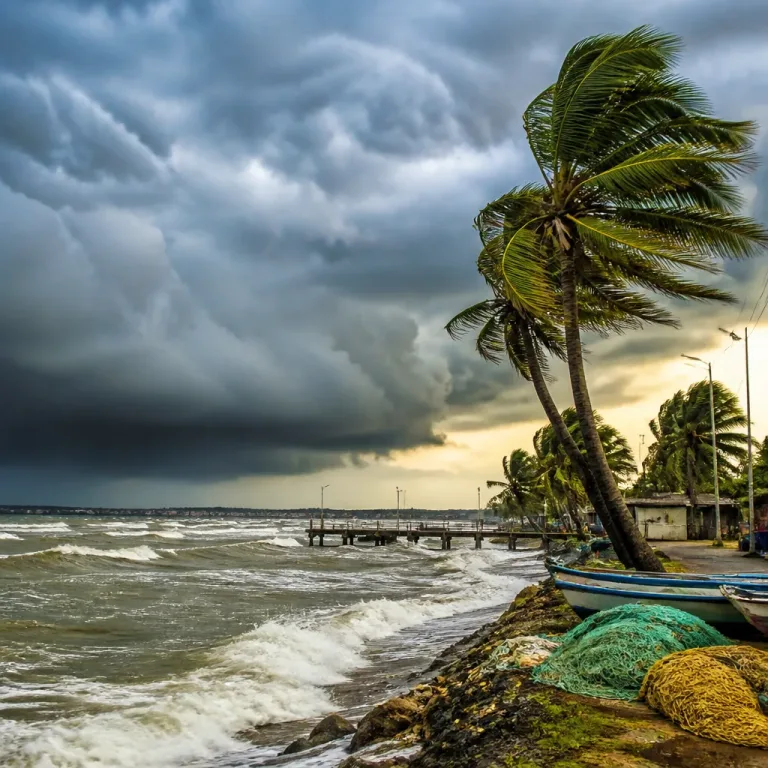
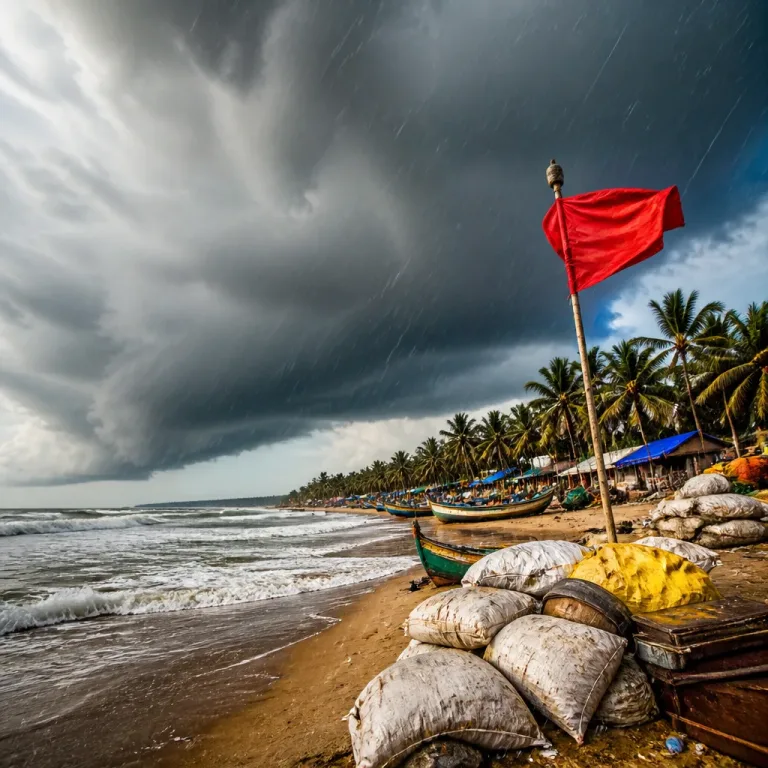
In view of the prevailing conditions, the IMD has advised fishermen not to venture into the North Bay of Bengal and along the Odisha‑West Bengal‑Bangladesh coast until 14 August. The weather office has also cautioned people living in coastal and low‑lying areas to remain alert and follow official advisories.
- Avoid unnecessary travel in flooded or waterlogged areas; do not drive through submerged roads.
- Fishing and all non‑essential activities at sea should be suspended until the advisory is lifted.
- Residents in low‑lying and riverside localities should move to safer ground if water levels rise near their homes.
- Keep emergency supplies—drinking water, battery‑operated lanterns, medicines—ready and charge mobile phones.
- Follow updates from the IMD, district administration and local disaster response authorities.
Local administrations have responded to the heavy rains, with reports that authorities declared the closure of educational institutions in affected areas after the rains intensified late on Wednesday. Relief and municipal teams in Balasore were reported to be monitoring waterlogging and river levels.
Outlook and likely impact
The IMD warned that the active weather may affect neighbouring states including Gangetic West Bengal, Jharkhand and Chhattisgarh, which are likely to experience heavy to very heavy rainfall in the ongoing wet spell. The movement of the system towards the north‑west raises the possibility of more widespread rainfall and localised flooding, particularly in riverine and low‑lying tracts.
Given the fast‑evolving situation, residents are urged to keep tuned to official bulletins. Disaster management offices and the state government will issue specific evacuation or relief orders if river gauges cross danger levels or if conditions deteriorate further.
Weather and emergency agencies typically advise: do not attempt to cross swollen streams and rivers, avoid going near embankments during heavy flows, keep a list of important phone numbers, and shelter livestock and essential items on higher ground. Coastal communities should remain especially vigilant until the IMD lifts the marine advisory.
Further updates from the IMD and district administrations are expected as the low‑pressure area progresses; residents are advised to follow verified official channels for instructions and to report emergencies to local helplines.