Gurgaon: The Haryana Human Rights Commission (HHRC) has directed the state education department, working with the transport department, to ensure safe and convenient transportation for primary-school children in Nuh who were shifted from makeshift classrooms to nearby government schools, the commission said on Wednesday.
Order follows inspection and media report
The direction came after a physical inspection carried out by the Ferozepur Jhirka block education officer (BEO) of four government primary schools and subsequent compliance reports submitted to the HHRC. The commission had taken suo motu cognisance of a newspaper report that highlighted several primary schools in Nuh operating from improvised premises, including a cowshed and a chaupal, despite being shown as functional in government records.
On July 21, while considering the compliance reports submitted by the district elementary education officer and the BEO, the HHRC noted that students of government primary schools in Ghatwasan, Malibass, Kalubass and Kubdabass had been shifted as a stop-gap measure to nearby government schools so that education would not be disrupted.
Commission emphasises children's safety and access
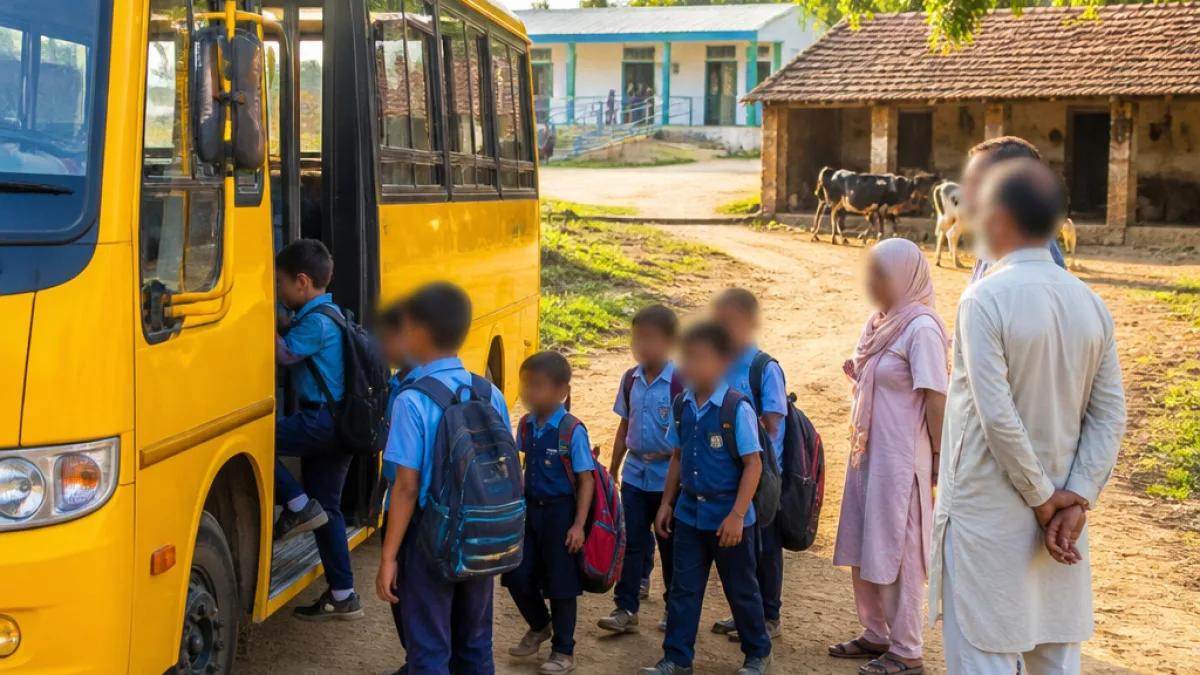
The HHRC observed that the children involved were of a “tender age” and that daily travel over long distances could impose hardship and adversely affect their access to education. In its latest directive the commission asked the education department, in coordination with the transport department, to arrange safe conveyance for the affected pupils and to submit action-taken reports before the next hearing.
- Schools inspected: Ghatwasan, Malibass, Kalubass, Kubdabass
- Reason for inspection: Report of classes running from makeshift premises (including cowshed and chaupal)
- Interim arrangement: Students shifted to nearby government schools with necessary facilities
- Facilities reported at receiving schools: adequate classrooms, safe drinking water, toilets, electricity and sanitation
What the compliance reports said
According to the compliance documents considered by the HHRC, the students were studying in nearby government schools that provided essential facilities such as adequate classrooms, safe drinking water, toilets, electricity and sanitation, and classes were continuing without interruption. The commission nevertheless required that practical arrangements be made for transporting young children to and from school safely, rather than leaving the matter to ad hoc means.
| Element | Details from HHRC records |
|---|---|
| Inspected schools | Ghatwasan, Malibass, Kalubass, Kubdabass |
| Interim arrangement | Shifted to nearby government schools |
| Reported facilities at receiving schools | Classrooms, drinking water, toilets, electricity, sanitation |
| Commission action | Directed education and transport departments to ensure safe transport; asked for action-taken reports |
Practical implications and next steps
The HHRC order places a timeline obligation on the education and transport departments to implement practical measures for students’ daily commute and to report back to the commission. Ensuring regular, safe transport is likely to involve coordination at district and block levels, identification of suitable vehicles, routings that minimise travel time for very young children, and monitoring mechanisms to guarantee reliability.
Local education officials had already taken steps to prevent disruption of learning by relocating classes to better-equipped schools. The HHRC’s directive now emphasises that logistical support must match the relocation effort so that access to education is not compromised by distance, safety concerns or unsuitable conveyance.
Background: why the HHRC intervened
The HHRC’s suo motu action was triggered by media reporting that some government primary schools in Nuh were functioning from makeshift structures such as a cowshed and a chaupal. Such arrangements raised concerns about dignity, safety and the basic right to education for children recorded on government registers as enrolled in those schools.
The commission’s intervention reflects an institutional check to ensure that enrolment on official rolls corresponds to the availability of safe and appropriate learning environments and that remedial measures do not impose additional burdens on young learners and their families.
The HHRC has asked the departments to submit action-taken reports before the next hearing; no date for the subsequent hearing was specified in the commission’s order available with reporters.