Correction removes linguistic gap in 2014 exemption
Chandigarh: The Haryana government has formally clarified that the existing full stamp-duty exemption on lifetime transfers of immovable property among blood relations also covers grandchildren through daughters, removing a Hindi-language ambiguity that had limited the waiver in practice.
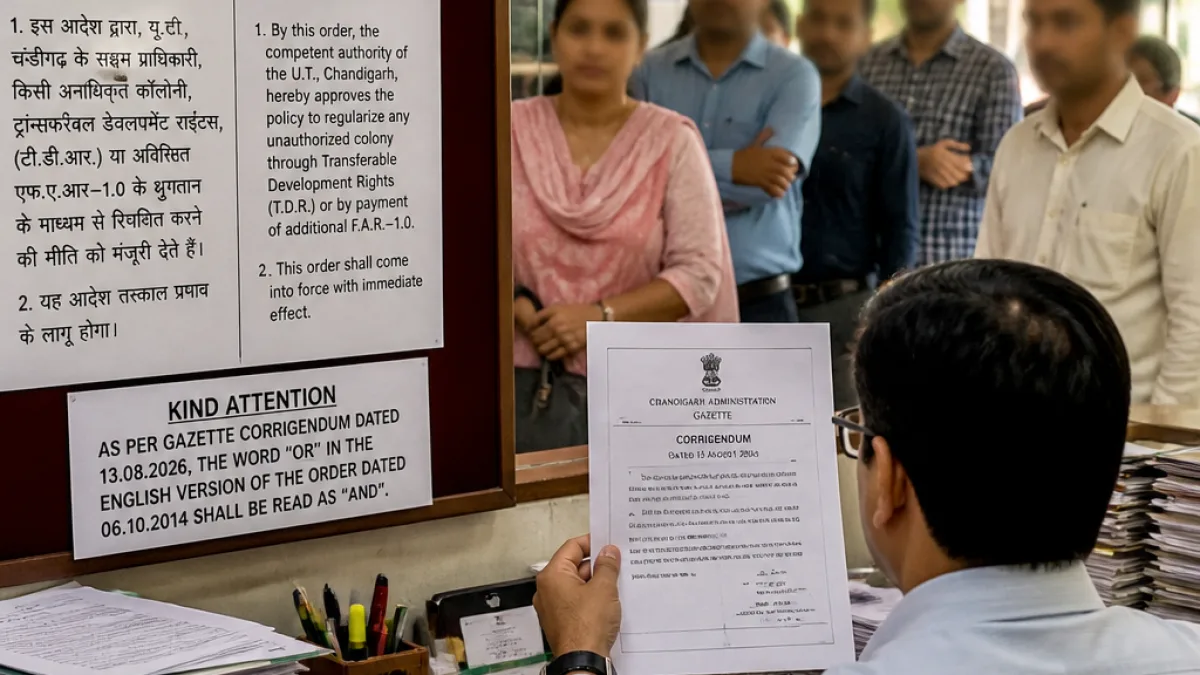
The Financial Commissioner of the Revenue and Disaster Management Department, Sumita Misra, said the state issued a corrigendum on July 24, 2026, which was published in the official gazette on 13 August 2026. The correction is intended to align the Hindi text with the original English order issued on 16 June 2014, which granted a full remission of stamp duty under Section 9 of the Indian Stamp Act, 1899 for lifetime property transfers among relatives.
Why the change was needed
Officials said the 2014 English notification used a general term corresponding to "grandchildren", but the Hindi version had referred only to a son’s children. That narrower Hindi phrasing had created inconsistent interpretations at sub-registrar offices, resulting in daughters' children sometimes being excluded from the zero-duty benefit.
"The amended corrigendum replaces the phrase 'pautar-pautri' (grandson-granddaughter) with 'pautar-pautri, dohata-dohati/ nati-natin', explicitly placing a daughter's sons and daughters on equal footing with a son's children for stamp duty exemption."
Misra said the corrigendum provides retrospective legal clarity across all revenue and registry offices in the state and will help avoid disputes or delays when families execute property gifts or transfers in favour of grandchildren via daughters.
What the exemption covers and the administrative effect
The 2014 order remitted 100% stamp duty on deeds executed during the owner's lifetime in favour of specified blood relations, including parents, children, grandchildren, siblings and spouses. With the new corrigendum, officials expect:
- Uniform application of the exemption at sub-registrar counters across Haryana.
- Reduced litigation and fewer procedural delays in registering transfers to grandchildren through daughters.
- Clear basis for retrospective claims where the benefit may previously have been denied due to the Hindi wording.
Revenue department sources indicated that the corrigendum functions as an interpretative clarification rather than a fresh policy, ensuring that the intent of the 2014 remission — broadening the family members eligible for zero-duty transfers — is implemented without linguistic discrimination.
Key dates and documents
| Date | Action |
|---|---|
| 16 June 2014 | Original Haryana order remitting 100% stamp duty under Section 9 of the Indian Stamp Act, 1899 for specified family transfers |
| 24 July 2026 | Corrigendum issued to amend Hindi wording |
| 13 August 2026 | Corrigendum published in the Haryana government gazette |
Practical advice for citizens
Homeowners and families planning lifetime transfers should:
- Carry the corrigendum and the 2014 order when approaching sub-registrar offices to ensure the zero-duty benefit is applied.
- Seek clarification at the local revenue office if a registrar questions eligibility for grandchildren through daughters.
- Retain documentation of any prior denials where the exemption was refused, as the corrigendum is intended to provide retrospective clarity.
Legal practitioners said that, in effect, the state has eliminated a textual barrier that had disadvantaged certain transfers. Revenue officials will now issue implementing instructions to sub-registrars and revenue officers to ensure consistent processing.
Political and social context
Family property transfers are a frequent source of disputes and administrative delay; language discrepancies between English and Hindi versions of government orders can cause uneven outcomes at the point of service. By issuing the corrigendum, the administration aims to remove one such source of inconsistency and to make the exemption more accessible to families who wish to transfer property to their grandchildren through daughters.
The Financial Commissioner emphasised that the corrigendum does not create a new exemption but restores the 2014 order’s intended scope so that daughters' children receive the same benefit as a son's children.