Rapid identification, prompt treatment avert fatality
Gwalior — A head constable posted at Bijoli police station survived a double bite by a black cobra after colleagues used an artificial intelligence tool to identify the snake and relay its venom profile to doctors, media reports said on Saturday.
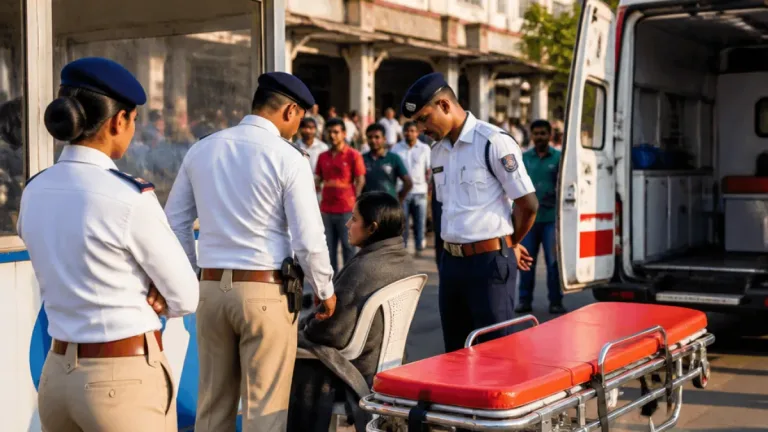
The incident took place on Thursday night at about 9 pm when Head Constable Pooran Sikarwar, who was sleeping in his government quarter, was bitten twice on the hand. Station In-charge (TI) Saurabh Srivastava and other staff rushed to the spot after hearing his screams and found Sikarwar in severe pain, the reports said.
AI image used to determine species and venom effects
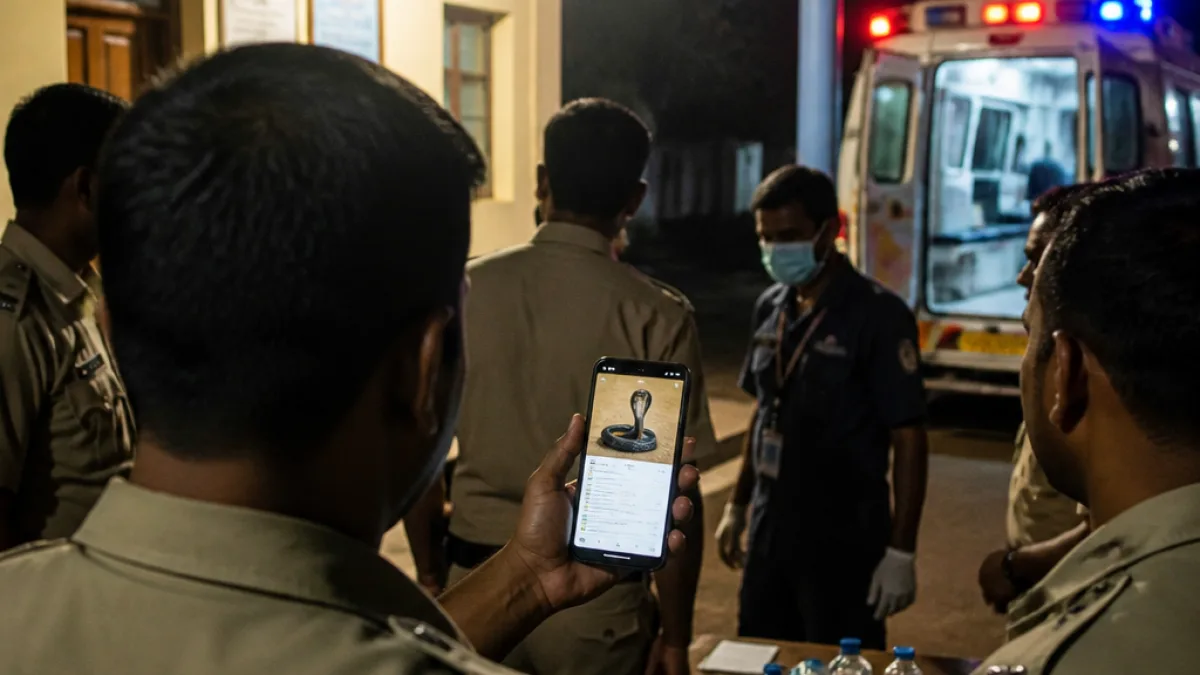
Given the urgency, the TI photographed the snake and uploaded the image to an AI-based identification tool. The AI returned a species identification as a black cobra and provided information about the effects of its neurotoxic venom. The TI forwarded the image and the AI-generated information to treating physicians prior to arrival at the hospital, the reports added.
"The AI identified the snake as a Black Cobra and provided information related to the effects of its neurotoxic venom," according to the report.
Following initial stabilisation, Sikarwar was first taken to Jai Arogya Hospital (JAH) and subsequently shifted to Apollo Hospital for advanced care. Doctors administered the appropriate anti-venom injections in time, which the reports said was instrumental in saving his life.
Timeline of events
| Time | Action |
|---|---|
| ~9:00 pm | Snake bites head constable twice in government quarter |
| Within minutes | TI photographs snake and uploads to AI tool |
| Shortly after | Photo and AI information sent to doctors; patient taken to JAH |
| Later | Transferred to Apollo Hospital; anti-venom administered |
Local context and implications
The episode highlights risks faced by frontline staff living in government accommodations near semi-urban and peri-urban areas of Gwalior, where human-snake encounters are not uncommon. Rapid species identification can influence clinical decisions because different snakes have distinct venom effects — neurotoxic, haemotoxic or cytotoxic — and anti-snake venom (ASV) selection, dosing and supportive treatment pathways may vary accordingly.
Medical literature and national guidelines emphasise that timely administration of polyvalent anti-snake venom and appropriate supportive care are key determinants of outcome in venomous snakebites. In this instance, the TI's use of an AI tool to identify the species appears to have provided clinicians with additional preparatory information before the patient arrived at hospital, according to the reports.
Precautions and public awareness
Officials and health practitioners in the region often advise residents to take simple preventive measures to reduce snakebite risk, such as keeping living quarters free of clutter, using mosquito nets, sealing gaps in doors and windows, and exercising caution when walking at night. Rapid access to trained medical personnel and hospitals with antivenom stocks is critical in districts and urban centres across Madhya Pradesh.
- Incident occurred at Bijoli police station quarters; victim was Head Constable Pooran Sikarwar.
- TI Saurabh Srivastava used an AI tool to identify the snake as a black cobra and shared venom information with doctors.
- Patient taken to JAH and later to Apollo Hospital where anti-venom was administered in time.
Local health authorities and police have not issued a public statement as of the time of reporting. The use of AI tools by first responders in wildlife encounters raises questions about reliability, the need for verification by trained herpetologists and protocols for integrating such tools into emergency medical workflows. For now, officials in Gwalior can point to a favourable outcome following swift action by colleagues and clinicians.
Further details on the constable's current condition and any follow-up investigations into how the snake entered the quarter were not available in the reports.