New mandatory registration for allied health staff in Gujarat
The National Commission for Allied and Healthcare Professions (NCAHP) has mandated registration for allied healthcare professionals, a move that will require practitioners in Gujarat to obtain licences to continue practising. The regulations cover a wide range of cadres — from physiotherapists and occupational therapists to optometrists and medical laboratory staff — and apply both to those already qualified and to future graduates.
Gujarat has prepared for the change by constituting four independent state boards, which will be responsible for enrolment and issuing unique identification numbers to practitioners operating in the state. Registration is to be carried out with the council of the state where the professional practices, the commission has said, and the process will be facilitated via a national online portal expected to be launched shortly.
Scope of regulated professions and courses
The NCAHP framework consolidates curricula and regulation across a broad sweep of allied-health education. So far the commission has formulated common curricula for 18 courses across 10 categories, encompassing fields such as physiotherapy, occupational therapy, optometry, nutrition, medical laboratory sciences, medical radiology, community care, medical technology and health information management. In total, these categories cover 57 allied healthcare courses, and draft syllabuses for an additional 14 courses have been prepared.
- Who is covered: practising physiotherapists, nutritionists, occupational therapists, optometrists, laboratory technicians and other allied professionals.
- Who must register: both existing practitioners and future graduates of allied-health programmes.
- Where to register: the state council where the professional practises; Gujarat will use four state-level boards.
Digital portal and unique IDs
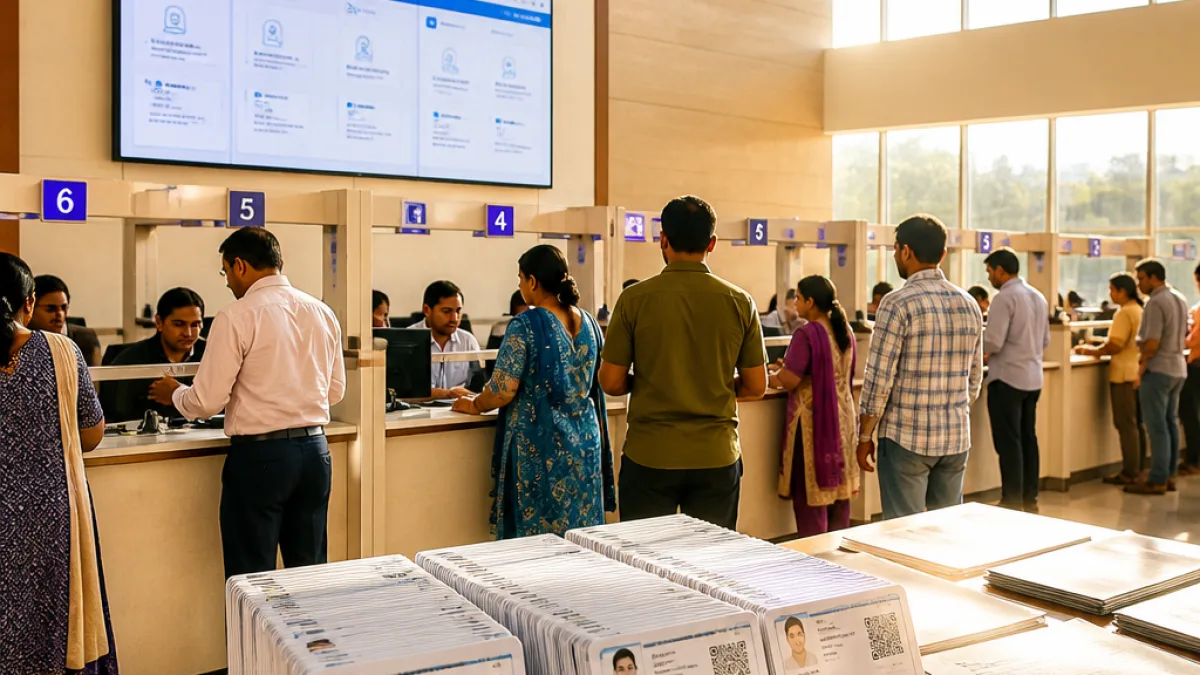
The commission has proposed an online platform called Swasthya Sangam to administer registrations and maintain centralised records of allied healthcare workers. The portal is expected to issue a unique identification number to each registered professional, enabling authorities to track deployment and verify credentials.
State councils will retain operational responsibility for registration, but the central portal aims to standardise data across states and facilitate mobility of professionals who shift practice to other jurisdictions.
Licencing cycle and governance
Under the new regulations, licence validity will be time‑bound and subject to periodic renewal. The commission has made it mandatory for registered professionals to obtain a unique ID and renew their registration every five years. The periodic renewal is intended to ensure continuing compliance with professional standards and any changes to curricula or practice norms introduced by the commission.
| Element | Detail |
|---|---|
| Regulating body | National Commission for Allied and Healthcare Professions (NCAHP) |
| State mechanism (Gujarat) | Four independent state boards (registration & ID issuance) |
| Portal | Swasthya Sangam (to be launched) |
| Courses covered | 57 allied-health courses across 10 categories; curricula for 18 courses finalised |
| Renewal period | Every five years |
Implications for practitioners and health services
For allied-health professionals in Gujarat — a state with a sizable private healthcare market and a growing network of diagnostic and rehabilitation services — mandatory registration will alter administrative and compliance duties. Clinics, hospitals and diagnostic chains that employ allied staff will need to ensure their teams are registered and holding valid unique IDs, especially where public contracts or empanelment require verified credentials.
The centralised database is also likely to assist policymakers and planners seeking accurate workforce data. Better information on the numbers and distribution of allied-health practitioners could inform recruitment, training priorities and emergency preparedness. However, operational details such as the timeline for the portal launch, documentation required for registration and fee structures will determine how smoothly the transition proceeds for practitioners and employers.
Next steps and practical guidance
The commission has indicated the Swasthya Sangam portal will be rolled out in the near term. Once live, professionals should:
- Identify the appropriate Gujarat state board for their discipline.
- Prepare proof of qualification and identity documents commonly required for professional registration.
- Monitor official NCAHP communications and the Swasthya Sangam portal for specific timelines and fee details.
The enactment of the National Commission for Allied and Healthcare Professions Act in 2021 and the commission's operationalisation in 2023 provided the statutory basis for these rules. The recent regulation represents a significant step towards formalising allied-health practice standards nationally while devolving registration to state councils for local administration.
The changes will be watched closely by training institutes, employers and state health administrators in Gujarat as they prepare to integrate new licencing and data requirements into existing human‑resource systems.