Kolkata/New Delhi, Sep 17 — The Election Commission (EC) on Thursday night issued an interim order temporarily removing the All India Trinamool Congress (AITC) name and its reserved “flowers and grass” symbol from the ballot for the West Bengal by-elections scheduled on 6 October. The move bars both rival factions that have emerged within the TMC from using the party’s political identity until the matter is substantively decided.
Interim order, legal basis and immediate requirements
In the order, the EC said the dispute between the two camps requires a substantive determination under Para 15 of the Election Symbols (Reservation and Allotment) Order, 1968. Pending that determination, neither faction will be permitted to use the name “All India Trinamool Congress (AITC)” or the reserved “flowers and grass” symbol in the bypolls.
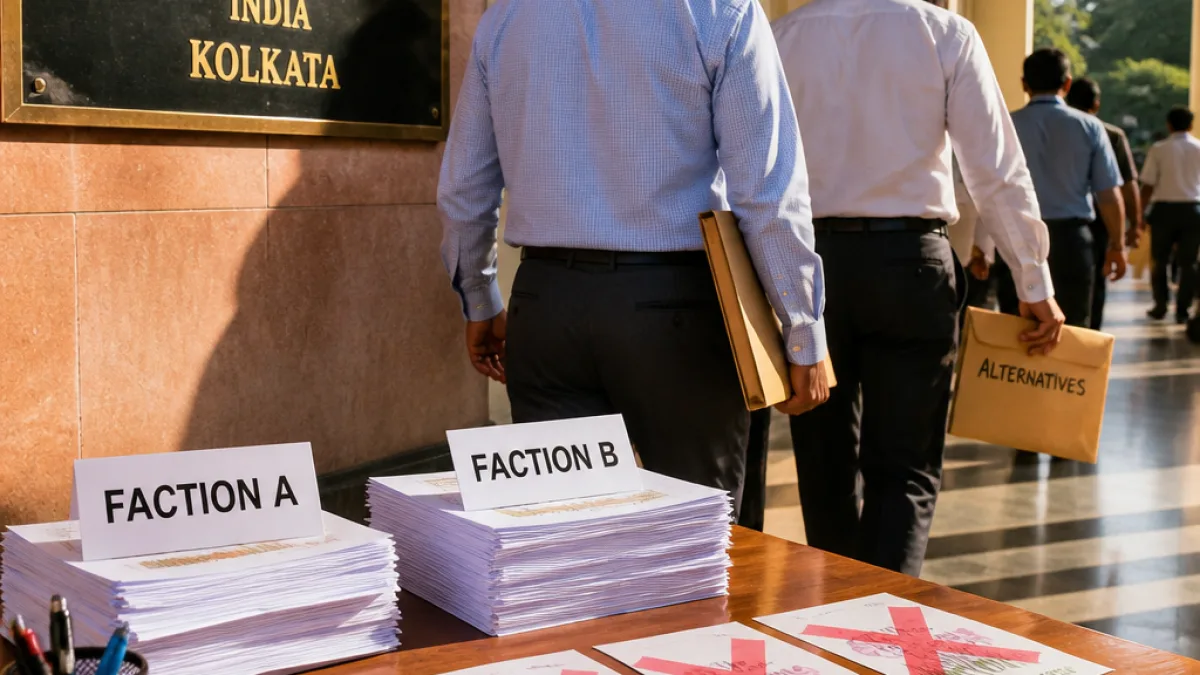
The Commission has directed both sides — led respectively by Mamata Banerjee and Arup Roy — to submit three preferred names and three free symbols for use in the polls by 11 am on September 18. The interim order follows a hearing in which leaders of the rival groups appeared before the EC.
Political context: rebellion and identity
The EC action comes against the backdrop of a rebellion inside the TMC that began after the Assembly poll defeat in May and later spread to the party’s parliamentary ranks. The dispute has now reached the party’s very name and election symbol — assets that have been central to the TMC’s political brand since the party’s formation in 1998.
The “flowers and grass” emblem, in particular, has been a visual identifier for nearly three decades and was a central element of the party’s outreach and grassroots image. The interim bar is therefore a significant disruption to how both factions campaign and how voters who traditionally identify with the TMC may locate their choice on the ballot.
Reactions from the two camps
Reactions to the EC order were split. TMC MP Kalyan Banerjee, associated with the Mamata Banerjee camp, rejected the interim decision and described it as “illegal” and “contrary to law”, saying “facts have not been placed in the order.” He added that the faction may nonetheless be forced to accept the arrangement temporarily and that it would submit its response by the deadline.
“We are not accepting it. At times you have to accept things which may not be in adherence to norms, rules and law for a temporary period,” Kalyan Banerjee said, according to PTI reporting.
By contrast, Akhruzzaman Ansari, a TMC MLA and chief whip of the West Bengal Assembly aligned with the Arup Roy-led faction, said his group accepted the EC order.
Electoral practicalities and possible voter impact
With the name and familiar symbol off the ballot for now, both factions must choose alternative names and free symbols that will appear beside candidates’ names. That change could cause voter confusion, particularly in rural and semi-urban constituencies where party symbols serve as a primary cue for many electors.
- Bypoll date: 6 October
- Deadline to submit alternative names/symbols: 11 am, 18 September
- EC legal reference: Para 15, Election Symbols Order, 1968
What happens next
The EC will first accommodate the interim arrangement for the immediate bypolls and then proceed to a substantive determination on rights to the name and reserved symbol. The order does not prejudge that final decision, but it places a temporary administrative barrier on the political identity both camps have claimed.
How quickly the Commission reaches a substantive decision is likely to depend on submissions from both factions and any legal arguments they raise. For now, political operatives across West Bengal are assessing contingency campaign plans and voter communication strategies to mitigate the absence of the familiar symbol.
| Item | Detail |
|---|---|
| Bypoll date | 6 October |
| Submission deadline | 11 am, 18 September |
| Legal provision cited | Para 15, Election Symbols (Reservation and Allotment) Order, 1968 |
The decision is a fresh flashpoint in West Bengal politics as the state prepares for bypolls that will test the organisational strength of rival camps and the extent to which voters remain attached to a party identity that, until now, had been represented by a single, recognisable symbol for nearly 28 years.
Reporting for this dispatch relied on the EC interim order and statements recorded in PTI coverage.