Chandigarh: The Congress on Sunday charged the Haryana government with placing an additional financial burden on property owners by linking property tax calculations to collector rates under a notification that came into force on 1 August 2026, according to a statement by party leader Randeep Singh Surjewala.
Allegations on repeated hikes in collector rates
Surjewala, a Congress Rajya Sabha member, said the government had increased collector rates for residential, commercial and agricultural land across the state by as much as 75% with effect from 1 April 2026. He alleged earlier revisions had also substantially raised these rates in recent years, and that linking property tax to collector rates would allow periodic revisions to translate directly into higher recurring tax liabilities for owners.
According to the Congress statement, the sequence of alleged increases included:
- an increase of up to 75% from 1 April 2026;
- revisions in August 2025 that ranged between 30% and 150%;
- increases of 10–20% in December 2024 in urban and rural areas; and
- hikes of 10–30% during 2023–24.
Revenue figures and opposition questions
Surjewala said Haryana already receives substantial revenue from property registrations and stamp duty, and questioned the rationale for successive collector-rate increases. The statement claimed the state government collects more than ₹14,000 crore annually from property registrations and stamp duty and noted that ₹33,562 crore was realised through these sources between April 2023 and April 2026.
He argued that the combination of already high registration and stamp duty receipts and the new linkage of property tax to collector rates would further strain households at a time when people are facing inflationary pressures. Surjewala said the change would affect buyers and existing owners of houses, shops and other properties and warned of a recurring rise in tax outgo as collector rates are revised periodically.
What the new system does (as alleged)
The Congress statement described the policy shift as a move away from the tax calculation framework followed since 2013. While the party characterised the August notification as linking tax assessments to collector rates, it did not provide the text of the notification or specific examples of how municipal or cantonment property tax bills would change for particular property categories.
| Period | Alleged change in collector rates |
|---|---|
| 2023–24 | 10–30% |
| Dec 2024 | 10–20% |
| Aug 2025 | 30–150% |
| From 1 Apr 2026 | Up to 75% |
Political context and public impact
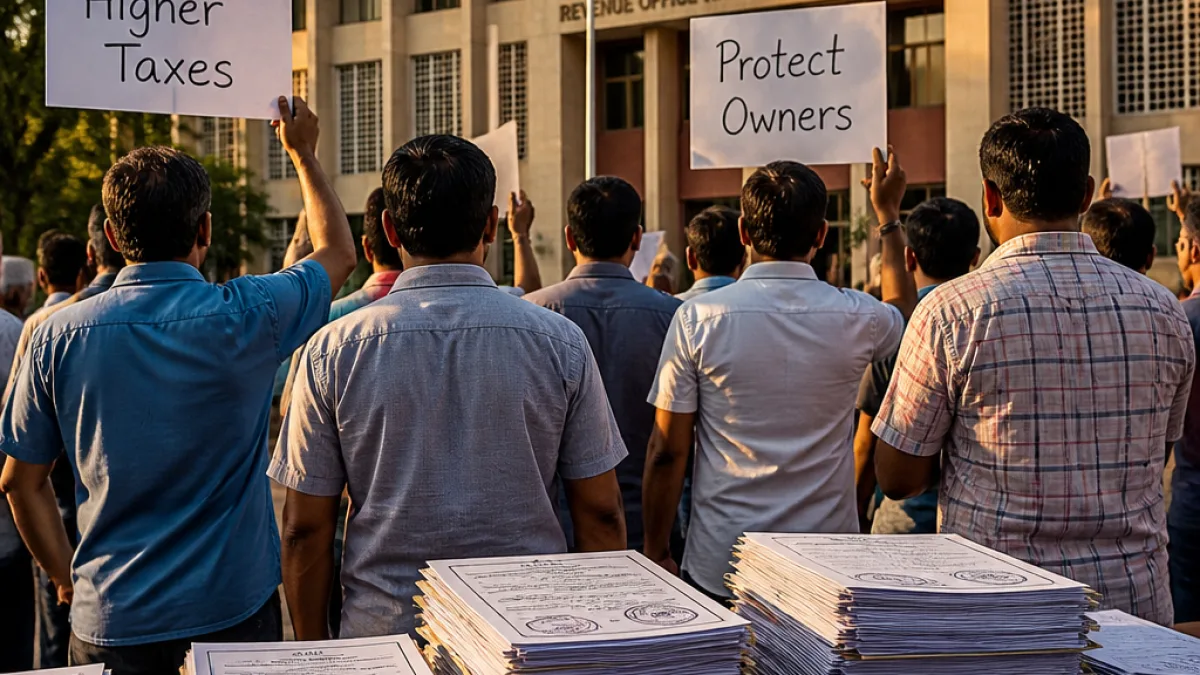
Property tax rates and collector values are politically sensitive because they directly affect household budgets and commercial costs. If tax assessments are linked to official collector rates, owners may see tax bills rise whenever authorities revise those reference values. Surjewala framed the change as an untimely increase in fiscal burden, saying families in the state were being forced to borrow to meet household expenses.
The statement also highlighted the scale of real-estate transactions in Haryana, saying around seven to eight lakh property registrations take place in the state each year — a figure used to underline potential reach of the policy change. However, the disclosure did not include municipal calculations, guidance on transitional relief, or mention of any state-level response to the allegation.
What remains unconfirmed
The allegations in the Congress statement describe changes to collector rates and assert a consequential impact on property tax liabilities. The notification referred to in the statement reportedly became effective on 1 August 2026; the actual text of the notification, administrative orders from the revenue or municipal departments, and any explanatory notes from the Haryana government were not provided in the material released by the party.
Officials from the state government and the departments responsible for property taxation and land valuation had not been quoted in the party statement. Requests for an official clarification or for the notification text were not included in the Congress release.
The matter is likely to become a point of contention between the ruling party and the opposition in Haryana in the coming days, given the size of the revenues involved and the potential for widespread citizen impact.