Bankura, West Bengal: Chief Minister Suvendu Adhikari said on Tuesday that his government will soon introduce a Uniform Civil Code (UCC) in the state and follow it up with a stringent law to prevent forced religious conversions and fresh legal restrictions on the purchase and sale of land.
Policy shift from rhetoric to legislation
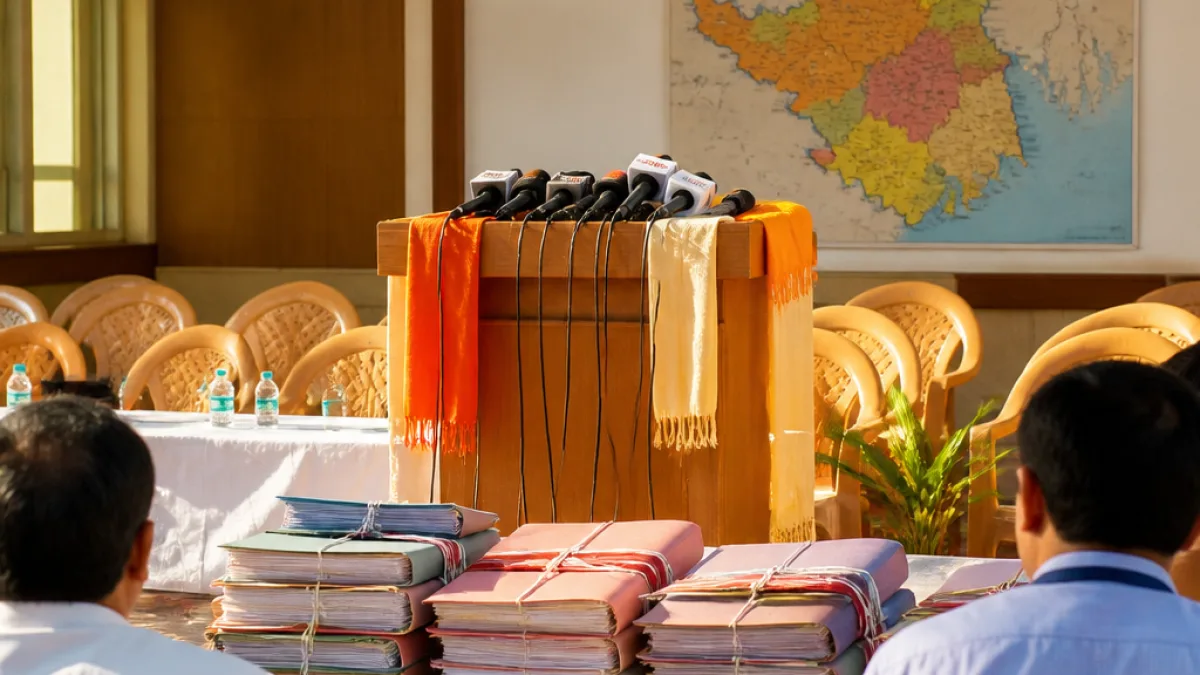
Addressing a review meeting of the Paschimanchal Unnayan Parshad in Bankura, attended by MPs, MLAs, cabinet ministers, district magistrates and around 75 Block Development Officers (BDOs) from districts including Bankura, Purulia, Jhargram and Birbhum, Adhikari declared the UCC would be the first major ideological law his government will enact.
"We will bring the UCC very soon; one country, one law. After that, our next steps will be to bring a stringent law to prevent forced conversion and new legal restrictions on land purchase and sale,"
The Chief Minister did not elaborate on the precise content of the proposed anti-conversion statute or the nature of the land-transaction restrictions. His remarks, however, place two matters that have long been central to the BJP's political narrative — religious conversion and what the party terms "land jihad" — squarely on the state administration's legislative agenda.
Context and political resonance
Adhikari said his government was taking action after receiving reports that foreign-funded organisations were allegedly misleading impoverished residents in Bankura and the larger Junglemahal region, engaging in what he characterised as illegal religious conversions and "fundamentalist" activities. He listed measures already taken by his administration during the meeting, though those were not detailed in his remarks.
The land question, the Chief Minister indicated, connects to concerns within the party about demography, illegal migration and the protection of indigenous land rights in border districts. With the Trinamool Congress (TMC) having been voted out after 15 years in power, Adhikari framed these measures as a move from campaign rhetoric into the policy domain.
His comments immediately invite comparison with other BJP-ruled states bordering Bangladesh, where governments have introduced restrictions on certain land transactions in protected communities and areas. Adhikari did not specify whether the West Bengal proposals would restrict sales between people of different faiths or set out other eligibility criteria.
Administrative audience and implications
The review meeting, attended by senior party and administrative officials from several western districts, highlights the government’s attempt to align administrative machinery with its new policy priorities. The presence of DM-level officials and a large number of BDOs suggests steps towards implementation planning, monitoring and enforcement could be discussed at district and block levels.
How such legislation, if framed along lines seen elsewhere, would interact with existing land records, land reform statutes and the constitutional framework remains unspecified. The state's announcement of a UCC also raises questions about the interplay between state powers and personal laws governed by central statutes and judicial precedents.
| Announced priority | Details given | Unclear aspects |
|---|---|---|
| Uniform Civil Code | Will be brought "very soon" | Scope, timeline, legal drafting, interaction with central law |
| Anti-conversion law | Described as "stringent" to prevent forced conversion | Definitions, penalties, procedure for complaints |
| Land transaction restrictions | New legal restrictions proposed | Whether restrictions will be on inter-faith sales, geography-specific, or category-based |
- Where: Paschimanchal Unnayan Parshad meeting, Bankura.
- Who was present: MPs, MLAs, cabinet ministers, district magistrates and about 75 BDOs from districts including Bankura, Purulia, Jhargram and Birbhum.
- Immediate effect: Political signalling; no bills or dates announced.
Legal experts, civil society groups and political opponents have in other contexts raised concerns that anti-conversion and land-restriction laws can affect civil liberties and minority rights. The state government’s next steps — whether consultation, draft legislation, or notification of rules — will determine the contours of legislative change and its judicial reviewability.
For residents of western and border districts, any restriction on land sales and new legal requirements for religious activities could have practical implications for property markets, community relations and administrative procedures at the block and district level. The state administration’s outreach to district and block officers at Tuesday’s meeting indicates preparations for ground-level implementation may already be under discussion.
As the government moves from announcement to formulation, opposition parties and stakeholders in West Bengal are likely to seek clarity on the text, safeguards and timelines for the proposed laws. The Chief Minister’s comments mark an early but decisive pivot towards issues that have dominated national BJP discourse and are now being prioritised at the state level.