MC seeks public views after General House clears SWM‑2026 draft
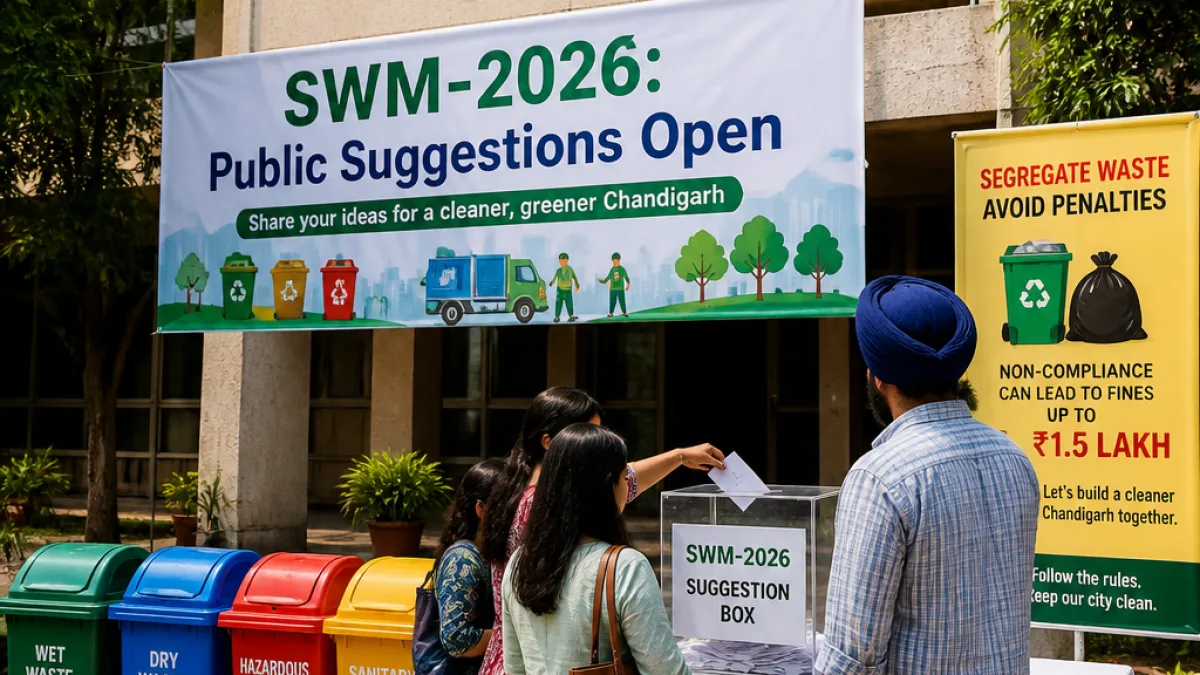
The Municipal Corporation of Chandigarh has invited suggestions and observations from residents and stakeholders within 15 days on the recently approved Solid Waste Management‑2026 (SWM‑2026) bylaws, officials said on Monday. The move follows the General House's approval of the draft and comes after instructions from the Supreme Court to align municipal rules with the central SWM Rules, 2026.
The current draft, approved by the House after a heated debate, proposes a series of operational and enforcement measures to overhaul the city's waste handling regime. A key element is mandatory segregation of waste at source into four streams, alongside enhanced penalties for violations.
Four‑bin segregation and on‑site processing
Under the draft bylaws, every waste generator in the city will be required to separate waste into:
- Wet or biodegradable waste
- Dry or recyclable waste
- Domestic hazardous waste
- Sanitary waste
The bylaws also require bulk waste generators to segregate horticulture and construction waste separately and to process biodegradable waste on‑site where necessary. The draft prescribes colour‑coded bins and expressly prohibits mixing of segregated waste during collection or transportation.
Stronger enforcement, higher penalties
The proposal empowers the Municipal Corporation to levy user charges, impose environmental compensation and enforce penalties for a range of violations, including littering, open burning, illegal dumping, failure to segregate waste, non‑registration and unauthorised transportation.
Penalties under the draft have been raised for various categories; officials highlighted that fines could be as high as ₹1.5 lakh for bulk waste generators and resident welfare associations (RWAs) for serious contraventions.
Councillors, vendors and public response
The bylaws were passed after councillors raised multiple issues connected to garbage disposal across the city, with particular concern over waste generated by street vendors. On July 31, the House rejected a proposed hike in user charges for different categories, though the increased fines were retained.
The draft also sets out responsibilities for street vendors; the published summary did not detail those clauses, but the corporation has solicited public suggestions before preparing a final version.
Next steps and timeline
After the 15‑day window for suggestions closes, the Municipal Corporation will prepare a final draft incorporating public feedback and any technical revisions. Implementation of the bylaws will follow notification by the civic body in line with statutory procedures.
| Stage | Date / timeframe |
|---|---|
| General House approval | Fortnight prior to public notice (July 31 referenced) |
| Public suggestion period | 15 days from public invitation |
| Finalisation | After public feedback (date to be notified) |
What this means for residents and businesses
- Households must adopt four‑stream segregation at source and use the colour‑coded bins prescribed by the bylaws.
- Bulk waste generators and RWAs face higher penalties for non‑compliance and may need to process biodegradable waste on‑site.
- Street vendors will have defined responsibilities; vendors and hawkers should monitor the final text for operational requirements and compliance obligations.
Compliance will be enforced through a mix of user charges, environmental compensation and fines, the draft states. The corporation's invitation for comments gives residents an opportunity to seek clarifications, propose practical modifications or raise concerns about enforcement and implementation.
Officials said the draft was prepared to bring local rules into conformity with the SWM Rules, 2026, issued at the central level and reinforced by the Supreme Court's directions to municipal bodies. The corporation has not yet published a consolidated list of the charges or the detailed colour‑coding scheme; those elements are expected to appear in the final notified bylaws after public consultation.
Residents and stakeholders are advised to submit written suggestions to the Municipal Corporation within the stipulated 15‑day period to ensure their views are considered before the bylaws are finalised.