Political push for policy as civic body issues notices to shops
Madhya Pradesh Congress president Jitu Patwari has sought a time‑bound policy from Chief Minister Mohan Yadav to address action against commercial establishments operating in residential areas of Bhopal, saying traders and families should not be penalised for delays in urban planning. The letter, sent on Thursday, follows enforcement steps by the Bhopal Municipal Corporation (BMC) taken after directions from the Supreme Court.
According to the letter cited by party sources, the civic body has issued around 1,800 notices to establishments alleged to be running commercial activities in residential localities. Patwari said these measures have affected small businesses and families that have operated from such sites for years and that while the Supreme Court's orders must be complied with, the government also bears responsibility for allowing such activity to continue because of planning gaps.
“Compliance with the Supreme Court’s order and finding a solution to the government’s planning‑related failure are two separate issues,” Patwari wrote.
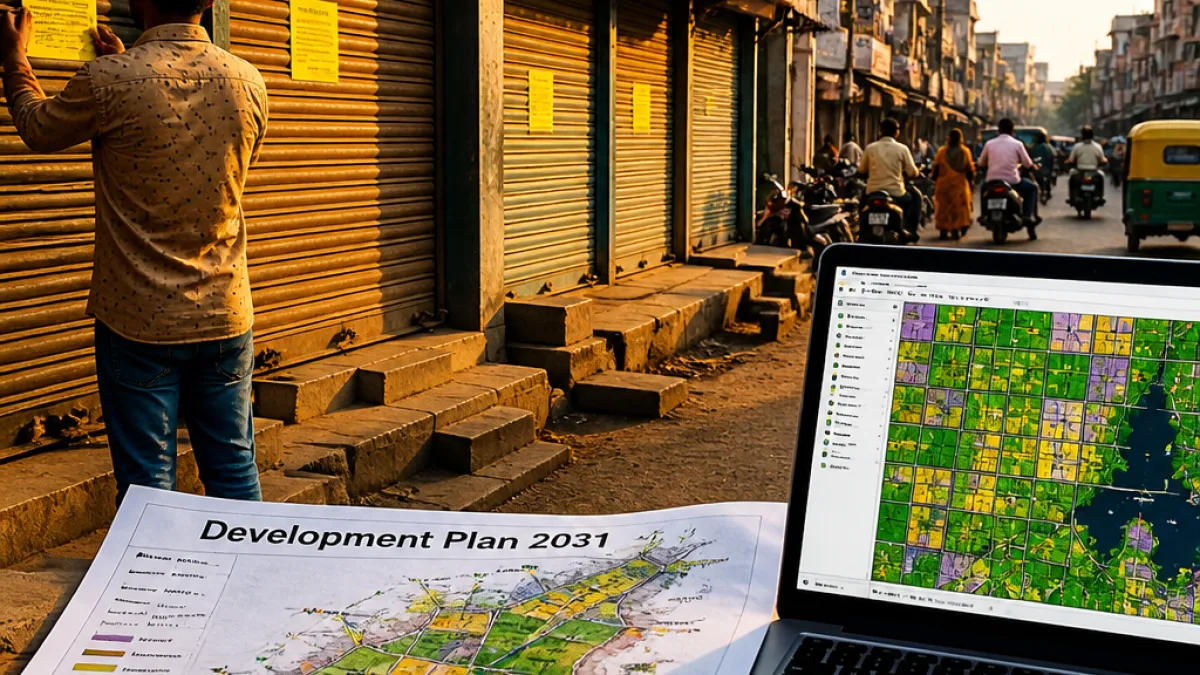
Patwari highlighted the dated status of the city's statutory development framework. He noted that Bhopal is still operating under the 2005 development plan and underlined that only two plans — those of 1991 and 2005 — have been approved since 1975. The Congress leader pointed out that the draft Bhopal Development Plan‑2031 was returned to the government in February 2024 and questioned the delay in finalising and publishing a revised plan.
- Questioning of state responsibility: many establishments reportedly paid taxes or held licences during the period when commercial activity expanded in residential areas.
- Demand for transparency: Patwari sought that the Development Plan‑2031 be made public with a deadline for implementation.
- Call for technical survey: a GIS‑based land‑use survey was proposed to clearly classify properties as residential, commercial, mixed‑use or other.
To assist traders who have operated for years after paying taxes or getting permissions, Patwari proposed a policy package that would include options such as relocation, regularisation or reclassification of properties. The proposal aims to balance compliance with the apex court's directives and mitigation of hardship for small business owners and families.
Local consequences and administrative challenge
Urban planners and civic officials in Bhopal face the dual task of implementing legal directions while managing the social and economic dislocation that sudden enforcement can cause. The issuance of roughly 1,800 notices indicates the scale of commercial activity that has emerged in residential precincts over decades, according to the letter. Traders who have paid municipal taxes or obtained licences from government agencies say they acted in good faith under existing administrative orders.
| Development plan | Status noted in Patwari's letter |
|---|---|
| 1991 | Approved (post‑1975 plan) |
| 2005 | Approved; still operative |
| Draft 2031 | Returned in Feb 2024; not finalised or published |
Patwari stressed that Bhopal’s urban requirements — population growth, housing, traffic, employment, education and healthcare needs — have changed significantly since 2005. He urged the government to carry out a GIS‑based survey of existing land use to provide an objective basis for reclassification or regularisation.
The demand for a formal policy is likely to intensify pressure on the state administration to clarify timelines and provide relief mechanisms. For affected shopkeepers and households, the questions are immediate: whether notices will lead to closures, where any relocations might be planned and whether a window for regularisation will be opened for those who paid taxes or held municipal permissions.
There has been no public release from the Chief Minister's office or the Bhopal Municipal Corporation in the reporting available that details how notices will be enforced or what interim arrangements, if any, will be made for long‑standing commercial activities in residential areas. The matter raises broader issues about urban governance, the pace of statutory planning and the need for technical mapping and stakeholder consultation before strict enforcement is pursued.