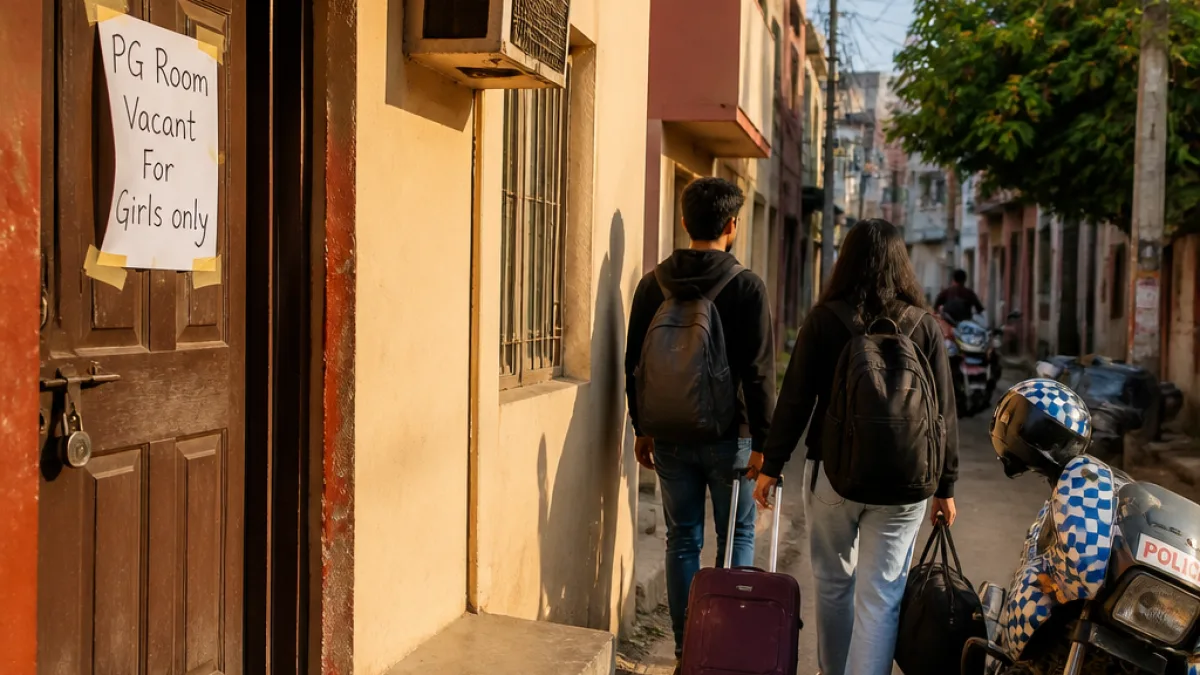
Allegations of harassment at Gandhi Nagar PG raise campus safety concerns
Two Kashmiri students studying pharmacy in Bhopal under the Prime Minister’s Special Scholarship Scheme (PMSSS) have alleged continuous harassment and threats aimed at forcing them to vacate their rented paying‑guest accommodation in Gandhi Nagar, the Jammu & Kashmir Students Association (JKSA) said on Tuesday.
JKSA national convener Nasir Khuehami wrote to the Madhya Pradesh Chief Minister seeking urgent intervention and asking the state government to direct Bhopal police and district administration to ensure the students’ safety, according to the association’s communication. The students are enrolled at a private college in Bhopal and are pursuing pharmacy after selection under the PMSSS, JKSA said.
Claims of pressure on landlord and threat of forcible eviction
According to the letter, the students were allotted hostel accommodation under the PMSSS but the college currently does not have functioning hostel facilities, forcing them to stay at a paying‑guest (PG) accommodation in Shanti Homes Colony, Korand, Gandhi Nagar since last year. The association alleged that members of the local colony had been pressuring the landlord to evict the students.
- Locals allegedly warned the landlord that people might forcibly enter the premises and remove the students if they were not evicted.
- JKSA said the threats have created an "intense sense of fear" among the students and left them traumatised and unable to attend classes freely.
- The association requested coordination among the state government, district officials and the college management to provide secure nearby lodging to avoid disruption to the students' education.
"The fact that a student is Kashmiri or Muslim cannot become a basis for denying them a safe place to live or study," the association said.
Official responsibilities and community impact
JKSA urged the state to order Bhopal police and the district administration to meet the students immediately and take measures to secure their safety. The association also asked for legal action against anyone found responsible for intimidation, coercion or unlawful eviction attempts.
The episode highlights broader issues for the city: when colleges lack on‑campus hostel capacity, students dependent on PG accommodation can become vulnerable to local disputes and social tensions. For students from far‑off or conflict‑affected regions such as Kashmir, disruption of housing threatens not only personal security but also continuity of study under scholarship programmes intended to broaden educational access.
| Detail | Information |
|---|---|
| Students' course | Pharmacy (private college, Bhopal) |
| Admission route | Prime Minister’s Special Scholarship Scheme (PMSSS) |
| Accommodation | Paying‑guest at Shanti Homes Colony, Korand, Gandhi Nagar |
| Complaint filed by | Jammu & Kashmir Students Association (JKSA) |
What next — calls for action
JKSA's letter asks the state government for immediate coordination with local police and college authorities to ensure that the students can continue their education without fear. The association specifically sought:
- Police and district administration intervention to assess and secure the students' safety.
- Provision of secure alternative accommodation close to the college if necessary.
- Legal action against those responsible for intimidation or attempts at unlawful eviction.
The matter is likely to test local administrative responsiveness on campus safety and communal harmony in a city that hosts a diverse student population. Officials at the college, Bhopal police and district administration had not been quoted in the association's communication; JKSA has sought a prompt official response from the state government and law enforcement.
The case underscores the need for institutions and local authorities to coordinate housing arrangements for out‑station students — particularly those admitted under central scholarship schemes — and to ensure that lack of on‑campus hostels does not expose vulnerable students to community‑level pressures.