Bhiwandi, Maharashtra — The Special Intensive Revision (SIR) of electoral rolls in Maharashtra has flagged Bhiwandi East as one of the urban assembly seats with a high incidence of uncollectible enumeration forms, according to data released by the Chief Electoral Officer's office. The release lists other urban constituencies such as Colaba and Khadakwasala among those with similarly elevated rates of uncollected or un‑digitised forms.
Urban–rural divide in enumeration outcomes
The CEO office data, made public on Friday, shows a clear contrast between urban and rural/tribal constituencies. While several urban pockets across Thane, Pune and Mumbai reported large numbers of uncollectible forms, many rural and tribal seats achieved substantially better outcomes, with some reporting that more than 90 per cent of enumeration forms were collected or digitised during the SIR process.
The release did not provide seat‑by‑seat percentages for all constituencies in the summary, but explicitly named Bhiwandi East, Colaba and Khadakwasala as assembly segments with the highest rates of uncollectible forms. The CEO's material attributed the discrepancy to differing ground conditions between densely populated urban localities and more contiguous rural areas.
What 'uncollectible forms' means for voters
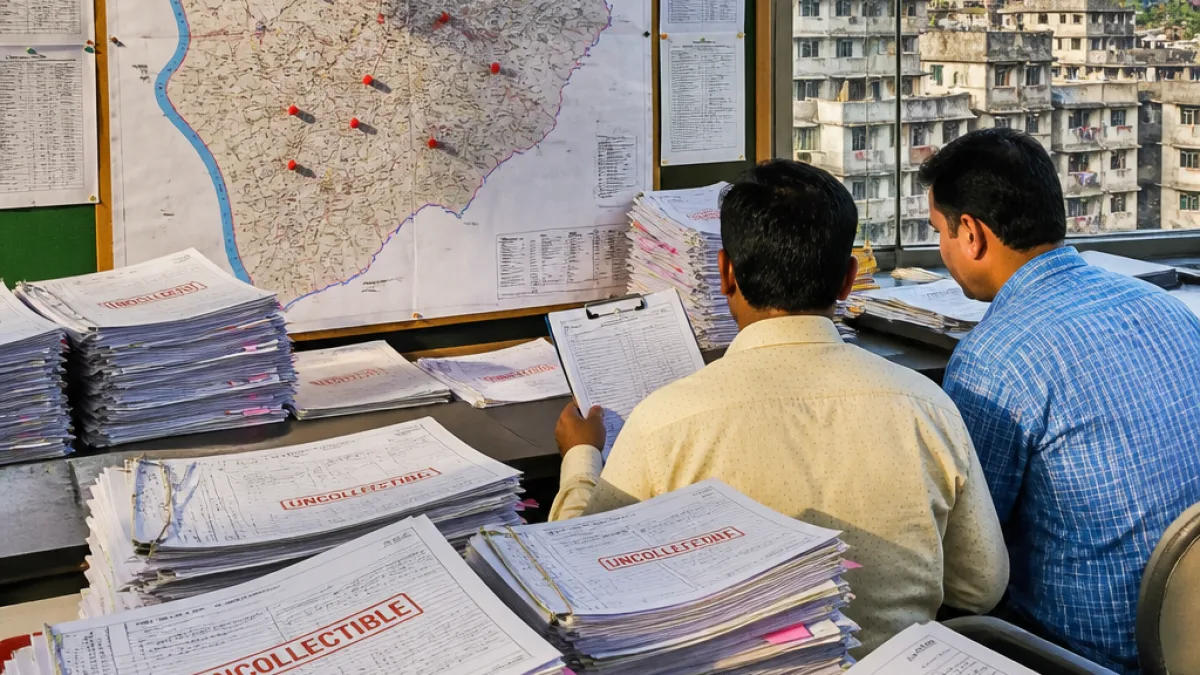
Uncollectible enumeration forms are entries that the revision teams could not obtain or digitise during door‑to‑door enumeration or follow‑up drives. The immediate administrative consequence is that these records remain pending in the roll‑revision process, which can delay updates to the electoral rolls and complicate future verification drives.
- Seats highlighted: Bhiwandi East, Colaba, Khadakwasala.
- Regions with stronger performance: Several rural and tribal constituencies where collection/digitisation exceeded 90%.
- Admin source: Data released by the Chief Electoral Officer's office, Maharashtra.
"Urban constituencies in Maharashtra, including several in Thane, Pune and Mumbai, have reported some of the highest rates of uncollectible enumeration forms during the Special Intensive Revision," the CEO release said.
Local implications for Bhiwandi
For Bhiwandi residents, the inclusion of Bhiwandi East among seats with high uncollectible forms raises practical concerns about the completeness and accuracy of the voter list ahead of future elections. Inaccurate or incomplete rolls can lead to administrative delays in issuing voter information, potential complications for people seeking to register or update their details, and additional workloads for election officials during subsequent drives to reconcile pending entries.
Election officials typically undertake additional verification and follow‑up once SIR results are analysed; the CEO office's public statement indicates that such follow‑ups will be necessary in constituencies where enumeration proved difficult. The data release did not specify timelines or detailed remedial steps for each flagged seat.
| Assembly seat | Status in CEO release |
|---|---|
| Bhiwandi East | Listed among seats with highest uncollectible forms |
| Colaba | Listed among seats with highest uncollectible forms |
| Khadakwasala | Listed among seats with highest uncollectible forms |
The Chief Electoral Officer's summary also underlined that many rural and tribal constituencies reported significantly lower rates of uncollectible forms, with some seats achieving high levels of collection and digitisation. That discrepancy suggests SIR implementation faced particular challenges in certain urban localities, the release noted.
Election authorities and local civic bodies in Bhiwandi will need to coordinate further to resolve pending forms and ensure eligible residents are not left off the rolls. Voters are advised to monitor official CEO or district election office communications for instructions on registration, corrections or verification drives.
More detailed constituency‑level figures and the CEO's complete dataset are expected to be referenced by district officials as they plan follow‑up measures in the coming weeks.