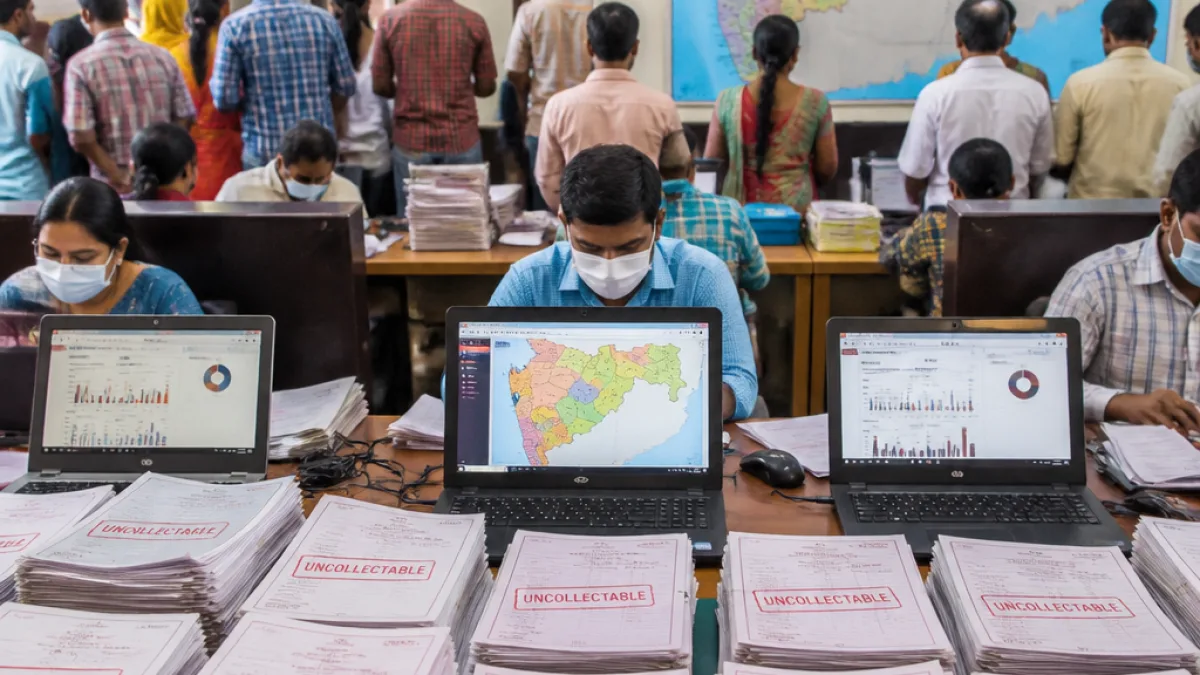
Mumbai, Aug 12: Information on more than 1,80,60,697 voters in Maharashtra — equivalent to 18.46 per cent of the state's electorate — has been classified as "uncollectable" under the ongoing Special Summary Revision (SIR) of electoral rolls, state Chief Electoral Officer S Chockalingam said on Wednesday.
Digitisation progress and gaps
Chockalingam told reporters that the SIR has so far digitised information on 7,60,98,153 electors, or 77.77 per cent, while distribution coverage of electors stands at 9,69,54,766, which is 99.08 per cent of the total. The state’s electoral strength is recorded at 9,78,54,049 voters.
He explained that entries labelled as uncollectable include individuals who were absent at the registered address, those who have shifted, deceased electors and duplicate entries. The CEO said the SIR is an ongoing process and that data relating to roughly four per cent of voters is still being processed.
Districts with high uncollectable shares
Large urban districts reported particularly high proportions of uncollectable information. According to the CEO’s figures:
- Mumbai: 30,81,495 voters (29.61%) categorised as uncollectable
- Mumbai Suburban: 21,41,596 voters (27.35%)
- Pune: 27,07,496 voters
- Thane: 19,16,790 voters
| District | Uncollectable voters | Share (where stated) |
|---|---|---|
| Mumbai | 30,81,495 | 29.61% |
| Mumbai Suburban | 21,41,596 | 27.35% |
| Pune | 27,07,496 | — |
| Thane | 19,16,790 | — |
Why records go uncollected and next steps
Chockalingam said the primary reasons for information being uncollectable are absence from the registered address, relocation, deaths and duplicate entries. He noted that such entries imply the voter may not be reflected in the current electoral roll at that address unless corrections are made.
“The electoral roll is changing every day as the process is ongoing,” Chockalingam said, adding that meetings have been held with political parties to facilitate corrections and updates.
The CEO urged political parties to assist citizens in the rectification process and to help ensure necessary modifications are carried out before the SIR deadline. He also outlined that digitisation of enumerated forms in Mumbai stands at 63 per cent, with about 30 per cent of Mumbai voters categorised as uncollectable and the remaining seven per cent of the state capital’s data yet to be finalised.
Implications for voters and administration
Large volumes of uncollected data in urban centres such as Mumbai and Pune point to high mobility and challenges in doorstep verification, especially in areas with rental populations, slums or multi-occupancy buildings. For individual electors, uncollectable status could mean a temporary mismatch between their actual residence and electoral entry, potentially complicating voting or enrolment until corrections are made.
Election officials continue door-to-door enumeration, verification and digitisation under the SIR process. Citizens who have shifted, changed names, or believe they are incorrectly listed are expected to approach electoral registration officers or use the official online portals and designated nodal centres to update details within the SIR timeline.
What to watch
- Finalisation of the remaining four per cent of records under processing;
- Outcomes of party-level meetings and any public drives to reduce uncollectable entries;
- Publication of the revised electoral rolls following the SIR deadline and details of corrections made.
As Maharashtra heads towards roll finalisation, electoral authorities have signalled continued engagement with stakeholders to ensure that as many electors as possible are accurately reflected in the rolls. The SIR's effectiveness will be measured by how successfully the administration and political parties address the large chunk of uncollectable entries, particularly in high-density urban pockets.