City honours legacy from Sabarmati to Khadia on 80th Independence Day
AHMEDABAD — As India marks the 80th Independence Day, Ahmedabad is reflecting on a layered history of mass mobilisation, student sacrifice and covert resistance that fed into the nationwide struggle against British rule. The city’s role ranges from being a launchpad for Gandhian civil disobedience to spawning local acts of defiance during the Quit India Movement of 1942.
Ahmedabad’s historic association with the national movement is anchored at the Sabarmati Ashram, the departure point of the 1930 Dandi March, and extends into neighbourhoods such as Khadia and Dariyapur where street-level clashes and student protests left an indelible imprint on the city’s collective memory.
Local historian Manel Patel, known as ‘Setu’, outlined Ahmedabad’s response to the Quit India call. According to the account reported by PTI, Khadia was among the earliest centres of organised resistance in Gujarat after Mahatma Gandhi issued the 'Do or Die' summons on August 8, 1942.
“When the entire country was burning in the blaze of freedom ... residents of Khadia in Ahmedabad turned rebels and took to the streets,” the historian said.
The uprising in Khadia included attempts to prevent police movement by barricading key junctions. On August 9, 1942, police fired to disperse crowds near Khadia Char Rasta, and a 21-year-old student, Umakant Motiram Kadia of Dariyapur, was fatally shot while on his bicycle. A memorial pillar near Khadia Char Rasta marks his sacrifice.
Violence and repression continued the following day when a procession of about 2,000 students entered Gujarat College campus; police used lathis and opened fire. Student Vinod Kinariwala, carrying the Indian tricolour and shouting ‘Inquilab Zindabad’, was hit by a bullet and later died, as chronicled in local records.
Local memory, public markers and civic context
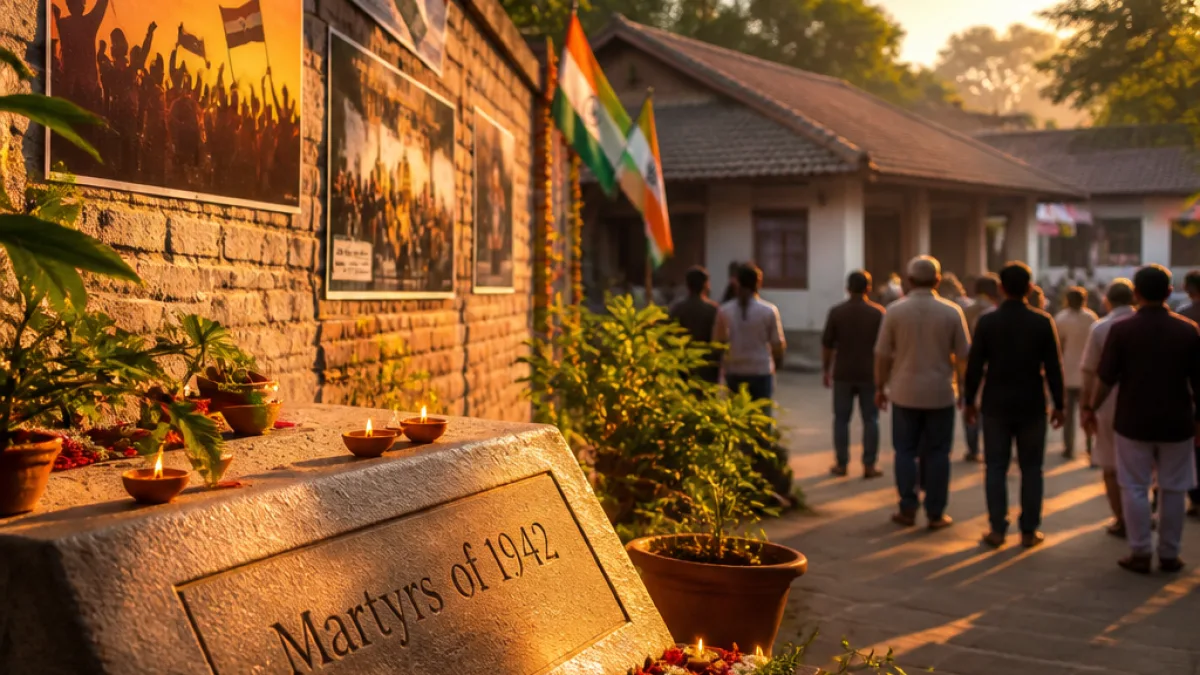
The city preserves the memory of these events through plaques, memorial pillars and narratives shared by historians and institutions. These local markers are part of Ahmedabad’s civic identity and contribute to heritage tourism that draws visitors to Sabarmati Ashram and other related sites.
- Sabarmati Ashram — base for Gandhian activities and the Dandi March launch.
- Khadia Char Rasta — site of the 1942 clashes and Umakant Kadia’s memorial pillar.
- Gujarat College area — scene of student protests, including the death of Vinod Kinariwala.
These events underscore two complementary strands of Ahmedabad’s engagement with the freedom movement: mass civil disobedience aligned with Gandhian non-violence, and more confrontational street-level resistance led by students and local activists during the Quit India period.
| Year | Event / Place | Notable individuals |
|---|---|---|
| 1930 | Dandi March (departure from Sabarmati Ashram) | Mahatma Gandhi (national) |
| 1942 | Khadia Char Rasta, Gujarat College | Umakant Motiram Kadia, Vinod Kinariwala |
Commemoration of these episodes has municipal and cultural implications. Heritage sites such as Sabarmati Ashram contribute to local tourism and educational programming, while memorials in Khadia and near Gujarat College serve as focal points for civic remembrance and school visits.
On the economic front, Ahmedabad’s freedom-era landmarks form part of a broader heritage circuit that supports hospitality and service sectors in and around the old city and riverside precincts. Conserving and interpreting these sites remains important for civic planners and cultural bodies seeking to balance preservation with urban development.
As Ahmedabad commemorates the sacrifices of martyrs and the participation of women and underground resistors in 1942, the city’s historical narrative continues to inform public ceremonies, school curricula and heritage walks that mark Independence Day and other civic milestones.
Local historians and civic groups stress that keeping these memories alive is essential not only for honoring individual sacrifice but also for understanding how local movements shaped national outcomes during the final phase of India’s freedom struggle.