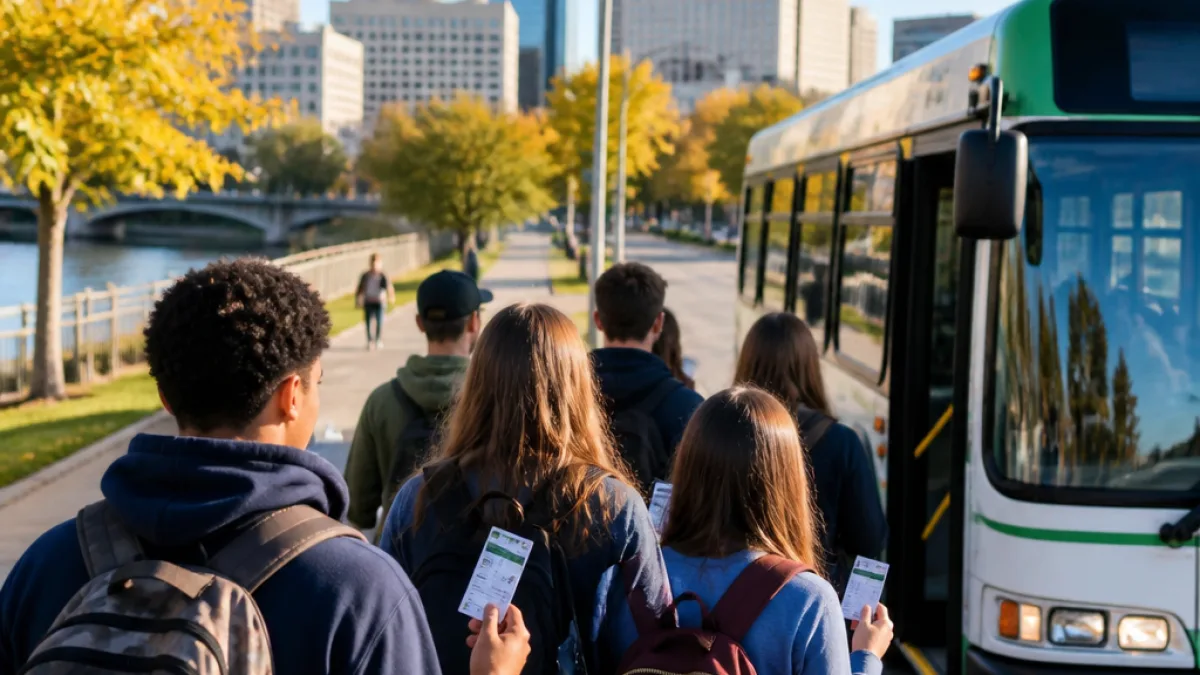
The City of Winnipeg is preparing to roll out a pilot program in September that will provide free public transit to students aged 11 to 21 who are enrolled in Winnipeg-based public, independent or home school programs.
Immediate aim: reduce barriers to school and community life
Municipal leaders say the initiative is intended to remove transportation barriers and improve students’ access to school, recreation, employment and community activities. The program is a partnership between the City of Winnipeg and the Manitoba government, with distribution coordinated through the city’s school divisions.
“The initiative is designed to remove transportation barriers and improve access to school, recreation, employment and community activities.” — City of Winnipeg
School divisions will receive transit passes to distribute to eligible students at the beginning of the school year. Officials said more information about how students and families can access the passes will be released at the end of August, ahead of the pilot’s launch when students return to classes in September.
Who is eligible and how it will be delivered
The pilot covers students aged 11 to 21 enrolled in Winnipeg-based public, independent or home school programs. The city said the passes will be distributed through the education system, placing responsibility on school divisions to manage delivery to students.
- Eligibility: Students aged 11–21 enrolled in Winnipeg-based schools (public, independent, home schooled).
- Distribution: Passes issued to school divisions to hand out at the start of the school year.
- Start date: Pilot begins in September with more details to be published at the end of August.
City officials framed the pilot as a way to improve equitable access to education and community programming by removing a cost barrier for families who rely on transit. For many households, transit fares are a recurring expense that can limit a young person’s ability to participate in after-school activities or maintain part-time employment.
Questions ahead for schools, families and transit operators
While the broad outline has been released, several operational questions remain. School divisions will need to determine the process for identifying eligible students and distributing physical or digital passes. Transit operators will need to adapt to increased ridership among youth, particularly during morning and afternoon peak periods. There are also questions about how the pilot will be evaluated and whether it could be extended or expanded after the initial trial.
| Item | Detail |
|---|---|
| Age range | 11–21 years |
| Who receives passes | School divisions (for distribution) |
| Program start | September (pilot) |
| More info expected | End of August |
CityNews Winnipeg, which first reported the program details, noted the pilot is part of a broader municipal effort to improve transit accessibility. As with other initiatives that alter transit pricing or eligibility, success will hinge on clear communication between the city, school divisions, transit operators and families.
For families who depend on buses for daily travel, the pilot could mean reduced household costs and easier access to extracurriculars and jobs. For the transit system, the program could prompt modest increases in boarding volumes among young passengers during school days, and the city will need to monitor service levels to avoid crowding and maintain reliability.
Officials have committed to releasing further details before the school year begins. In the meantime, parents, guardians and students should watch for information from their school division on how and when passes will be distributed.
This pilot follows a trend among Canadian municipalities exploring fare adjustments and targeted pass programs to make transit more accessible to vulnerable or cost-sensitive groups. How Winnipeg’s pilot is evaluated and whether it becomes a permanent program will likely depend on ridership data, budgetary impacts and feedback from the school community.