A tiny retinal implant combined with specially designed glasses has restored functional sight for parts of the vision field in people with advanced age-related macular degeneration, researchers report.
How the system works
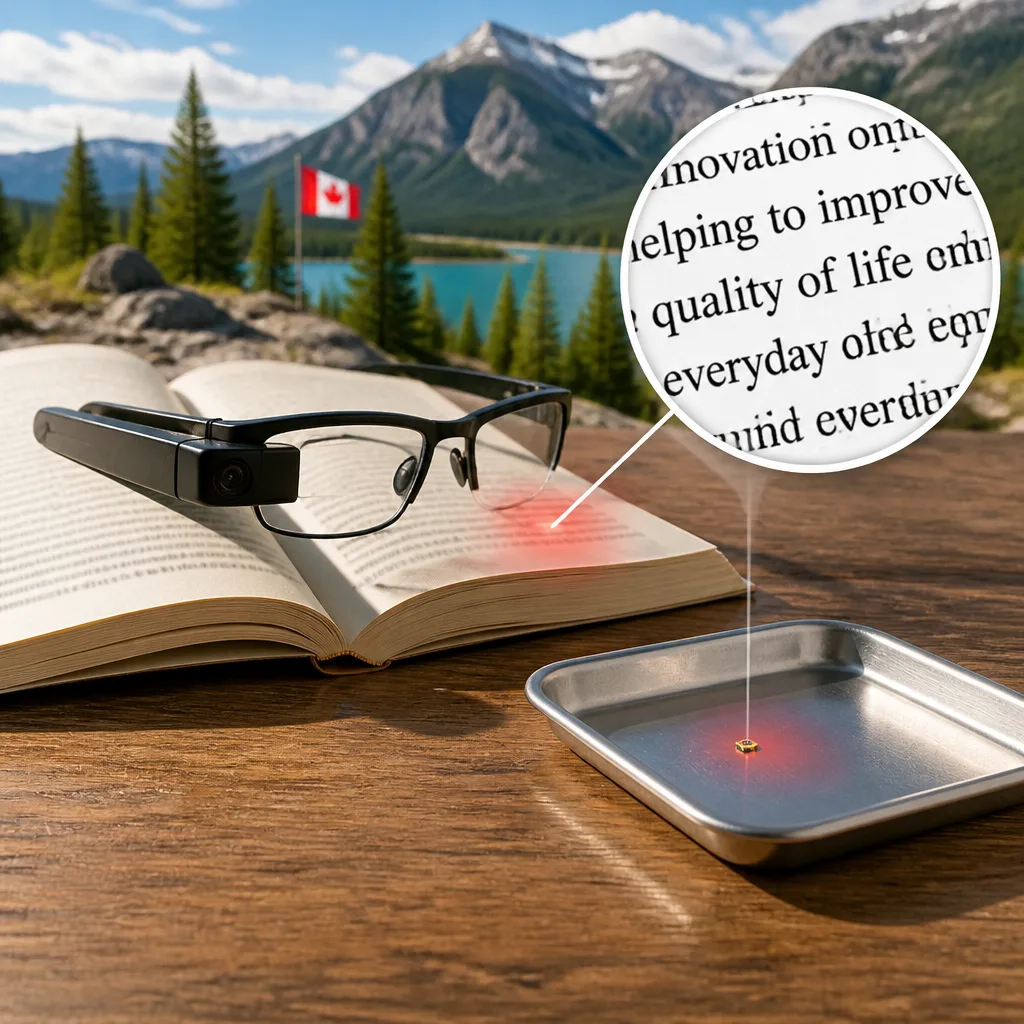
The device, called a Photovoltaic Retina Implant Microarray (PRIMA), is smaller than a sesame seed and is placed at the back of the eye. It receives infrared light projected from a camera mounted on the accompanying glasses and converts those signals into electrical stimulation to replace damaged photoreceptors.
The team from Stanford reported that digital enhancements available through the glasses — such as zoom and increased contrast — helped some participants reach the equivalent of 20/42 vision for reading tasks.
“All previous attempts to provide vision with prosthetic devices resulted in basically light sensitivity, not really form vision,” said Daniel Palanker, professor of ophthalmology and a co-senior author. “We are the first to provide form vision.”
Trial outcomes and what they mean
The first human trial enrolled 38 participants with vision worse than 20/320, each receiving an implant in at least one eye. At the 12-month assessment point, data were available for 32 people, and 27 of those showed a measurable improvement in vision — typically the equivalent of reading two additional lines on a standard eye chart. One participant experienced an improvement of 12 lines.
| Measure | Number |
|---|---|
| Enrolled participants | 38 |
| Assessed at 12 months | 32 |
| Participants with measurable improvement | 27 |
The implant is targeted at people with an advanced form of the condition known as geographic atrophy, which progressively erodes central vision while often leaving peripheral vision intact. The PRIMA design permits users to combine prosthetic central vision with their natural peripheral vision, which helps with orientation and navigation.
Practical takeaways for patients and caregivers
- Who was helped: People with advanced age-related macular degeneration and central vision loss in the trial experienced measurable gains.
- What the device offers: Form vision restored to central field, plus digital features such as zoom and contrast to aid reading and recognition.
- How it’s powered: Infrared light projected from the glasses both transmits images and powers the implant—no external battery is implanted behind the eye.
Daniel Palanker and colleagues emphasised that infrared projection was chosen so the device’s stimulation remains invisible to remaining photoreceptors outside the implant, allowing the brain to merge prosthetic central input with intact peripheral vision.
While the reported results are promising, the study details reflect an early-stage human trial. The improvements ranged from modest (roughly two additional lines on an eye chart for many participants) to substantial in at least one case, underscoring variability in outcomes.
For Canadians and others following advances in vision restoration, the PRIMA system highlights an evolving toolkit of technologies that may shift daily life for people with age-related macular degeneration — potentially improving the ability to read, recognise faces and perform close work previously lost to the disease.
Further research, larger trials and regulatory review will be required before this type of therapy becomes widely available. In the meantime, the results represent a proof of concept that prosthetic central vision can provide meaningful form vision, not merely light perception, for people with severe retinal degeneration.