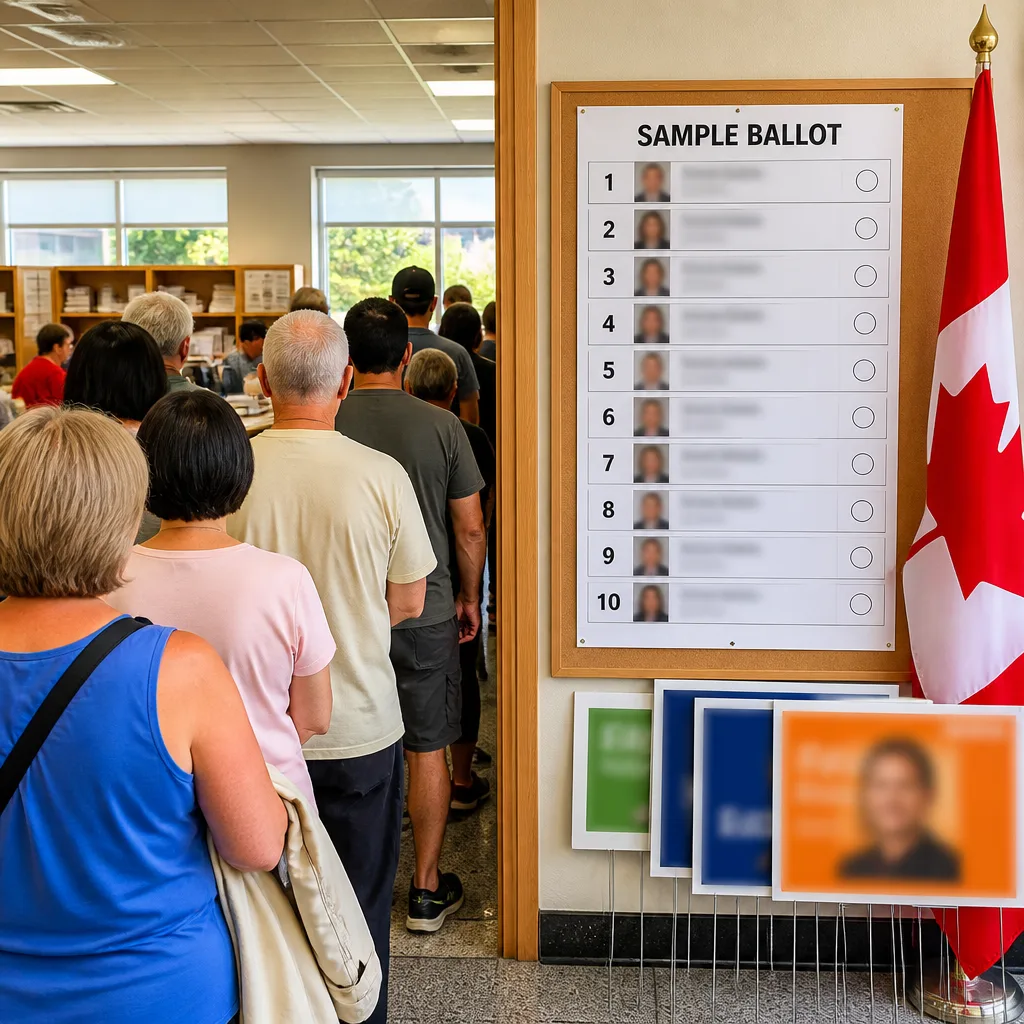
Ten Republican candidates are on the ballot in South Carolina’s special primary to determine who will replace the late Sen. Lindsey Graham as the party’s nominee for the U.S. Senate in November.
Vacancy created by sudden death
Lindsey Graham, who won the Republican renomination on June 9, died unexpectedly on July 11 from an aortic tear, creating two distinct vacancies: the immediate Senate seat and his place on the fall ballot for another six-year term. Governor Henry McMaster appointed Graham’s sister, Darline Graham, to serve out the remainder of his current term and she is now running to appear on the November ballot as the Republican nominee.
Field includes sitting members and former governor
The special primary field includes sitting members of Congress, a former governor and candidates who contested Graham during the June primary. Among those seeking the nomination are:
- U.S. Reps. Russell Fry and Ralph Norman
- Former Gov. Mark Sanford
- Business owner Mark Lynch, who challenged Lindsey Graham in the June 9 primary
- Appointed incumbent Sen. Darline Graham, who holds the endorsement of former U.S. president Donald Trump
"I'm in." Darline Graham says she will run for a full term in Lindsey Graham's Senate seat
Runoff and general election dynamics
If no candidate receives a majority of votes in the special primary, the top two finishers will advance to a special primary runoff scheduled for Aug. 25. The winner of the special primary — or the subsequent runoff — will face Democratic nominee Annie Andrews, a Charleston paediatrician who was the Democratic challenger to Rep. Nancy Mace in 2022.
The contest comes with a backdrop of Republican strength in recent statewide results: Graham last won reelection in 2020 with 54 per cent of the vote, while former president Trump carried South Carolina in 2024 with 58 per cent.
Where votes could be decisive
Greenville County, the state’s most populous county, typically provides the largest bloc of ballots in statewide Republican primaries and has at times shown independent tendencies. In the June 9 primary, a plurality of Greenville County voters supported Mark Lynch over Lindsey Graham in the U.S. Senate race and showed preference for Ralph Norman over the two candidates who later advanced to a gubernatorial runoff.
| Item | Detail |
|---|---|
| Cause of vacancy | Death of Lindsey Graham (aortic tear) on July 11 |
| Special primary date | Tuesday (special primary to replace Graham on November ballot) |
| Runoff if no majority | Aug. 25 |
| Notable endorsement | Donald Trump backing Darline Graham |
The special primary resolves an unusual procedural situation: the late senator had secured the party’s nomination in June, but his death created a vacuum both in Washington and on the ballot. The Republican field’s composition — with congressional incumbents and a former governor among the contenders — signals competing visions within the state GOP for who should represent them this fall.
Victory in the special primary will hand a candidate the chance to compete in a fall race that could be shaped by national-level attention, high-profile endorsements and the legacy of the late senator whose death triggered this scramble. For Democrats, the selection of a Republican nominee sets the stage for a November matchup in a state that has leaned Republican in recent nationwide contests.