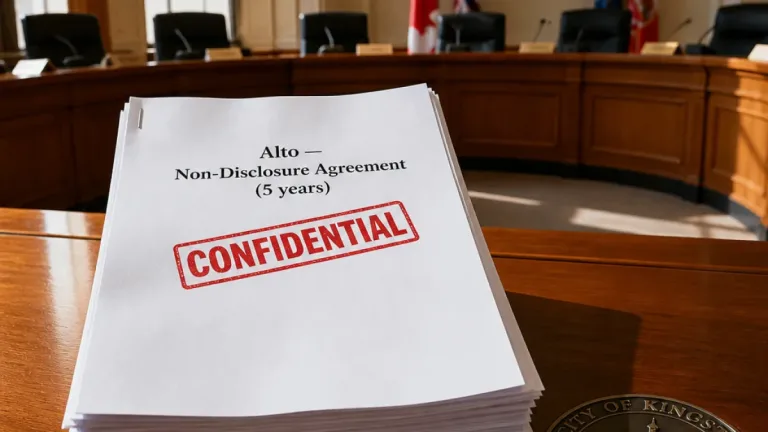
Rural opponents of the proposed high‑speed rail project overseen by Crown corporation Alto have travelled into Kingston to press their case, saying local residents are not getting sufficient information ahead of potentially consequential decisions about route selection and property impacts.
Mounting concern over information and consultation
Alto, the Crown corporation in charge of the project, announced plans in late June for a railway that would link Quebec City and Toronto, with an estimated price tag of between $60 billion and $90 billion. Even with those figures public, activists and some residents say significant details remain scarce — particularly for communities that would lie along potential corridors outside major city centres.
The delegation of what the media has described as the "No Alto" movement is framing its visit to Kingston as an effort to find “allies” among urban residents and community groups concerned about transparency and local impacts. Organizers say their aim is to ensure that voices from rural and small‑town communities are heard before decisions are locked in.
“We are looking for allies”
Why Kingston matters
Kingston sits in a geographic and political space that links Ontario and Quebec and could play a role in shaping public debate about any corridor running between Toronto and Quebec City. Residents here face both urban concerns — such as transit integration and ridership forecasts — and rural questions about land use, property rights and local environmental effects.
Community groups and municipal officials often act as intermediaries between provincial or federal project proponents and residents. That relationship can determine how widely information is shared, what local concerns are elevated, and whether mitigation or compensation measures are negotiated into an eventual plan.
- Scope and cost: Alto’s project is one of the largest infrastructure initiatives proposed in recent Canadian history, with an estimated cost of $60–$90 billion.
- Geography: The proposed link would run between Quebec City and Toronto, potentially affecting communities in both provinces.
- Community concerns: Rural activists warn that early decisions could preclude meaningful local input on route selection, property impacts and environmental protections.
Questions about process and timing
Activists argue that the timing of announcements and the pacing of consultation can favour large‑scale planning decisions over local engagement. When agencies announce preliminary plans or corridors, landowners and municipalities may feel pressure to respond quickly to technical proposals they do not yet fully understand.
For Kingston residents, that dynamic raises several practical questions: How will potential stations or alignments connect with existing transit infrastructure? What protections will be in place for agricultural land, conservation areas and residential properties? And how will benefits such as jobs or faster travel times be distributed between urban and rural communities?
What residents can expect next
At this stage, Alto has published a cost range and identified the two anchor cities for the project. Further technical work, environmental assessment and consultation will be required before detailed route decisions are made. Those processes typically involve multiple public meetings, formal comment periods and regulatory reviews at provincial and federal levels.
Local stakeholders in Kingston — from city council to neighbourhood associations and nearby rural townships — will have opportunities to request information, submit feedback during public phases and press for clarity about timelines and impacts. The presence of rural organisers in Kingston is likely to broaden the conversation and push for more coordinated representation of interests across the region.
As the debate continues, Kingston residents should expect a mix of technical studies and political discussion. The coming months will be critical for shaping how, and how much, local communities influence a project whose cost and scope make it one of the most consequential infrastructure proposals in recent Canadian memory.