
Yellowknife — The federal and territorial governments announced nearly $52 million in funding for air-transport projects across the Northwest Territories on Monday, centred on major upgrades at Inuvik’s Mike Zubko Airport and a new hangar for North‑Wright Airways in Norman Wells.
What was announced
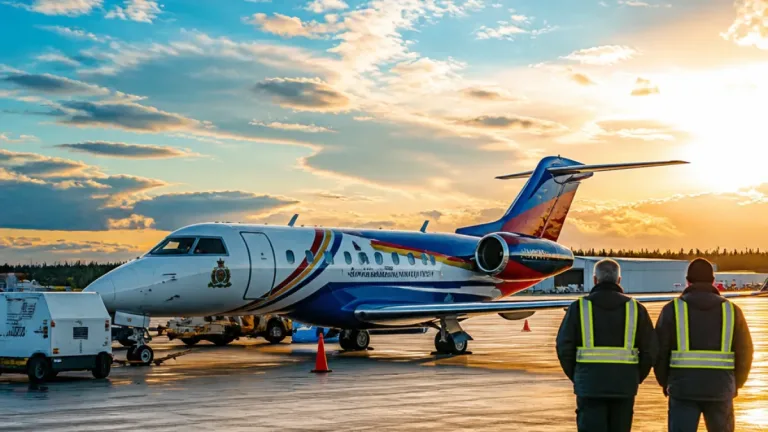
Ottawa will provide up to $49.5 million through the Arctic Infrastructure Fund to upgrade the runway and access road at the Mike Zubko Airport in Inuvik, in partnership with the Government of the Northwest Territories. A second prominent investment will support construction of a new hangar at the North‑Wright Airways hub in Norman Wells.
The announcement took place at a multi-project event in Yellowknife attended by territorial and federal officials and Indigenous representatives, including Inuvik Boot Lake MLA Denny Rodgers, NWT Minister of Municipal and Community Affairs Vince McKay, and representatives from North‑Wright and Det’on Cho Management.
“This is why the Government of Canada is working quickly with partners to ensure critical infrastructure projects move ahead rapidly to benefit communities, lower costs for families, and build up Canada’s economy.”
Why it matters in the North
Airports in the N.W.T. play a central role in daily life, linking remote communities to goods, services, medical evacuations and seasonal supplies. Improvements to the Mike Zubko runway and its access road will affect commercial carriers, medevac capacity and the flow of freight coming into the Beaufort Delta region.
For Norman Wells, a new hangar at the North‑Wright hub will enable the airline to handle larger aircraft and improve cargo and passenger operations, strengthening a regional hub that provides critical flights to smaller Sahtu communities.
- Reduced transportation costs: smoother operations and greater reliability can lower delays and disruptions that add expense to households and businesses.
- Economic opportunities: construction, maintenance and expanded air services can create local jobs and contracts for Indigenous and northern firms.
- Operational readiness: federal officials framed the upgrades as reinforcing Canada’s dual‑use Arctic infrastructure for civilian and defence needs.
Funding context and partnerships
The federal contribution for the Inuvik upgrades is supplementary to other investments in the airport. A prior commitment from the Department of National Defence — totalling $230 million — was cited as part of a broader effort to extend and modernize the runway.
Officials described the work as a partnership between Canada and the Government of the Northwest Territories and flagged opportunities for Indigenous and northern businesses during construction and follow‑up operations. Present at the announcement were leaders and representatives from North‑Wright, Det’on Cho Management, and federal parliamentary staff supporting northern and Arctic affairs.
| Project | Location | Federal support |
|---|---|---|
| Runway and access road upgrade | Inuvik, Mike Zubko Airport | Up to $49.5M (Arctic Infrastructure Fund) |
| New hangar — North‑Wright Airways | Norman Wells | Included in the broader funding announcement; supported as part of multi‑project funding |
Local reactions and next steps
Event photos and officials’ statements emphasised the urgency of addressing living costs and infrastructure needs in northern communities. Organizers and government spokespeople said the projects would move ahead rapidly to deliver benefits in the short term, while also supporting longer-term regional capacity.
Operational timelines, procurement schedules and precise construction details were not released at the event. Project proponents and governments will need to finalize design, contracting and community engagement before work begins; those steps will determine how quickly tangible improvements reach residents and businesses across the region.
The announcement frames the investments as both local economic stimulus and strategic infrastructure upgrades that fit a broader federal agenda for northern resilience and Arctic readiness. For many N.W.T. communities that rely on frequent, reliable flights, the promised upgrades and new facilities represent the prospect of steadier service and lower costs — but delivery will depend on the follow‑through in planning and construction.
Coverage will continue as governments provide project schedules and procurement details, and as communities and northern businesses weigh in on contracting and employment opportunities during the work.