
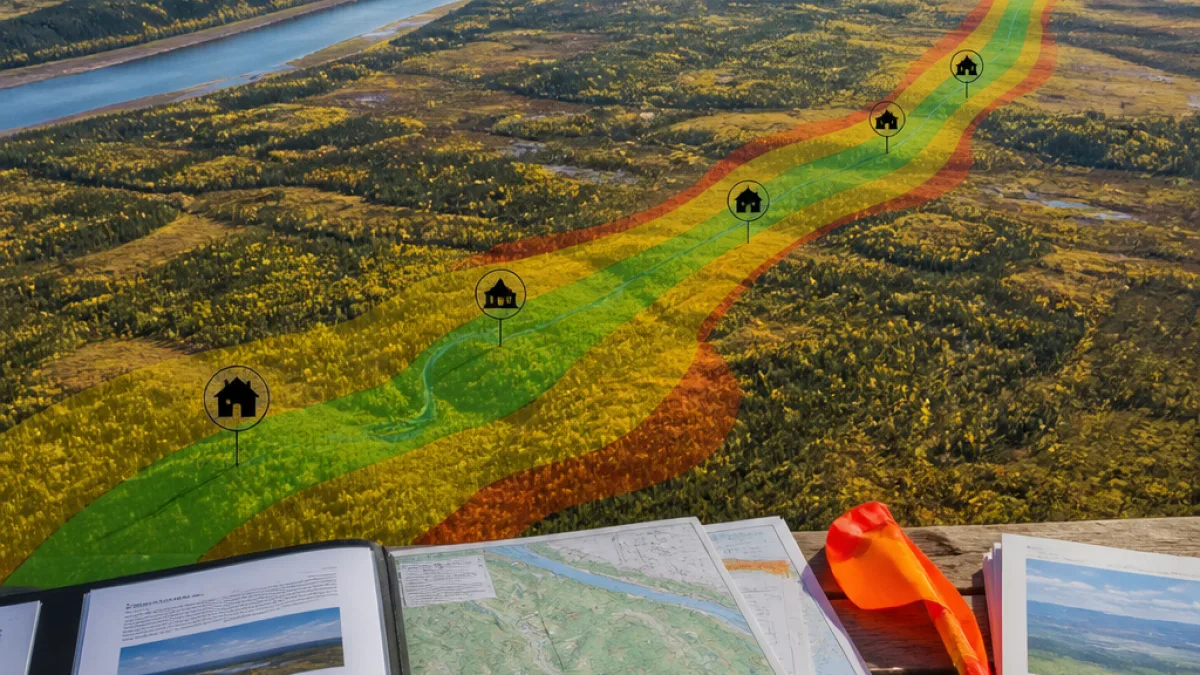
The Government of the Northwest Territories has widened the scope of the environmental assessment for the Mackenzie Valley Highway to include the corridor linking Norman Wells to the Dempster Highway, the territory announced Monday.
The move brings the entire proposed Wrigley-to-Inuvik corridor into a single environmental assessment before the Mackenzie Valley Environmental Impact Review Board. Officials said the change is intended to streamline the review process and allow planning to be more coordinated, while emphasising it does not constitute project approval or reduce the rigour of environmental review.
What the expansion means
Under the revised referral, the review board will now assess potential impacts across the extended corridor, examining the cumulative and regional effects that building the remaining sections of the highway could produce. That broader footprint is likely to alter the scale of studies required, stakeholder engagement and the list of issues the board must consider.
Caroline Wawzonek, minister responsible for strategic infrastructure, energy and supply chains, framed the decision as a response to opportunity. In the government release she said the project has reached a national stage and the territory must be ready.
“We need to be ready to move when opportunities arise,”
She added the change would allow the project to “move forward in a more integrated and timely way.”
How the review board’s process works
The Mackenzie Valley Environmental Impact Review Board carries out a detailed examination to determine whether proposed developments are likely to cause significant environmental harm or generate substantial public concern. Depending on its findings, the board issues recommendations to the territorial government.
| Possible board outcomes | Effect |
|---|---|
| Proceed under existing regulations | Project may continue without additional conditions |
| Proceed with additional mitigation measures | Conditional approval with prescribed measures to reduce impacts |
| Rejection | Project recommended to stop |
Implications for communities and land
Bringing the Norman Wells–Dempster link into the same environmental review means communities and rights-holders along the entire corridor will see a single, coordinated assessment. That has practical consequences:
- Combined studies may better capture cumulative effects on wildlife, waterways and permafrost.
- Indigenous governments and local communities can address corridor-wide concerns in one forum rather than multiple, fragmented processes.
- Project planning could be accelerated if national and territorial approvals align, but construction is not guaranteed.
The territory was explicit that the referral expansion is intended to streamline administrative work and “does not reduce environmental review requirements or approve construction.” The federal Major Projects Office remains a parallel actor for larger project referrals and coordination.
What remains to be decided
The environmental assessment will examine scientific, social and cultural impacts. Key questions will include effects on caribou and other wildlife, integrity of permafrost and hydrology, potential effects on traditional land use, and how to mitigate environmental and social impacts if the project proceeds.
Because the review now covers a longer corridor, timelines for studies and public consultations may lengthen. Interested parties should watch for notices from the review board setting out scoping documents, public hearing schedules and opportunities for written submissions.
Why this matters across the North
The Mackenzie Valley Highway has been a decades-long aspiration for many communities in the western Northwest Territories. Proponents argue a continuous all-season road could lower travel costs, improve supply chains and connect communities more reliably. Critics warn of ecological disruption, effects on caribou and traditional land use, and the social changes that increased access can bring.
By expanding the environmental assessment to include the Norman Wells–Dempster corridor, territorial officials are signalling an effort to align land-use planning with potential funding and federal interest. Yet the board’s independent process will determine whether and under what conditions the highway could proceed.
Residents, Indigenous governments and stakeholders along the corridor will now have an opportunity to review and respond to a single, consolidated assessment rather than multiple fragmented studies. That consolidated review could sharpen the focus on cumulative impacts — a central concern in northern environmental decision-making.
Further details, including the review timeline and opportunities for public participation, are expected to be posted by the Mackenzie Valley Environmental Impact Review Board in coming weeks.