
Yellowknife — A decision by the Government of the Northwest Territories to sign an agreement with a Yellowknife-based arts group for a new non-commercial territorial art gallery has prompted questions from the Beaufort Delta about whether communities outside the capital were given a fair chance to host the institution.
Concerns from Inuvik about process and place
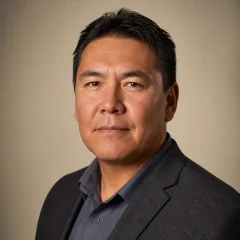
Tony Devlin, who served on the board of the Great Northern Arts Festival, said he was taken aback when he learned the GNWT had reached a memorandum of understanding with the NWT Art Centre Initiative to develop the gallery at the former Akaitcho Hall site in Yellowknife. Devlin said Inuvik’s long-running cultural work and festival presence give the community a special claim to territorial arts programming.
“Inuvik does hold a special place as far as promotion of art and celebration of art in the NWT. It’s kind of one of our claims to fame,”
Devlin said his concern is not about opposing Yellowknife’s bid but about the lack of what he described as a territory-wide conversation. He questioned why no comparative process appears to have been undertaken to identify other potential locations, and whether the Great Northern Arts Festival and artists from outside Yellowknife were given opportunities to participate in the project.
What the GNWT and the Initiative say
Adrian Bell, executive director of the NWT Art Centre Initiative, confirmed by email that the group did not explore locations beyond Yellowknife. Bell said the project was presented to funders from the outset as a territorial gallery based in Yellowknife.
Agata Gutkowska, a spokesperson for the Department of Education, Culture and Employment, told Cabin Radio that the GNWT likewise did not carry out a formal process to compare potential locations in other Northwest Territories communities before signing the memorandum.
Government officials say the agreement followed an approach by the initiative proposing the Akaitcho Hall site, and that the signed memorandum reflects that proposal.
Questions about territorial reach and access
Devlin’s remarks underscore wider issues about how cultural infrastructure in the North is sited and how artists from smaller communities can access territorial institutions. He asked how creators outside Yellowknife will be able to "play in this ballpark as well," and whether the initiative’s board, which he noted is composed of Yellowknife members, has reached out to festival organizers and other communities.
Those concerns echo a common tension in the NWT between centralised services in Yellowknife and the need for equitable geographic representation and access across the territory’s dispersed communities.
What is known about the arrangement
| Party | Position on location | Consultation undertaken |
|---|---|---|
| NWT Art Centre Initiative | Presented project as a Yellowknife-based territorial gallery | Did not consider locations outside Yellowknife |
| Government of the NWT — Department of Education, Culture and Employment | Signed memorandum of understanding after being approached for Akaitcho Hall site | No comparative process to identify other communities |
Potential local impacts and next steps
The development of a territorial art gallery could have lasting consequences for artists, curators and cultural organisations across the Northwest Territories. Key considerations for communities include:
- Whether regional artists will have equal opportunities to exhibit and participate in programming.
- How the gallery will distribute resources, outreach and travel support to outlying communities.
- What governance or advisory mechanisms will include representation from communities beyond Yellowknife.
Devlin said he is not opposing Yellowknife hosting a gallery; rather, he seeks clarity on how other communities will be included. The initiative and the GNWT will likely face requests for more detailed plans showing how the proposed gallery will serve the whole territory and what steps, if any, will be taken to ensure access for northern and remote artists.
Requests for further comment were made to the NWT Art Centre Initiative and the Department of Education, Culture and Employment as part of ongoing coverage. Observers in other communities may watch for whether the memorandum of understanding evolves into more extensive consultation or formalised mechanisms to bring artists from across the NWT into the project.
Why this matters: Decisions about where cultural institutions are located shape who can participate in them. For the Northwest Territories, with its dispersed population and strong local cultural centres, the siting of a territorial gallery raises questions about representation, access and how the GNWT balances support for the capital with the needs of other communities.