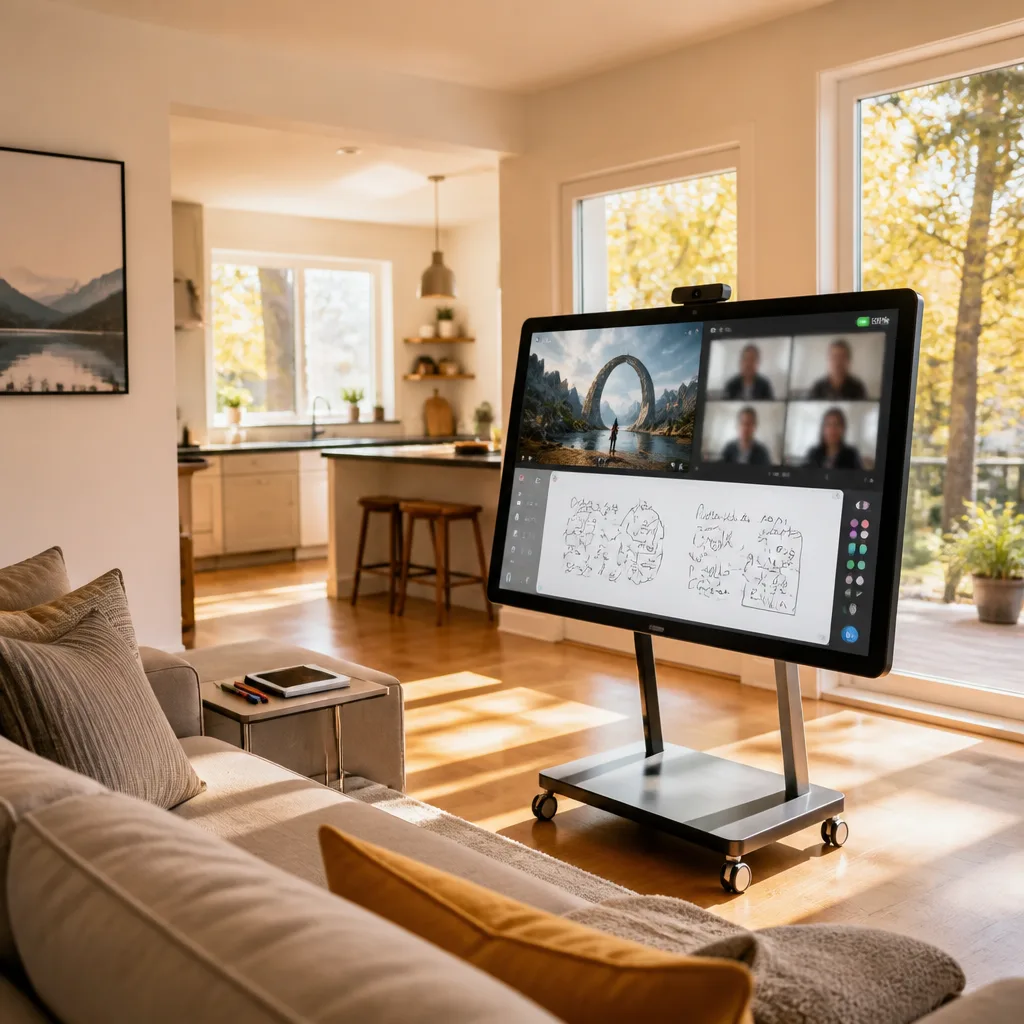
Hisense has introduced a battery-powered large-format screen that aims to bring a full-size viewing and creative experience to different rooms without a permanent installation. The RoamView combines a movable display with onboard memory and storage, positioning itself between wall-mounted televisions and smaller portable devices.
Design for flexibility
The RoamView is crafted to be repositioned around the home: users can rotate, tilt and raise the screen to suit different activities, from watching films to participating in video calls. Its built-in battery removes the need for continuous mains connection, allowing the display to travel from kitchen to living room to bedroom, or to be used outdoors where power is available.
Multifunctional features for everyday life
Beyond standard streaming, the device supports a range of interactive uses that expand how a large screen can function in a household. The company highlights the display’s ability to serve as a digital whiteboard and sketching surface, to show rotating art, and to host karaoke sessions. With 4K streaming capability and apps for typical entertainment needs, the screen is intended to work as both a primary viewing surface and a shared productivity or leisure tool.
Technical specifications included in the announcement note 8 GB of memory and 128 GB of storage, which the company says will enable multitasking and local content storage without constant reliance on cloud services.
Where this fits in the home-tech landscape
RoamView joins Hisense’s Lifestyle series alongside products named CanvasTV and DécoTV, reflecting a broader industry push toward display portfolios designed as lifestyle objects rather than single-purpose appliances. The emphasis is on aesthetics and adaptability, with brands seeking to offer hardware and software combinations that can be used as décor, a family hub or a productivity screen.
- Shared viewing: A large portable screen allows households to move premium viewing experiences to where people are gathered.
- Multifunction use: Interactive tools such as whiteboarding expand the display’s role beyond passive viewing.
- Installation-free flexibility: Battery operation eliminates the need for permanent installation and opens new placement options.
Practical considerations for consumers
For Canadians weighing whether a mobile large-format screen makes sense at home, a few practical points emerge from the product’s positioning. Portability addresses renters and homeowners who prefer not to mount or hardwire a television. The interactive features could appeal to families managing remote schooling or to people working from home who need larger collaborative surfaces for video meetings and brainstorming.
At the same time, decision-making will hinge on factors not detailed in the announcement: battery life under typical use, screen size options, price, and how well the device integrates with existing streaming services and smart-home ecosystems. Those specifics will determine whether this category becomes mainstream or remains a niche option for early adopters.
What this could mean for the market
Brands expanding lifestyle-focused display lineups create space for differentiated services and content experiences beyond the conventional TV. Devices like RoamView could prompt competitors to offer more flexible hardware and bundled software features aimed at households that value adaptability and multipurpose technology.
| Feature | Detail |
|---|---|
| Resolution | 4K streaming supported |
| Memory | 8 GB |
| Storage | 128 GB |
| Primary uses | Streaming, whiteboarding, sketching, art display, karaoke, video calls |
The RoamView exemplifies a broader trend toward flexible, multipurpose displays that blur the boundaries among televisions, tablets and smart-home hubs. For consumers prioritizing mobility and a mix of entertainment and productivity features, these new options are worth watching as they arrive in the market.