Leaked internal correspondence from Suncor Energy Inc. outlines a plan to increase the number of workers based in Fort McMurray/Wood Buffalo for routine and recurring roles by the end of 2026. The change, which would also curtail camp accommodation for some contractor personnel, threatens to reshape how turnaround and maintenance crews are deployed to northern Alberta oil sands sites.
What the documents say
The documents specify a phased timetable. Effective June 30, 2026, contractors’ employees at Syncrude and base plant sites performing routine work scopes are expected to be locally located and non-trade labour from the Fort McMurray/Wood Buffalo region. By Sept. 30, 2026, the policy would extend to include all sustained or recurring routine work scopes, explicitly naming operations, maintenance and technical roles.
"will be expected to be locally located and non-trade labour from the local region."
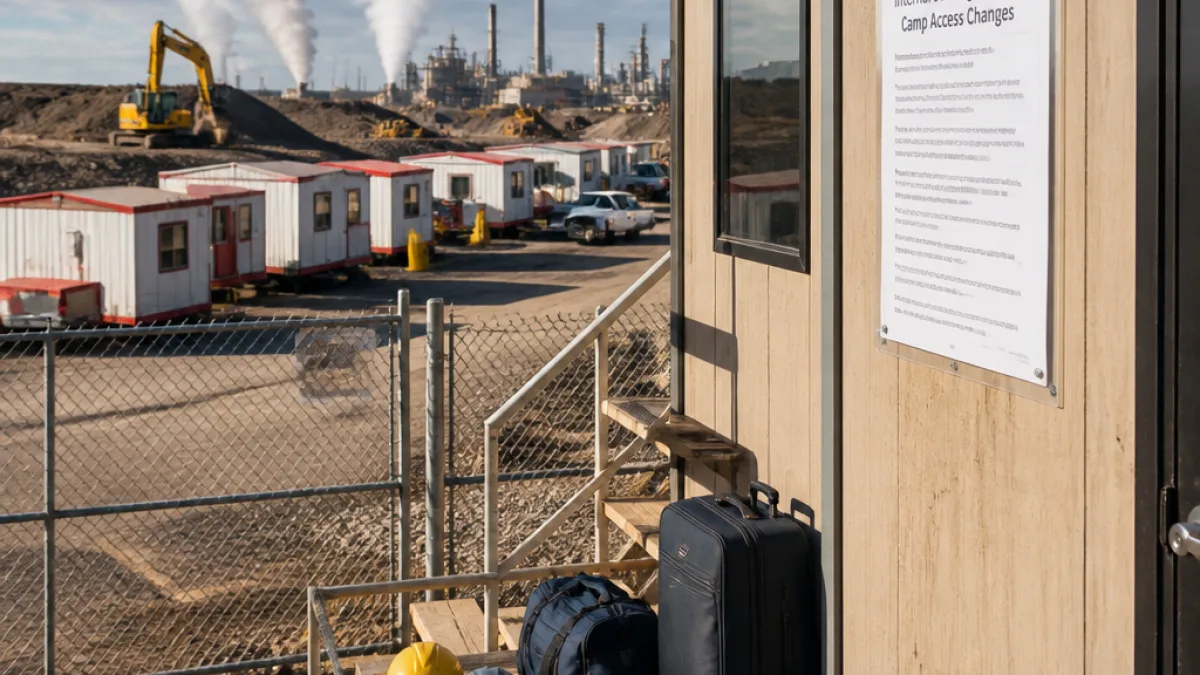
The leaked memo also indicates that camp accommodations would no longer be provided for certain categories of contractor staff, including overhead, indirect or non‑trade personnel. Examples cited in the correspondence include safety, administrative and leadership roles, as well as labour and janitorial positions.
Local and regional consequences
For Fort McMurray residents and the regional economy, the move is designed to boost local employment and the share of work going to Wood Buffalo residents. That could mean more regular jobs and less rotational fly‑in/fly‑out employment for some roles. For service industries that support rotating workers — hotels, short‑term housing, restaurants and transportation providers — a reduction in camp and rotational staffing could reduce demand.
Across Canada, however, the change raises concerns for provinces that supply large numbers of the traditional turnaround workforce. The leaked files note that many turnaround workers maintain homes and families in other provinces and travel to Alberta for shifts. One example referenced in the reporting framed the potential impact on workers from Newfoundland and Labrador, where a study of interjurisdictional workers estimated turnaround earnings exceeded $900 million in 2021.
- June 30, 2026: Local location requirement begins for routine work scopes and camp accommodations restricted for some categories.
- Sept. 30, 2026: Policy expands to cover all sustained or recurring routine work scopes, including operations, maintenance and technical roles.
- Impacted roles: safety, administrative and leadership, labour and janitorial (examples given in the documents).
| Effective date | Scope |
|---|---|
| June 30, 2026 | Routine work scopes; limit camp housing for overhead/indirect/non‑trade personnel |
| Sept. 30, 2026 | All sustained/recurring routine work scopes including operations and maintenance |
The company’s stated aim in the leaked correspondence is to draw more employees from the Fort McMurray/Wood Buffalo region by the end of 2026. From a corporate perspective, locating staff closer to operations can reduce logistical costs and simplify scheduling. From a regional policy standpoint, it supports local hiring and retention in an economy that has long relied on rotational labour.
Questions for contractors and communities
The leaked documents do not outline how contractors will implement the change, what supports will be offered to affected workers, or whether there will be exemptions for specialised trades and short‑term projects. Key questions for local contractors and neighbouring provinces include:
- How will contractors transition current rotational workers who live outside Fort McMurray?
- Will there be incentives or hiring programs to train and employ local residents to fill impacted roles?
- What compensation or relocation support, if any, will be available for workers asked to move?
For Fort McMurray, the proposed shift is a reminder of how corporate workforce policies ripple through local labour markets and regional economies. If implemented as indicated in the leaked files, the changes will strengthen demand for locally based workers while placing pressure on the long‑established model of cross‑country turnaround crews. Officials in affected jurisdictions, contractors and industry groups will be watching closely as the June and September 2026 deadlines approach.