Clown car returns to hallways after five-year gap
The Grande Prairie Regional Hospital has brought back its therapeutic clown car after a five-year hiatus, a small but highly visible boost to paediatric supports inside the facility.
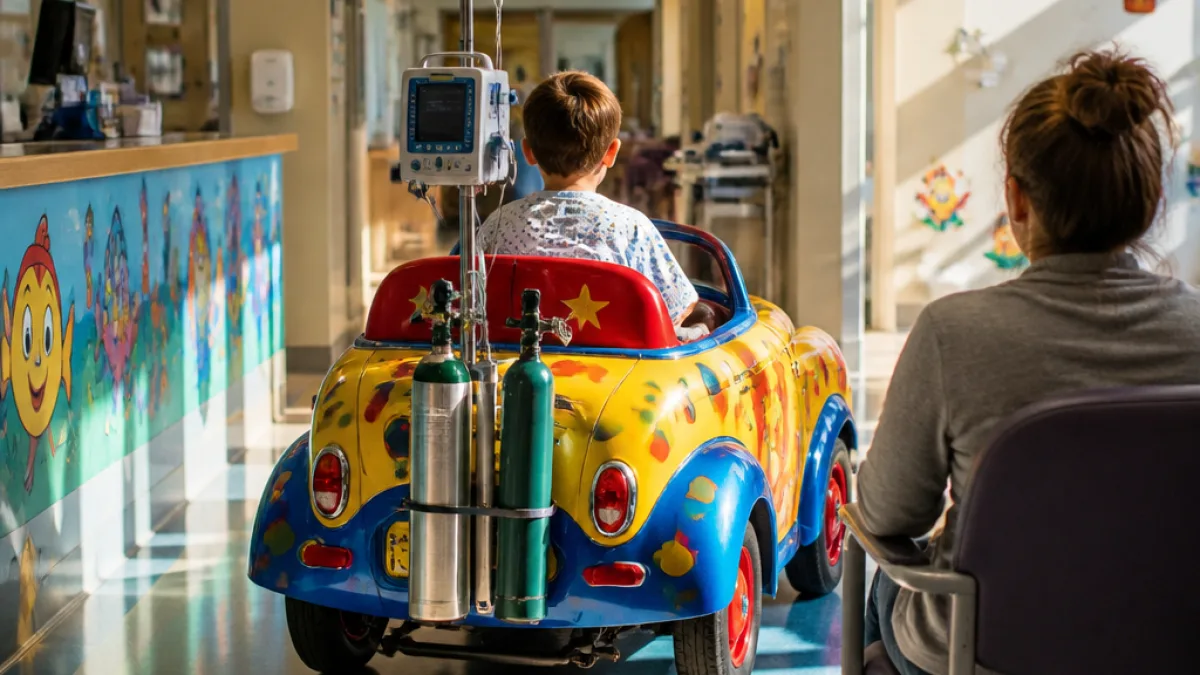
The custom vehicle travels up and down hospital corridors, allowing children who are undergoing treatments, procedures or awaiting surgery to take a ride while remaining connected to necessary medical equipment. According to hospital staff, the car is equipped with an IV pole and two oxygen tanks, so young patients can be moved while still receiving care.
The car is part of the Grande Prairie Therapeutic Clown Program, where a trained professional—known at the hospital as Butterfly—works in health-care settings to bring companionship and joy to patients and their families.
“It has absolutely touched my heart to see how much people have come together to get this up and running. The car was a significant part of the old hospital, where we frequently took kids for rides.”
Butterfly expressed excitement about rediscovering the familiar ritual of driving children through the hospital after the long break. The new vehicle was made possible through donors and community support, hospital officials said.
Filling a gap in paediatric supports
Hospital leadership framed the return of the clown car as particularly important given the facility currently does not have a child life specialist. Without that role, many developmental and recreational activities for young patients are managed through the therapeutic clown program.
“It’s fantastic to see the clown car back in action; it’s such a wonderful feature of our hospital,” said Candice Edey, senior operating officer at the Grande Prairie Regional Hospital. “It’s really unique—you don’t find this often, even in some of the larger facilities.”
Hospital-funded or donor-funded non-clinical supports such as therapeutic clowns often play a compensatory role when staffing or specialist positions are not in place. In Grande Prairie’s case, the clown car is a visible symbol of that community-backed support.
- Purpose: Reduce fear and stress for children undergoing medical care.
- Design: Custom vehicle equipped to carry medical devices including an IV pole and oxygen tanks.
- Operation: Staffed by the Grande Prairie Therapeutic Clown Program; made possible by donors and community contributions.
Community donations and hospital morale
The return of the car underlines the role of local donations in maintaining hospital amenities that improve patient experience. Hospital officials credited donors and community support for making the project possible.
Beyond the practical benefits of moving patients safely while attached to treatment equipment, the car has intangible effects on morale. Staff say the rides can break the monotony of hospital stays and create moments of normalcy for children and families navigating medical care.
| Feature | Why it matters |
|---|---|
| IV pole | Allows patients to stay connected to fluids and medications during rides |
| Two oxygen tanks | Enables transport of patients requiring oxygen without interruption |
| Therapeutic clown operator (Butterfly) | Provides entertainment, companionship and emotional support |
What this means for families in Grande Prairie
For families using the Grande Prairie Regional Hospital, the revived clown car is a concrete sign that community-led initiatives can fill gaps in patient care experience. While it does not replace clinical roles such as a child life specialist, it provides a practical and emotional resource for children who face frightening or uncomfortable procedures.
The program also highlights how hospital features valued by patients and families are often sustained through local generosity. As the health system continues to adapt to staffing and service pressures, community support remains a key part of maintaining a patient-centred environment at the Grande Prairie Regional Hospital.
This small, mobile piece of hospital life now back in operation is both a comfort to young patients and a reminder of the community networks that keep Grande Prairie’s health-care supports running.