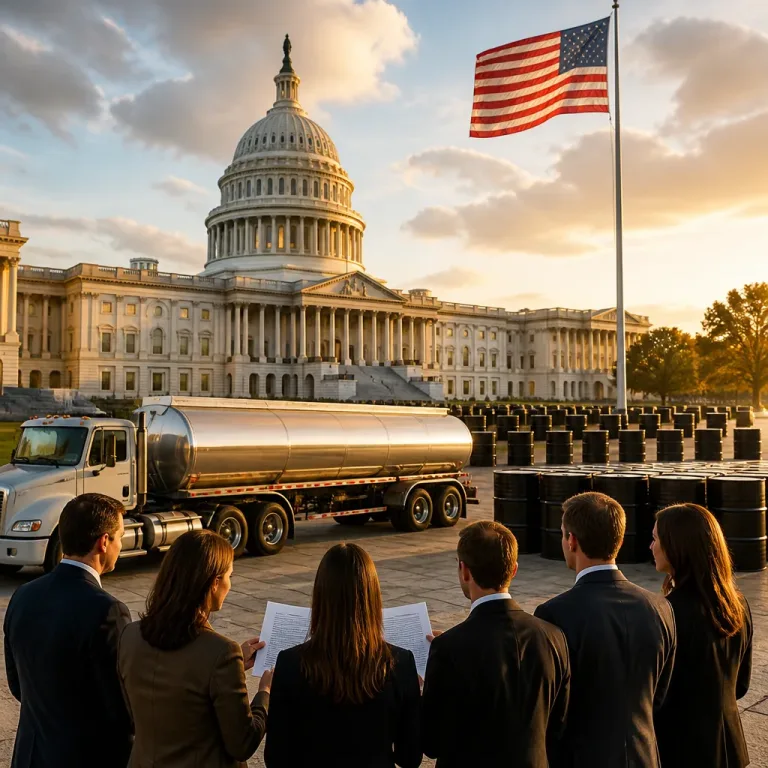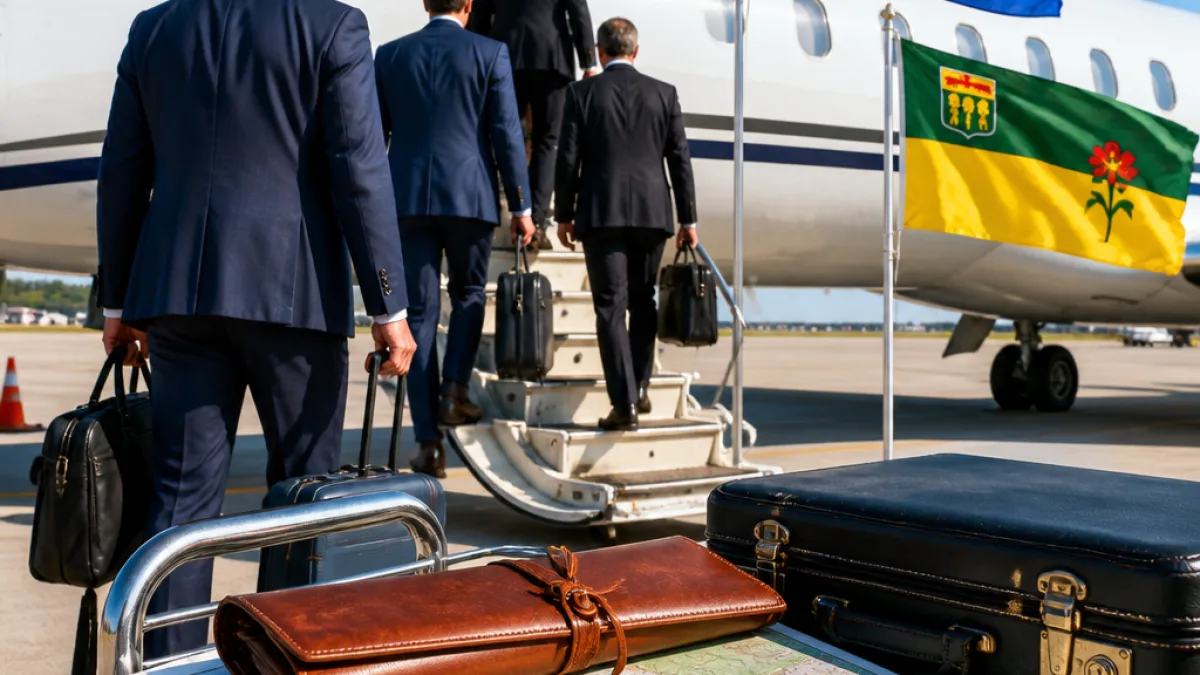
EDMONTON — Senior officials from Alberta and Saskatchewan are travelling to the United States next week to press provincial interests at the annual Midwestern Legislative Conference in Saint Paul, Minn., a trip that combines trade advocacy with efforts to maintain cross-border relationships amid recent Canada–U.S. tensions.
Diplomacy on the agenda
Alberta Premier Danielle Smith has a previously planned personal trip to the U.S., but her office says she will take time to meet with American officials while there. Smith’s press secretary, Sam Blackett, confirmed the premier will hold meetings alongside Alberta’s senior U.S. representative, Nathan Cooper, including with representatives from Tennessee’s tourism and business community.
“The United States had 'no excuse for their behaviour'... I didn't think Canada could win through 'brute force,'”
The quote above reflects Smith’s recent public comments after bilateral trade talks faltered last week; her office says the meetings in the U.S. will also be used to argue that tariffs and other trade barriers are damaging and should be reversed.
Who’s going and why it matters
Alberta is sending a delegation led in part by MLA Jennifer Johnson, who serves as the province’s representative to the Council of State Governments (CSG) Midwest. Johnson is expected to use the conference platform to advance Alberta’s shared priorities on energy, trade and agriculture. Saskatchewan will be represented by a group of six members of Premier Scott Moe’s caucus; Agriculture Minister David Marit confirmed his attendance.
The Alberta government said lawmakers from 11 U.S. states will attend the conference, which runs from Sunday to Wednesday. Saskatchewan is a full member of the CSG Midwest; Alberta, Manitoba and Ontario hold affiliate-member status. The difference in membership underscores Saskatchewan’s longer-standing institutional ties within the organisation and reflects differing provincial strategies for U.S. engagement.
Regional outreach as trade talks stall
The trip comes after recent Canada–U.S. trade discussions broke down last week. Alberta officials framed this mission as an effort to sustain and deepen province-to-province connections while federal talks seek a way forward. The delegation will combine attendance at the Saint Paul conference with separate meetings in cities such as Nashville, where Smith’s team will meet tourism and business leaders — including the commissioner of the Tennessee Department of Tourist Development, the head of the Nashville Chamber of Commerce and the CEO of the Nashville Convention & Visitors Corp., Blackett said.
For Alberta, maintaining dialogue with state legislators and business groups is about protecting market access for products and services that contribute to the province’s economy — notably energy and agriculture — and ensuring Alberta’s message on tariffs is heard at multiple levels of government and industry.
Practical implications for Alberta industries
- Energy: Provincial officials will reiterate that trade barriers harm long-term investment and market certainty.
- Agriculture: Saskatchewan and Alberta officials plan to press for predictable cross-border trade rules important to prairie farmers and processors.
- Tourism and business links: Meetings with Tennessee business leaders aim to sustain non-resource economic ties and conventions.
Alberta’s involvement in the CSG Midwest and presence at the Midwestern Legislative Conference give provincial politicians a forum to advance sector-specific concerns directly to U.S. state legislators and business contacts, bypassing — but not replacing — federal diplomatic channels.
| Delegation | Role | CSG Midwest status |
|---|---|---|
| Alberta | MLA Jennifer Johnson; meetings led by Premier’s office | Affiliate member |
| Saskatchewan | Six MLAs including Agriculture Minister David Marit | Full member |
What to watch
Watch for statements from provincial delegates after the conference detailing any new commitments from U.S. state legislators or business groups. Given the recent failed federal talks, provinces are using subnational diplomacy to limit economic fallout. Whether these meetings will translate into concrete changes on tariffs or market access remains to be seen, but the trip signals continued provincial engagement with U.S. counterparts in pursuit of Alberta’s economic priorities.
This delegation-level diplomacy emphasises a pragmatic approach: keep channels open, press sectoral concerns, and try to safeguard Alberta’s ties while Ottawa remains the lead on formal trade negotiations.