Service change aims to reduce late buses and missed connections
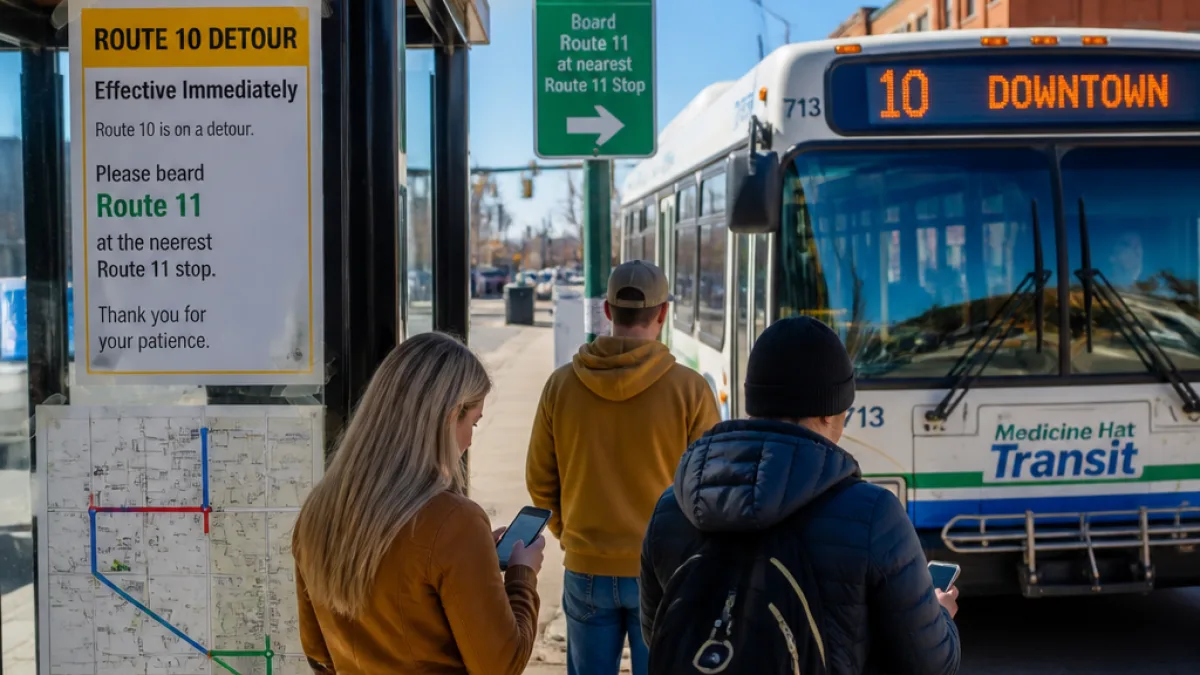
Medicine Hat Transit has implemented changes to Route 10 that took effect on Aug. 27, a move the city says is intended to improve overall schedule reliability across the system. The adjustments follow persistent complaints that Route 10 frequently ran behind schedule, particularly during periods of higher ridership.
Under the new routing, Route 10 will no longer run west along 12 Street Northeast. Instead, three stops on the north side of that segment will now be served by existing Route 11 stops on the south side of 12 Street. Two southbound stops on Division Avenue have also been removed; riders are being directed to use existing Route 10 stops on the east side of the street.
City transit staff say the changes are designed to reduce bottlenecks that caused delays and to maintain connections between routes. Officials warned that, before the changes, delays could ripple through the network.
"Delays can result in missed connections and affect other routes."
The Route 10 alterations reflect an operational approach common to smaller urban systems: realigning stops to simplify loops and shorten dwell times where congestion or overlapping service causes schedule slippage. For regular riders, the immediate impact will be where they board and disembark; for the system, the goal is fewer late buses and a more predictable timetable.
What riders need to know
- Changes took effect Aug. 27.
- Route 10 no longer travels west along 12 Street Northeast; affected north-side stops now use Route 11 south-side stops.
- Two southbound stops on Division Avenue were removed; riders should use existing east-side Route 10 stops, where signage will point to alternatives.
Signage will be placed to direct passengers to the nearest alternative stops. Transit officials say the adjustments should reduce overlap between routes and cut the likelihood of buses falling behind during peak demand.
Local context and likely consequences
Medicine Hat relies on a compact fixed-route network to move residents to work, school and amenities. Even small changes can have outsized effects during morning and afternoon peaks. Riders who previously boarded on the north side of 12 Street Northeast will need to cross to the south side or use a different stop, a minor inconvenience for some and a barrier for others with mobility or time constraints.
Short-term consequences are likely to include an adjustment period as passengers learn new stop locations and timing; longer term, the city expects improved reliability. The transit changes also demonstrate the council and operations staff wrestling with common pressures: keeping service frequent and timely while managing limited fleet size and traffic conditions.
For commuters, the practical considerations are straightforward: check the posted signs at affected stops, allow a few extra minutes during the transition, and monitor published schedules. The city has said that signage will point passengers toward the nearest available stops and that existing Route 11 and Route 10 stops are being used where possible to reduce confusion.
| Item | Before Aug. 27 | After Aug. 27 |
|---|---|---|
| 12 Street Northeast north-side stops | Served by Route 10 | Served by Route 11 south-side stops |
| Division Avenue southbound stops | Two stops in use | Removed; riders to use east-side Route 10 stops |
Transit riders who rely on precise connections — for work shifts, school schedules or appointments — should pay close attention to posted changes. While the city has framed the updates as reliability-focused, some customers will face modest travel-pattern adjustments.
Officials encourage riders with concerns about accessibility or travel impacts to contact Medicine Hat Transit directly. The system’s handling of this change will be watched closely; if on-time performance improves, similar minor reroutes could be considered for other corridors with chronic delays.
The adjustments underline a practical truth for prairie cities: small operational shifts can deliver measurable service gains if backed by clear communication and careful monitoring.