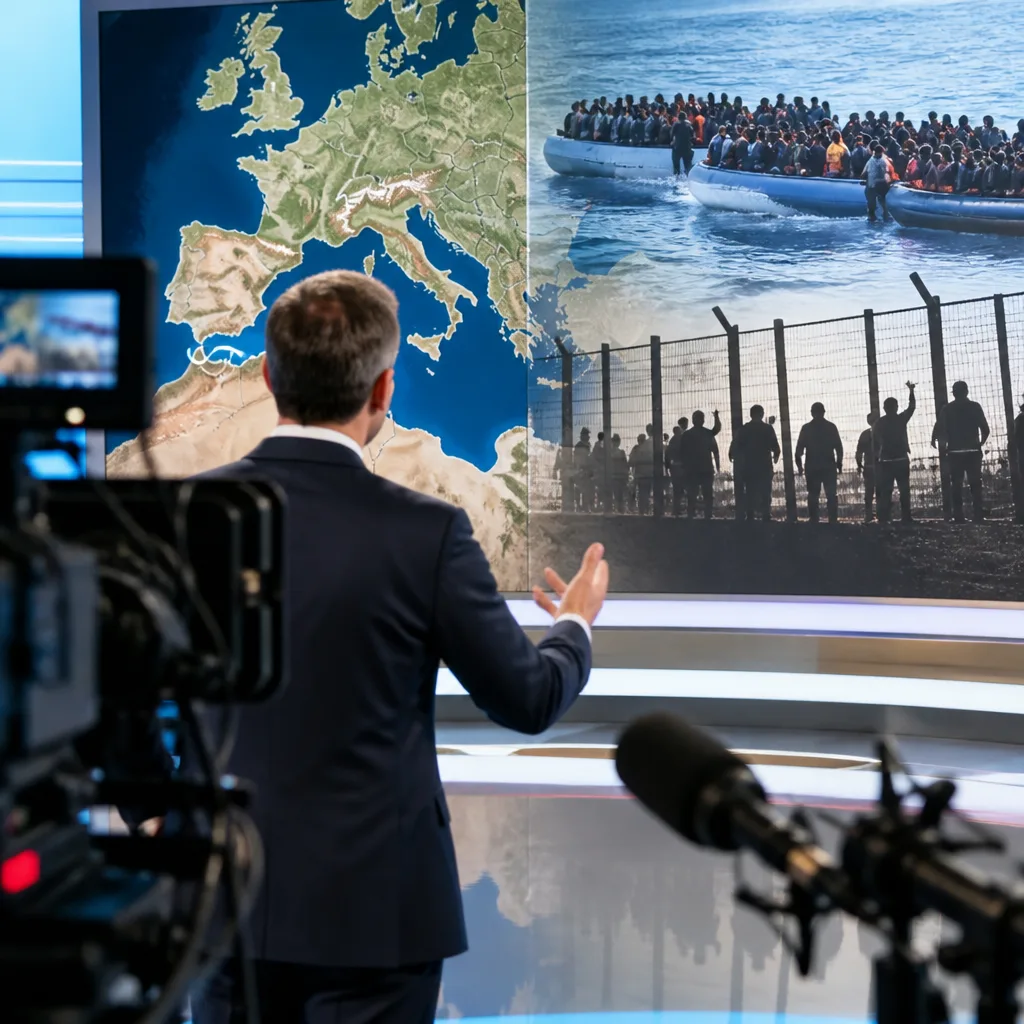
An analyst appearing on Poland’s TVP World said recent migration episodes in Europe are being used as instruments of political warfare by Russia and its allies, amplifying social division and strengthening hard‑right movements across the continent and in the United Kingdom.
Ceuta influx and the political fallout
The television segment began with the case of Ceuta, the Spanish enclave on the north African coast, where officials say an influx of 72,000 migrants from Morocco occurred last month. According to the account given on TVP World, all those migrants were returned to Morocco, but almost 100 people died during the event.
Broadcasters and analysts highlighted how the immediate humanitarian crisis provided fertile ground for hard‑right activists to stoke hostility toward migrants, refugees and asylum seekers. The programme linked those efforts to a wider push to promote “white nationalist” parties and anti‑immigration platforms across Europe and in the UK.
From disinformation to tunnels at the border
The TVP World discussion placed the Ceuta episode in a broader pattern of what was described as Russian political warfare. The analyst detailed a range of techniques that Moscow and its allies have reportedly employed since 2014, including:
- racial and social disinformation campaigns aimed at inflaming existing tensions;
- election interference and covert operations to undermine democratic institutions;
- support for and amplification of hard‑right political forces across Europe and the United States.
The broadcast also cited immediate security concerns on the eastern flank of the EU, noting reports of tunnels from Belarus into Lithuania and Latvia as part of operations designed to destabilize neighbouring states.
“The issue of immigration across Europe is being exploited for political and social division and turmoil,” the analyst told TVP World.
Allies and adversaries
In outlining the geopolitical landscape, the analyst named an unexpected ally in the effort to weaken European cohesion: the Trump administration. The comment framed recent American political dynamics as complementary to Russian objectives when it comes to undermining consensus in Europe.
The broadcast tied the migration narrative and the orchestration of disinformation back to concrete political outcomes, suggesting that crises like Ceuta can be repurposed to build electoral support for hard‑right parties by weaponizing fear and uncertainty.
What this means for democracies
The TVP World appearance underscored two linked risks for democratic states. First, large, visible migration events can quickly become a focal point for domestic political contestation, giving political entrepreneurs opportunities to mobilize support through anger and fear. Second, foreign actors can accelerate and amplify that domestic polarisation by injecting targeted disinformation and supporting sympathetic political groups.
Policy responses implied by the discussion include bolstering information resilience, improving cross‑border intelligence cooperation and addressing the humanitarian dimensions of migration to reduce the space available for exploitation. The broadcast did not offer new empirical claims beyond the cited events — Ceuta’s mass movement of people, the deaths associated with it, the reported tunnels from Belarus, and the long‑running catalogue of Russian influence operations since 2014 — but it framed those facts as components of a coordinated political strategy.
| Incident | Detail |
|---|---|
| Ceuta influx | 72,000 migrants; almost 100 deaths; returns to Morocco |
| Border operations | Tunnels reported from Belarus into Lithuania and Latvia |
| Longer‑term activity | Racial/social disinformation and election interference since 2014 |
For Canada and other Western democracies, the TVP World assessment is a reminder that migration and border incidents are not only humanitarian and security challenges but also potential levers in broader campaigns of foreign political influence. Recognizing the intersection of domestic politics and international interference will be important in shaping responses that protect vulnerable people while defending democratic norms.