
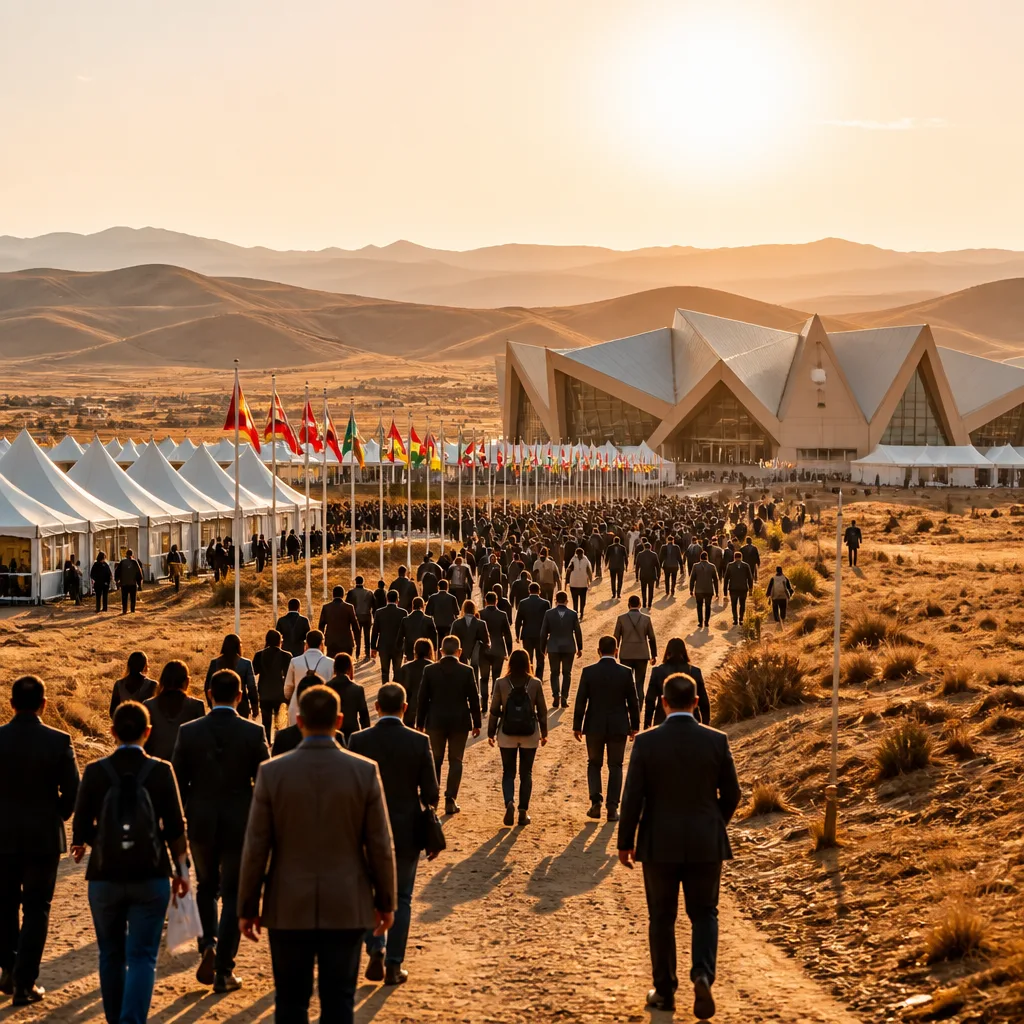
About 10,000 government negotiators, scientists, journalists and campaigners will gather in Ulaanbaatar, Mongolia, next week for COP17, a United Nations conference focused squarely on stopping fertile land from turning to desert as global temperatures climb.
Why the summit matters now
Drought is sweeping large swathes of the Northern Hemisphere, leaving some parks and landscapes looking parched and savannah-like, contributing to crop failures, rising food prices and significant economic losses. The scale of the problem has pushed even high-income countries into emergency mode: Britain’s prime minister convened a COBRA meeting, typically reserved for wars, terrorist attacks, riots and pandemics, to respond to extreme heat and prolonged dryness that the country has endured since May.
At COP17, hosted in a purpose-built venue within a national park on the outskirts of Mongolia’s capital, attendees will work on how to halt and reverse land degradation—an issue that, while less prominent than rising temperatures and sea-level rise, is fundamental to food security, water supply and livelihoods worldwide.
What delegates will address
The conference aims to elevate the policy profile of land restoration and resilience. Delegates will examine scientific findings and negotiate measures intended to protect soils, restore degraded ecosystems and mitigate desertification driven by a warming climate.
- Scale of participation: roughly 10,000 participants representing governments, research institutions, media and civil society.
- Immediate drivers: ongoing drought across much of the Northern Hemisphere, with visible impacts on urban parks, agriculture and markets.
- Policy urgency: countries with greater resources have already mobilised emergency procedures, signalling the potential for more acute impacts in less-resourced nations.
What is COP17 and its remit
COP17 convenes governments and experts under the UN framework to negotiate and cooperate on land-related climate issues. The conference will seek agreements and commitments that can be translated into national and international action to protect productive land, restore degraded areas and reduce the risks of desertification.
Delegates will also explore how to align national strategies with scientific recommendations so restoration efforts can support food production and economic resilience without compromising biodiversity.
| Item | Details |
|---|---|
| Estimated participants | About 10,000 |
| Location | Ulaanbaatar, Mongolia (purpose-built national park venue) |
| Key focus | Preventing land degradation and desertification; restoring productive land |
Implications for Canada and the wider world
Although this summit is taking place in Asia, its topics bear directly on Canada. Canadian farmers and forest managers are already confronting changes in precipitation patterns, pest dynamics and wildfire risks that can compound land degradation. International agreements emerging from COP17 could shape funding, research collaboration and best-practice standards that influence restoration projects and agricultural policy at home.
For lower-income countries, where adaptive capacity is limited, commitments sealed in Ulaanbaatar could determine the difference between stabilising livelihoods and escalating humanitarian or food-security crises. For wealthier states, the considerations highlighted by Britain’s emergency meeting underscore that no country is immune to the cascading economic and social effects of prolonged heat and drought.
Observers will watch whether COP17 produces concrete financing mechanisms, technology transfer arrangements or binding targets for restoration and conservation — measures that would move the discussion from diagnostics to delivery.
As delegates convene, the global backdrop of worsening drought and rising food costs makes COP17 less an abstract diplomatic exercise and more a forum with immediate consequences for markets, migration pressures and the stability of food systems worldwide.