Huzhou, a prefecture-level city in Zhejiang province, has released the sixth edition of a municipal index that quantifies how residents are adopting greener habits, using a digital platform as the bridge between daily behaviour and government targets.
Measuring everyday sustainability
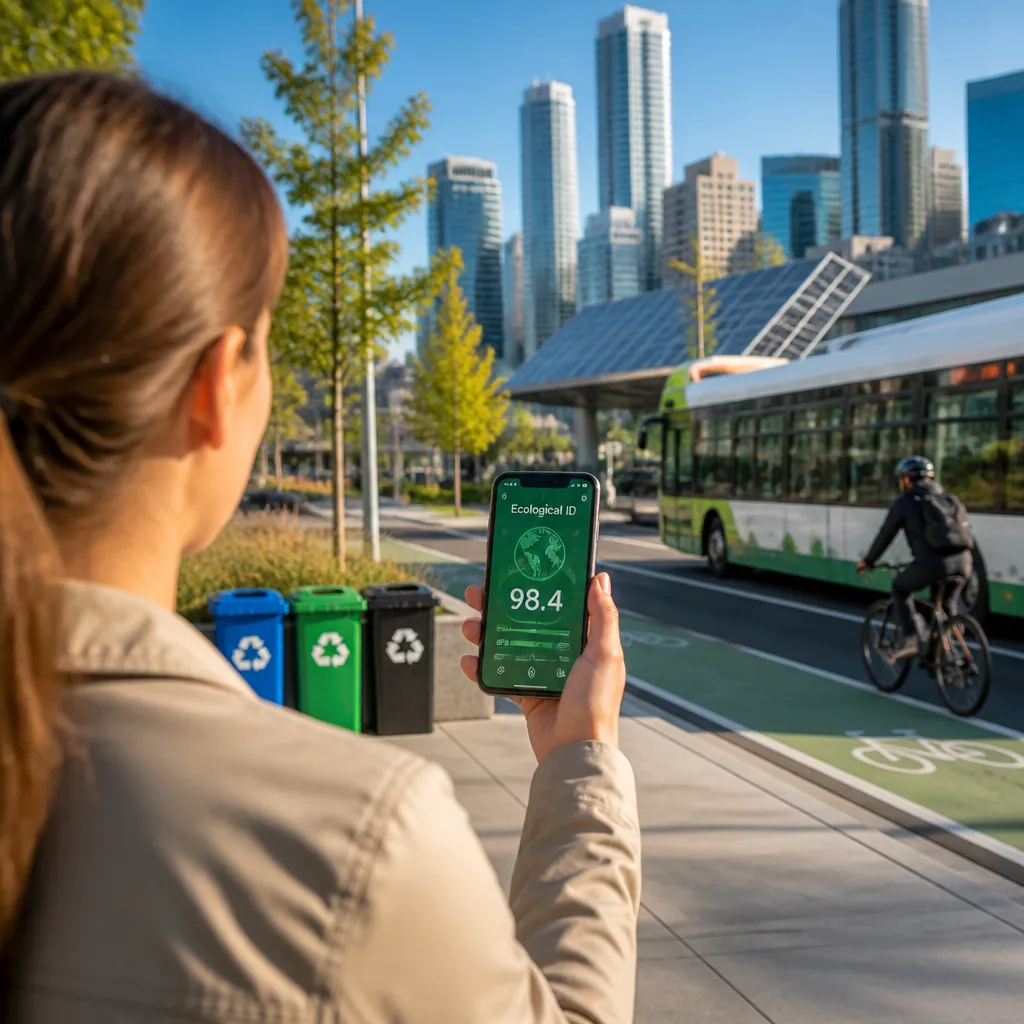
The Green and Low-Carbon Lifestyle Index tracks a range of measurable indicators tied to household and urban life — from energy and water systems to transport and waste sorting. This year’s report gave the index a score of 98.4, a modest rise of 0.2 points over the 2025 result, according to the city’s release.
Officials say the index is designed not just to record outcomes but to shape them: it links municipal performance assessment with concrete, trackable behaviours and infrastructure metrics such as the reach of green electricity accounting, the leakage rate in water supply networks, the share of new-energy buses and taxis, and rates of garbage recycling and reuse.
Digital ID connects life to policy
Central to Huzhou’s approach is the Huzhou Ecological ID, launched in 2025, which the city describes as the “core carrier” connecting government, enterprises and citizens. The app embeds emission-reduction guidance across common daily scenarios — commuting, dining, shopping, travel and leisure — and can be used to redeem rewards such as coffee coupons.
Local examples of behaviour tracked through the system include setting thermostats to higher temperatures in summer, choosing new-energy vehicles for commuting, cycling for short trips and portion control when ordering food. Officials portray these choices as small but cumulative contributors to the city’s low-carbon goals.
"Lifestyle transformation is not solely the responsibility of the people, but also requires the government to be precise and proactive," said Lai Huineng, director of the Zhejiang Huaxia Institute of Livelihood and Public Welfare, which develops and evaluates the Huzhou index.
Policy, infrastructure and daily choices
The index reflects a mixture of behaviour change and infrastructure investment. By including metrics such as the proportion of new-energy public vehicles and pipeline leakage rates, Huzhou’s measure sets standards that municipal administrators can use to assess policy performance, not just public sentiment.
That blending of personal and institutional responsibility is part of the city’s stated aim to present a visible model of “green modernisation” — a phrase used by local commentators to describe improved living standards that are also environmentally sustainable.
What others can learn
For readers interested in applying similar ideas locally, the Huzhou example highlights several practical elements that support sustainable lifestyle change:
- Quantified goals: Numerical indicators make progress measurable and accountable.
- Digital nudges: An app that links rewards to low-carbon choices can increase uptake of greener behaviours.
- Infrastructure alignment: Behavioural targets work best when paired with investments in transport, energy and waste systems.
| Measure | 2026 Result | Change from 2025 |
|---|---|---|
| Green and Low-Carbon Lifestyle Index | 98.4 | +0.2 |
Huzhou’s model emphasises that lifestyle modernisation can be guided by municipal policy and digital tools as much as by individual choices. While transferability depends on local contexts — transport networks, energy grids and governance structures differ widely — the core idea is straightforward: combine measurable targets, enabling infrastructure and incentives to make greener daily choices easier and more visible.
For Lifestyle readers, the takeaway is practical: small, repeatable actions — adjusted thermostats, active transport for short trips, mindful portioning and consistent recycling — can be amplified when supported by clear standards and systems that reward lower emissions.