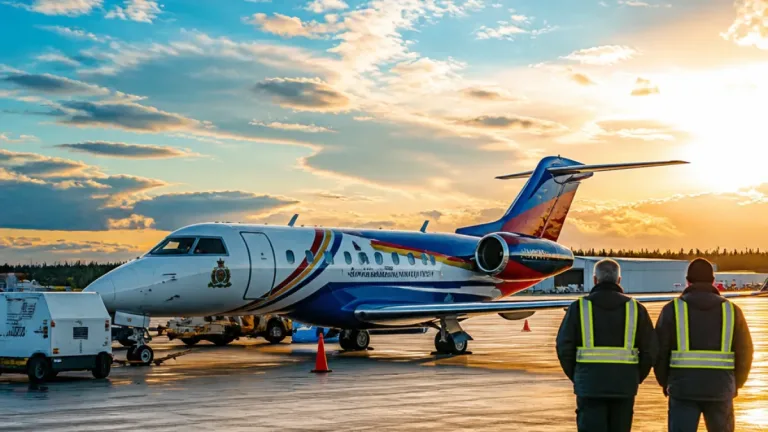

OTTAWA / INUVIK — The Government of Canada will provide up to $49.5 million to modernise the runway and replace the access road at Inuvik (Mike Zubko) Airport, officials announced, part of a larger effort to strengthen transport links and defence capability in the Western Arctic.
Scope and timing
The investment will be delivered through the federal Arctic Infrastructure Fund (AIF) in partnership with the Government of the Northwest Territories. Work is scheduled to begin this autumn, with the immediate priority to create a consistent paved surface across the existing runway and to resurface the airport access road with asphalt.
Federal officials said the upgrades aim to improve safety and reliability for year-round operations, enable heavier roadway traffic, and accommodate rising cargo volumes that move through the regional hub.
How this fits with defence spending
The federal contribution builds on a previously announced $230 million investment from the Department of National Defence for runway extension and modernisation. Together, the two funding streams will support both civilian and military uses of the airport, including its role as a Forward Operating Location for the Royal Canadian Air Force and NORAD.
| Funding source | Amount (CAD) |
|---|---|
| Arctic Infrastructure Fund (federal) | $49.5 million |
| Department of National Defence | $230 million |
| Total announced | $279.5 million |
Government rationale
"Inuvik Airport plays a vital role in supporting communities across the Western Arctic and contributes to Canada’s broader transportation and northern priorities," said the Honourable Steven MacKinnon, Minister of Transport and Leader of the Government in the House of Commons.
MacKinnon added that the investment will "strengthen the airport’s capacity to serve the region, support operational readiness, and advance Canada’s defence, security and sovereignty objectives in the North."
Regional impact
Inuvik’s airport functions as a logistical lifeline across the Western Arctic, providing passenger services, cargo handling, emergency response staging and the seasonal resupply of remote communities throughout the Northwest Territories, Yukon and neighbouring areas. Federal officials say the upgrades are intended to preserve and expand those roles, particularly for medical evacuations, wildfire response and other emergency operations.
Local leaders and service providers have long raised concerns about runway conditions and the reliability of road connections, especially during freeze–thaw cycles and extreme weather. A consistent paved runway surface and an asphalt access road are expected to reduce operational pauses and allow heavier equipment to travel safely to the terminal and cargo areas.
Practical outcomes and expectations
Officials pointed to several tangible outcomes from the work:
- Improved year-round connectivity for passengers and freight;
- Stronger supply-chain resilience for communities reliant on air transport;
- Enhanced capacity for emergency response operations, including medevac and wildfire support;
- Support for defence readiness through upgraded infrastructure at a Forward Operating Location.
Design, procurement and environmental assessments will guide the construction schedule. The federal announcement said the AIF funding is the first envelope of investment under a broader $1-billion program for northern infrastructure, although no further project-specific allocations were detailed in the release.
Local context and next steps
Inuvik, a town of critical strategic and community importance in the Beaufort Delta region, stands to see both short-term construction activity and longer-term benefits from the airport work. Construction will likely provide temporary employment and contracting opportunities for regional suppliers, while improved infrastructure could decrease costs and delays tied to air cargo movements.
Officials from the territorial government will work with federal partners to finalise project plans and the commencement of work this fall. Residents and stakeholders can expect updates on timelines, traffic management and any temporary service interruptions as contractors mobilise.
The announced spending signals a continued federal focus on northern infrastructure as part of broader priorities that include sovereignty, security and community resilience in the Arctic.
Reporting from Inuvik and Ottawa.