
The fast-moving Bald Range wildfire that erupted near Summerland has laid bare concerns about emergency access and the vulnerability of local wildlife, after more than 20,000 residents were forced to leave their homes and Highway 97 was rendered impassable.
Calls for alternate evacuation routes
Chief Gabriel of the Penticton Indian Band has urged provincial authorities to address the need for an alternative emergency route out of communities, saying the current network proved fragile when the blaze cut off the primary artery. The closure of Highway 97, which many residents rely on for north–south travel through the Okanagan, intensified the scramble to find safe exits during the overnight and early Saturday exodus.
Premier David Eby acknowledged the problem, noting there is a “significant demand” across British Columbia for secondary egress roads. The provincial Transportation Ministry has committed to evaluating which routes should be prioritised for upgrades or designation as emergency alternatives.
Evacuations, infrastructure and planning
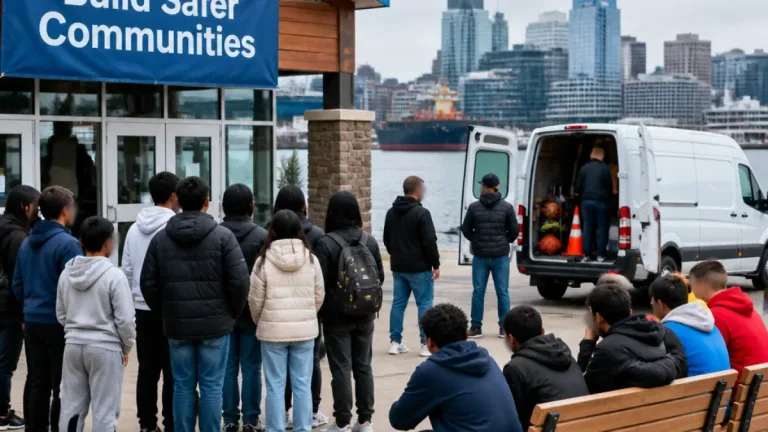
Local officials have described a chaotic evacuation as the fire expanded rapidly. The scale of the displacement — reported as more than 20,000 people — highlights the need for resilient transportation planning in a region where single highways and winding local roads can become chokepoints during major incidents.
Experts in emergency management often emphasise the value of redundancy: multiple, clearly marked exit routes, pre-planned traffic-management protocols and community drills. In terrain such as the Okanagan, where valleys and lakefront development concentrate communities along narrow corridors, creating redundancy can be costly and technically complex.
Wildlife at risk: mountain goat herd endangered
Beyond human safety, the wildfire threatens the region’s natural heritage. Biologist Michael Noonan has raised alarms about an iconic herd of mountain goats that habitually occupy cliffs above Okanagan Lake near the evacuated communities. He warned there is a strong possibility many animals were lost when the fire intensified last Friday.
Noonan said the goats’ habitat falls within the Bald Range fire perimeter. He also cautioned that repeated, intense fires of this sort could eliminate the species from the area entirely — a prospect that would alter the local landscape and diminish opportunities for residents and visitors to observe the animals.
Immediate needs and next steps
For evacuees and residents, the immediate priorities remain safety, shelter and communication. For municipal and provincial planners, the episode prompts questions about where to invest to reduce future risk: whether to fortify key roadways, to design secondary corridors, or to expand early-warning and evacuation planning for communities adjacent to wildland-urban interfaces.
Transport officials have said they will examine which secondary routes should be made priorities, but timelines and specific projects have not been announced. Meanwhile, wildlife specialists and conservation groups will be assessing damage to habitats and populations once it is safe to enter burned areas.
- Evacuations: More than 20,000 residents displaced by the Bald Range wildfire.
- Road closure: Highway 97 cut off, prompting calls for alternate emergency egress routes.
- Wildlife impact: Mountain goat herd above Okanagan Lake likely suffered heavy losses; long-term local presence may be threatened.
| Item | Current status |
|---|---|
| Evacuated residents | More than 20,000 |
| Main route affected | Highway 97 closed in fire area |
| Wildlife concern | Mountain goats’ habitat inside fire perimeter |
As recovery and assessment continue, the incident underscores an emerging pattern across British Columbia: larger, more intense wildfires intersecting increasingly populated areas. The pressure on transportation infrastructure and on species that occupy narrow ecological niches is likely to inform public debate about land-use planning, emergency preparedness and measures to reduce wildfire risk.
Provincial decisions on which secondary roads will be prioritised and any funding commitments will be watched closely by local governments, Indigenous communities and residents still displaced by the blaze.