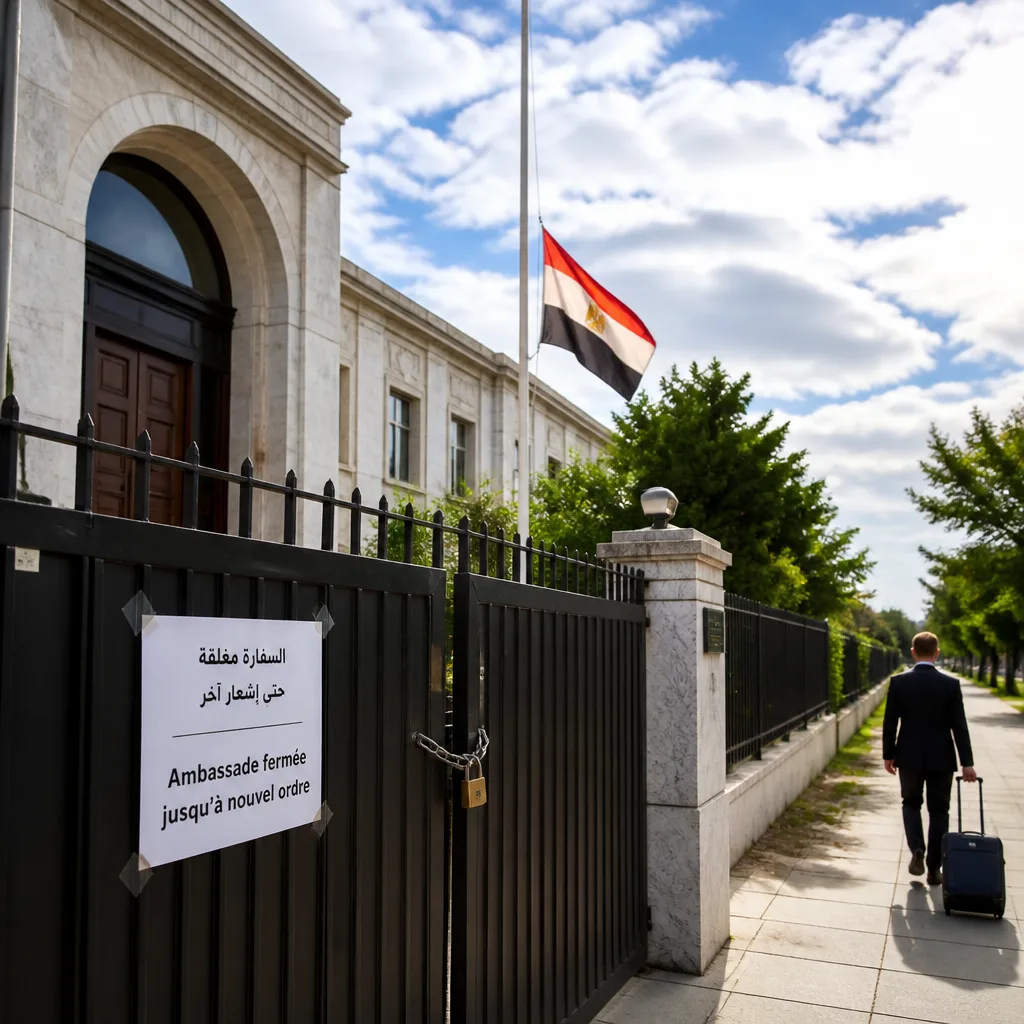
Algeria announced on Thursday that it will cut diplomatic relations with the United Arab Emirates, accusing Abu Dhabi of a string of “provocative or hostile” actions that, the foreign ministry said, left Algiers with no option but to sever ties.
Algiers cites pattern of hostile behaviour
The Algerian foreign ministry said the UAE had repeatedly been warned but that its conduct had reached a level that could no longer be tolerated. Officials informed the Emirati ambassador of the decision and gave him 48 hours to comply, the statement said. There was no immediate response from the UAE.
The announcement follows years of growing strain between the two North African and Gulf states, which have taken divergent positions on a number of regional issues.
“Wherever they set foot, blood flows,”
The comment, made by Algerian President Abdelmadjid Tebboune in July and cited by Algerian officials, reflects the sharp tone of recent rhetoric. In the same interview the president described the UAE as a “micro-state” or “statelet” he believed was seeking to destabilise several countries in the region and said a diplomatic break “would have happened long ago” but for a desire to avoid deepening divisions in the Arab world.
Fault lines: Israel, Western Sahara and the Sahel
Three long-running disputes lie at the heart of the diplomatic rupture:
- Normalisation with Israel: Algeria opposes normalisation with Israel, while the UAE — along with Morocco — established diplomatic ties with Israel under the Abraham Accords in 2020.
- Western Sahara: The UAE supports Morocco’s claim to sovereignty over the contested territory, where it maintains a consulate; Algeria backs the Polisario Front, which seeks independence for Western Sahara.
- Influence in the Sahel: Abu Dhabi has expanded ties with several Sahelian governments in recent years, while Algeria’s relations with some southern neighbours have been strained following a series of military coups.
| Issue | Algeria | UAE |
|---|---|---|
| Israel normalisation | Opposes | Supports / normalised |
| Western Sahara | Supports Polisario Front | Supports Morocco's claim |
| Sahel relations | Relations strained with some southern neighbours | Expanded ties with several governments |
Regional and diplomatic consequences
The decision to sever ties is likely to reverberate across North Africa and the Gulf. Diplomatic ruptures between regional powers can complicate conflict mediation, cross-border security co‑operation and economic projects, and may further fragment existing alignments on Middle East and Sahel issues.
Algeria’s move also exposes the limits of Gulf–Maghreb consensus. While the UAE has cultivated strategic partnerships beyond the Gulf, including with Morocco and several Sahelian states, Algeria has positioned itself in opposition to those policies it sees as undermining sovereignty and regional stability.
For international actors engaged in the region, the break signals an additional layer of volatility. Matters such as counter‑terrorism co‑operation in the Sahel, diplomatic mediation over Western Sahara and responses to evolving Israeli–Arab relationships could all be complicated if major regional players refuse bilateral engagement.
What happens next
The Algerian foreign ministry’s order for the Emirati ambassador to depart within 48 hours begins the immediate process of downgrading relations. Beyond that, both states will decide whether to recall ambassadors, close embassies or suspend consular services — measures that would further restrict bilateral ties. The UAE’s response, at the time of the announcement, had not been made public.
As this diplomatic episode unfolds, it will test whether diplomatic channels can be reopened or whether the rupture will become a longer‑term realignment of regional partnerships.