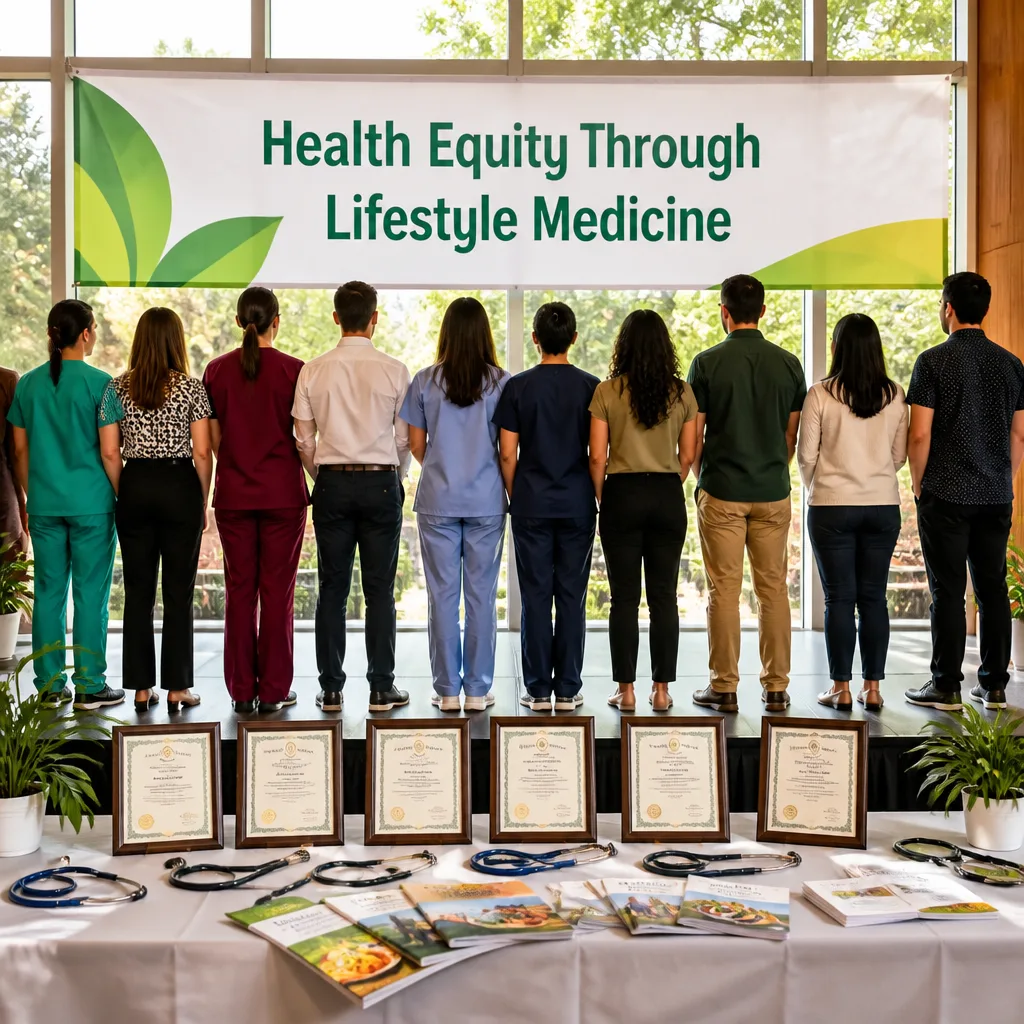
The American College of Lifestyle Medicine has named 10 recipients of its 2026 Health Equity Achieved through Lifestyle Medicine (HEAL) Initiative scholarships, continuing a targeted effort to increase access to lifestyle medicine training for clinicians from historically underserved backgrounds.
Scholarships aim to widen access and representation
The HEAL Initiative awards scholarships that cover education, certification and professional development in lifestyle medicine — a specialty that prioritizes therapeutic lifestyle changes to prevent, treat and reverse chronic disease. The 2026 cohort joins a programme that, since its launch, has focused on eliminating financial obstacles that can deter underrepresented-in-medicine (UIM) clinicians and public-health leaders from pursuing advanced training.
Since 2021, the initiative has supported more than 110 UIM clinicians and public-health professionals with no-cost training and certification. The HEAL community now includes over 1,400 professionals who use a Community-Engaged Lifestyle Medicine (CELM) framework to work with historically underserved and under-resourced populations.
Why lifestyle medicine matters to communities
Lifestyle medicine is built on six evidence-based pillars: optimal nutrition, physical activity, restorative sleep, stress management, social connectedness and avoidance of risky substances. Proponents say these pillars address root causes of chronic conditions such as type 2 diabetes, heart disease and obesity — conditions that disproportionately affect marginalised communities.
By supporting clinicians who come from or serve these communities, ACLM hopes to make the specialty more representative of the populations most impacted by chronic illness and to expand culturally informed, community-centred care.
Investment and scale
The HEAL Initiative Scholarship programme, launched in 2021, has provided training and board certification to more than 100 clinicians and public-health professionals, representing an investment of nearly $400,000. The 2026 awards reinforce ACLM’s strategy of reducing financial barriers to credentialling and leadership development in lifestyle medicine.
| Metric | Value |
|---|---|
| Scholars supported since 2021 | 110+ |
| HEAL community members | 1,400+ |
| Approximate investment | $400,000 |
| 2026 scholarship recipients | 10 |
Practical takeaways for clinicians and health leaders
- Clinicians from underrepresented groups interested in lifestyle medicine should consider scholarship pathways like HEAL to offset training costs and access board certification.
- Health systems serving marginalised populations can benefit from recruiting clinicians trained in the Community-Engaged Lifestyle Medicine framework to deliver culturally responsive prevention and chronic-disease care.
- Policy-makers and funders aiming to reduce chronic disease disparities may look to scale similar programmes that combine education, certification and leadership development with community engagement.
For Canadians watching trends in preventative health and equitable care, ACLM’s model offers a blueprint for integrating lifestyle-focused clinical practice with community-centred strategies. The approach underscores that addressing chronic disease at scale involves not only clinical tools but also workforce diversity and targeted investment.
As the HEAL cohort for 2026 begins its year of membership, training and professional development, the broader question is whether similar scholarship and workforce-development models will be adopted beyond the United States to strengthen lifestyle-medicine capacity in other health systems and to better reach communities most affected by chronic illness.