Women’s skateboarding in South Africa is quietly expanding its footprint, driven by community clubs, volunteers and a national federation that is trying to convert interest into sustainable pathways. The sport’s Olympic profile — after its inclusion in Tokyo in 2021 — has helped, but administrators say challenges remain if more girls are to move from learning to competing at higher levels.
Grassroots growth with limited resources
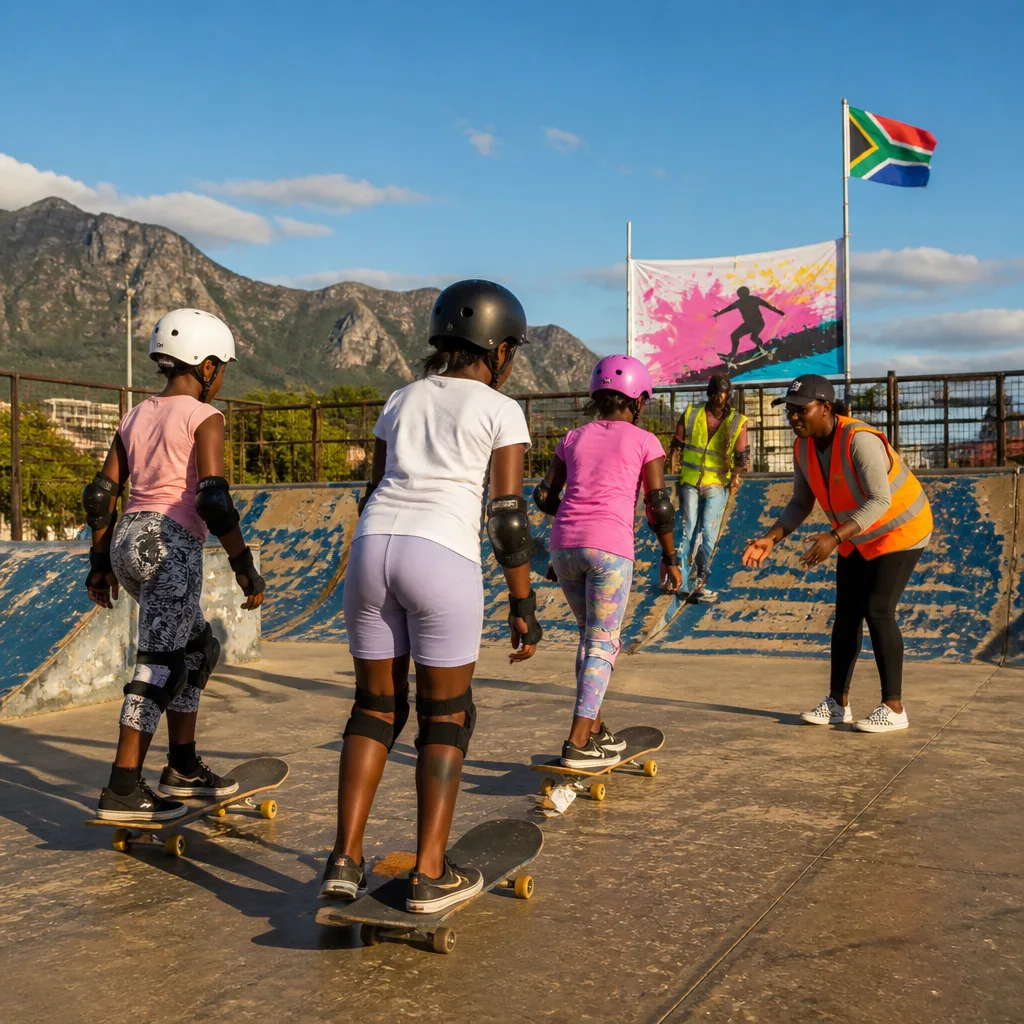
Roller Sports South Africa reports a steady rise in female involvement, though women are still markedly underrepresented compared with men. Club organisers and volunteers have been the backbone of that growth, creating accessible, safe spaces for girls to learn skateboarding despite scarce funding and infrastructure.
According to the federation’s president, these organised clubs have multiplied over the past five to 10 years, enabling South African skaters to compete within World Skate structures and offering women the same opportunities as men in competition settings.
“We try to encourage girls to start, and we have a strong safeguarding policy,” said Roller Sports South Africa president Wendy Gila.
Gila said the Tokyo Olympics primarily affected the sport by setting out qualification rules and motivating a cohort of young people to train seriously with an eye on Olympic selection. Yet she warned that increased interest has not been matched by a surge in female competitors at provincial and national events.
Barriers to entry and progression
Federation officials pointed to several persistent obstacles hampering the sport’s female uptake. Accessibility is a concern where suitable skate parks or training facilities are lacking. Cultural perceptions about the sport and limited family support for girls pursuing skateboarding also weigh heavily on participation rates.
To address those issues, Roller Sports South Africa has run Olympic Solidarity programmes aimed specifically at women in skateboarding and has invested in training female administrators. Those administrators have gone on to chair local clubs, a development the federation highlights as a key step towards creating more inclusive environments.
- Growth driven mainly by grassroots clubs and volunteers
- Federation has implemented safeguarding and women-focused training programmes
- Major barriers include access to facilities, cultural attitudes and family support
Notable milestones and role models
The federation points to individual achievements as evidence of progress. Boipelo Awuah has twice qualified for the Olympic Games, a milestone that signals what is possible for South African women in the sport. Another name highlighted by the federation is Sharné Jacobs, who is receiving coach training from World Skate, suggesting emerging domestic coaching capacity for women.
Photographer Grant McLachlan’s images of skaters such as Alba Lingeveldt accompany the sense that a growing community exists, one that values inclusivity and mentorship as much as competition.
| Milestone | Detail |
|---|---|
| Olympic inclusion | Skateboarding became an Olympic sport at Tokyo 2021 |
| Olympic qualifiers | Boipelo Awuah has twice qualified for the Olympic Games |
| Coaching development | Sharné Jacobs is being trained by World Skate as a coach |
The federation’s targeted programmes have produced women administrators who now lead clubs, and that administrative representation is a practical outcome that can improve recruitment, safeguarding and retention of female skaters.
What’s next?
Organisers and the federation acknowledge that while the foundations are being laid, more support is required to turn participation into competitive depth. That will mean expanding access to facilities, sustained funding for clubs, and continued focus on safeguarding and community outreach to change perceptions and build family support.
For a sport where self-taught tricks and park camaraderie are part of the appeal, South Africa’s female skateboarders are carving out a space — albeit one that still needs investment if it is to produce a broader base of provincial and national competitors. The lessons here resonate beyond skateboarding: targeted development, local leadership and role models can shift a sport’s culture — but the leap from grassroots joy to podium potential requires resources and long-term planning.
Images of the movement — and its young practitioners — underline both how far women’s skateboarding has come in South Africa and how much farther it could go with steady support.