
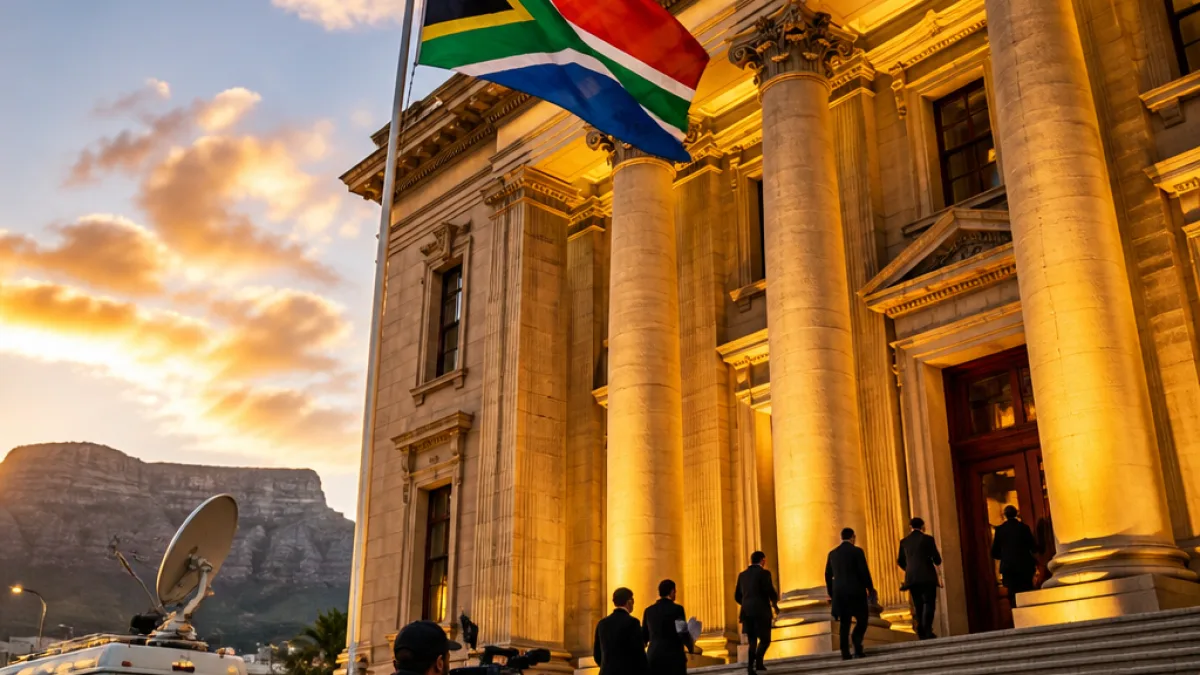
The Western Cape High Court has reserved judgment in President Cyril Ramaphosa’s application to review and set aside the report of an independent panel that concluded he had a case to answer in connection with the Phala Phala matter.
What the court has decided so far
Judgment was not delivered at the hearing and the court indicated that its written ruling will follow. The application asks the High Court to set aside the panel’s report, which found that the President should face further investigation or processes based on its findings.
The matter was heard in Cape Town and the reservation of judgment means the parties must await the court’s written reasons before the legal questions at the centre of the dispute are resolved.
Legal and public stakes
The outcome of the High Court’s ruling could affect whether the panel’s findings remain in force and whether any recommended follow-up steps may proceed. Because the proceeding involves the President and a high-profile independent review, the case has drawn intense public and political attention.
- Reserved judgment: The court will issue written reasons at a later date.
- Relief sought: The President asked the court to review and set aside the independent panel’s report.
- Panel finding: The panel concluded the President had a case to answer.
Procedure and next steps
Until the court issues its written decision, the legal status of the panel’s report remains unchanged. If the High Court upholds the President’s application, the panel’s report could be set aside or struck down; if the court dismisses the application, the report would stand and any processes flowing from it could proceed according to law.
Litigation records show the matter was fully argued before the court. The reservation signals that the judge(s) will provide considered reasons, which will be central to how the dispute progresses and whether it is taken on further appeal.
Implications for governance and public accountability
At stake is the interface between independent investigative processes and judicial review. The court’s reasons will likely examine the legal basis on which the panel made its findings and whether the review application met the required thresholds for interference with such a report.
Observers will watch whether the court adopts a narrow review focused on procedural defects or a broader approach addressing substance. The written judgment will also be scrutinised for its treatment of issues relating to transparency, institutional independence and the role of review mechanisms in holding office-bearers to account.
| What happened | Current position |
|---|---|
| President applied to review and set aside an independent panel report | Western Cape High Court reserved judgment; written reasons pending |
Public interest and the wait for reasons
The reserved judgment prolongs uncertainty for all involved. For the public, it delays final clarity on whether the panel’s recommendation will be legally sustained. For the President and other affected parties, the ruling will determine whether the matter proceeds to subsequent stages or is curtailed by the court.
Once the High Court issues its written judgment, the decision could be appealed to higher courts depending on the outcome, the grounds of the ruling and the legal strategies adopted by the parties.
Until that time, the Western Cape High Court’s reservation of judgment is the clearest indication that the matter will be decided on detailed legal grounds rather than by immediate oral ruling. The written reasons will be decisive in charting the next steps for both the legal process and the wider political conversation.
Ruling awaited; all eyes remain on Cape Town for the court’s written judgment.













