TSOLO, Eastern Cape — A planned shopping complex in Tsolo has prompted a standoff between residents, a local church and the municipal council after community members objected to proposals to develop land they say is church and municipal property.
What is happening in Tsolo?
Residents and the church have publicly opposed plans to build a shopping centre on a site in Tsolo, according to reporting by News24. The dispute centres on land that community members and the church assert should not be alienated from public or communal use.
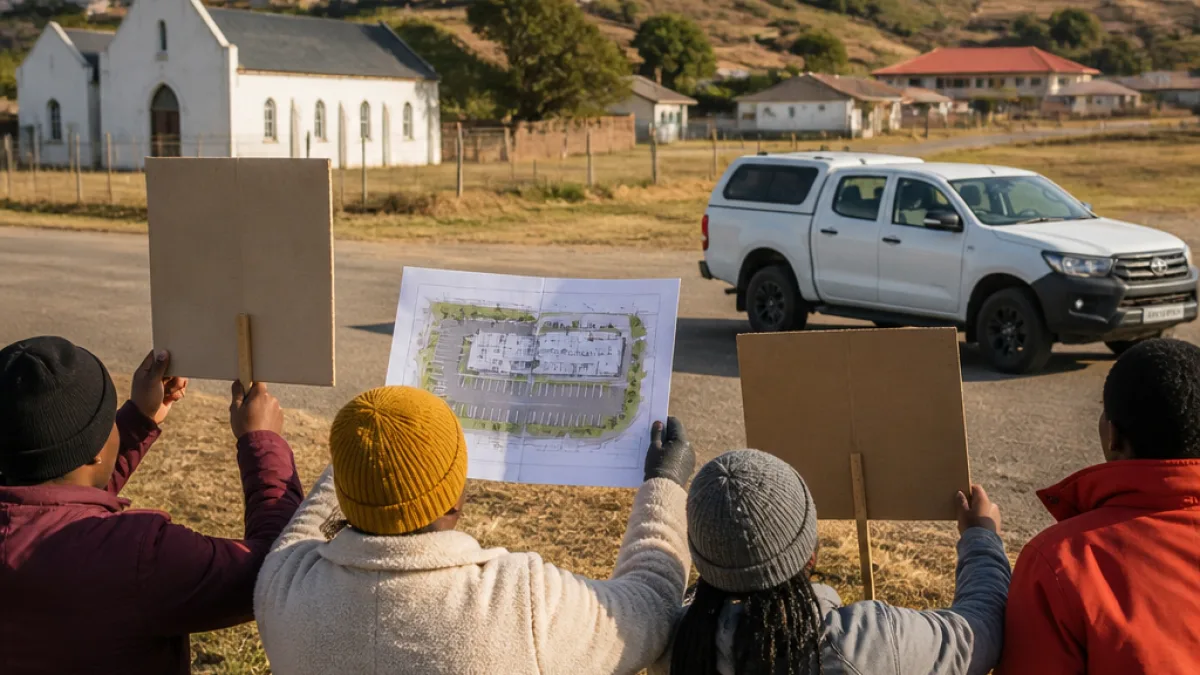
The municipality has been accused by residents of proceeding with a deal that would transfer or lease the land to a private developer without adequate consultation. The planned development has been presented in visual material circulating in the area, including artist impressions of the proposed complex.
Community concerns and stakes
Opponents say the land holds community value beyond its commercial potential. Their objections reflect broader anxieties in small Eastern Cape towns when public or church land is earmarked for private development. Key concerns include:
- Transparency: Questions about whether proper public consultation took place and whether council followed legal processes for land disposal.
- Community benefit: Skepticism that promised jobs and economic activity will materialise, or that benefits will accrue to a small number of outsiders rather than local residents.
- Loss of public space: Fears that once land is sold or leased to private interests it cannot easily be returned to community use.
Such disputes can be combustible in towns where unemployment and poverty are high and where municipal governance is under intense scrutiny.
What the municipality has said
At the time of reporting, News24’s coverage indicated a standoff but did not publish full statements from the municipality in the material provided to this newsroom. It is not clear from the available reporting whether a formal council resolution has been adopted, what the exact terms of any proposed transfer are, or which private party is involved.
Why this matters for the Eastern Cape
Land disposals by municipalities are regulated and require adherence to legislative processes designed to protect public interest. In the Eastern Cape, where rural towns rely on fragile local economies, the question of how municipal land is used matters for small-business development, social cohesion and trust in local government.
Cases where churches and community groups challenge municipal decisions have wider precedential value: they force scrutiny of how councils weigh commercial opportunities against collective needs and heritage.
| Stakeholder | Position |
|---|---|
| Local residents | Opposed to proposed shopping complex on contested land |
| Local church | Objecting to development on its claimed land |
| Municipality | Proposed deal leading to standoff (details not published in available reporting) |
Possible next steps and what residents can do
When disputes like this arise, the following avenues are commonly pursued:
- Requesting full disclosure of council resolutions and the legal basis for any land transfer or lease.
- Filing objections formally at council meetings and using public participation provisions in municipal legislation.
- Pursuing legal review where there are grounds to argue that procedures were not followed.
Community groups and churches often seek support from civil-society organisations or legal advisers to ensure their concerns are recorded and adjudicated through proper channels.
Context from previous disputes
Across the province, contested land deals have repeatedly exposed weaknesses in municipal consultation and record-keeping. Those controversies frequently combine questions about economic development, patronage and the protection of communal assets. Without full disclosure from the municipality and details about any developer involved, residents’ concerns will persist.
The available reporting from News24 and visual material circulated locally triggered the public opposition in Tsolo. This newsroom will seek comment from the municipality, the church and any identified developer to provide a comprehensive account of the proposed transaction and the legal status of the land.
Reporting note: This article is based on News24’s coverage of the dispute and additional contextual reporting on municipal land-use practices in the Eastern Cape. No new figures or additional stakeholders were invented beyond what was reported.