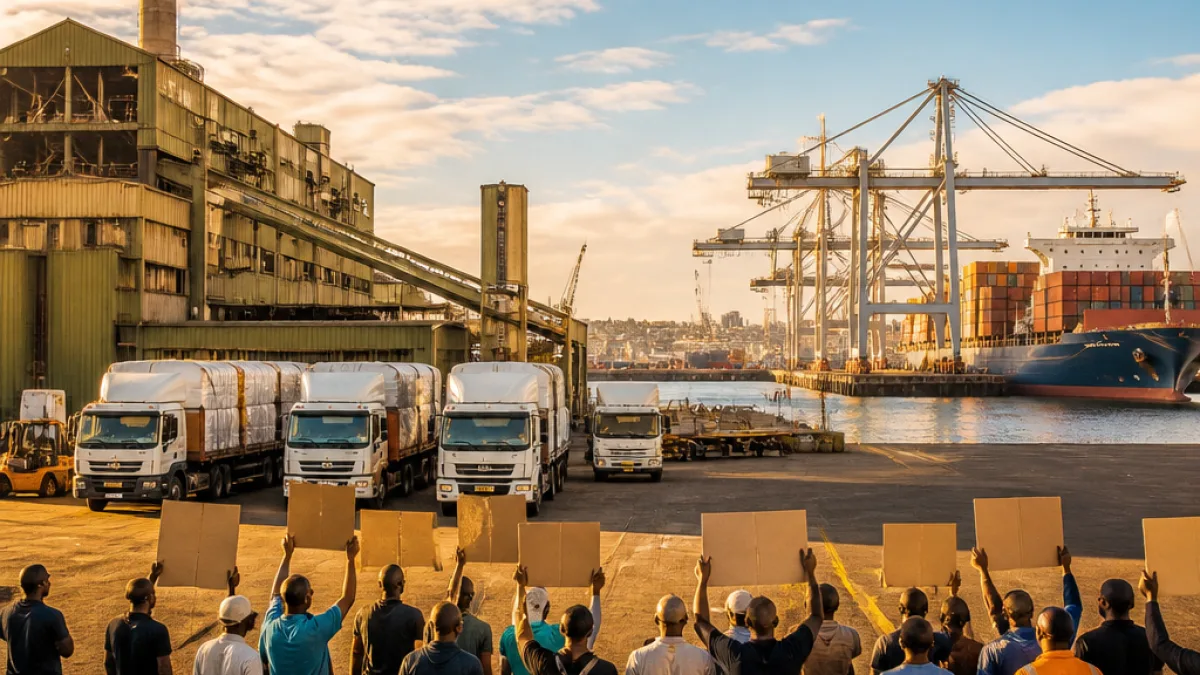
DURBAN — A protected wage strike in South Africa’s sugar manufacturing and refining sector has moved into a second week, heightening concern in KwaZulu‑Natal where most of the country’s sugar infrastructure and growers are based. The industrial action comes as local producers contend with a marked increase in imported sugar, a combination that industry bodies warn could undermine jobs and rural incomes.
Demands and deadlock
Negotiations between organised labour and employers reached an impasse over wages and conditions. Food and Allied Workers’ Union (FAWU) President Nico Ndima confirmed to SABC News that workers are demanding a 13% wage increase. Employers have offered 5.4%, while a proposed 6% settlement was previously considered and rejected by unions.
"Workers were demanding a 13% wage increase, while employers had offered 5.4%," said FAWU President Nico Ndima.
With the dispute unresolved, milling and refining operations face disrupted schedules, delayed deliveries and potential financial strain on companies that are also coping with a growing share of imported sugar in the domestic market.
Why KwaZulu‑Natal feels the pressure
The South African Sugar Association (SASA) says the country currently operates 12 sugar mills, of which 10 are in KwaZulu‑Natal and two in Mpumalanga. This concentration links the province closely to developments that affect sugar production, processing and downstream employment.
| Indicator | Figure |
|---|---|
| Operational sugar mills (national) | 12 (10 in KwaZulu‑Natal) |
| Annual direct income (industry) | R24 billion |
| Direct jobs | 65,000 |
| Indirect jobs | 270,000 |
| People dependent on industry | ~1 million |
| Average annual production | 2.2 million tonnes |
The industry supports an estimated 25,000 registered sugarcane growers across KwaZulu‑Natal and Mpumalanga. Many rural households and local economies are reliant on seasonal and permanent employment tied to the sugarcane value chain, from field work to milling and refining.
Impact of rising imports
Producers already faced heightened pressure from imported sugar. While government trade measures and safeguards have been discussed in the past, the recent surge in imports increases competition on price and margin, reducing the buffer available to manufacturers should production or refining be disrupted by strike action.
- For workers: Prolonged strikes risk lost wages and financial stress for households dependent on sugar sector income.
- For growers: Mill shutdowns or reduced throughput can delay cane deliveries and hurt incomes at a critical time in the season.
- For consumers: Continued dispute and imported-supply fluctuations can affect retail prices and availability in the medium term.
Who the major players are
The sector comprises several large milling and refining companies represented in national industry structures, including Illovo Sugar South Africa, Tongaat Hulett, RCL FOODS, UCL Company, Umfolozi Sugar Milling and Gledhow Sugar Company. These firms, together with smaller operators and the network of independent growers, form the backbone of the province’s sugar economy.
Industry and labour representatives will need to return to the bargaining table quickly if the strike is to be resolved without wider economic fallout. Any delay could amplify the pressure from imports and reduce the negotiating room on both sides.
What to watch
Interest will focus on three immediate developments:
- Whether unions and employers agree to resume talks and the terms tabled by both parties;
- Announcements from SASA or government on trade remedies or support measures to stabilise local production; and
- Operational notices from major mills on shutdowns, reduced shifts or revised delivery timetables that would affect growers and logistics firms.
For KwaZulu‑Natal communities that depend on the cane belt, the coming days are likely to determine whether the strike remains a short labour stoppage or becomes a protracted disruption with wider economic consequences.
Note: Reporting draws on SABC News and South African Sugar Association figures supplied to media. Negotiation positions and figures quoted are those confirmed by union and industry sources during recent coverage.