Sanofi and the United Nations Children’s Fund (UNICEF) have launched a targeted effort to restore routine childhood immunisation in three Eastern Cape districts, where gaps in coverage have left many children at risk of vaccine-preventable diseases.
What the programme will do locally
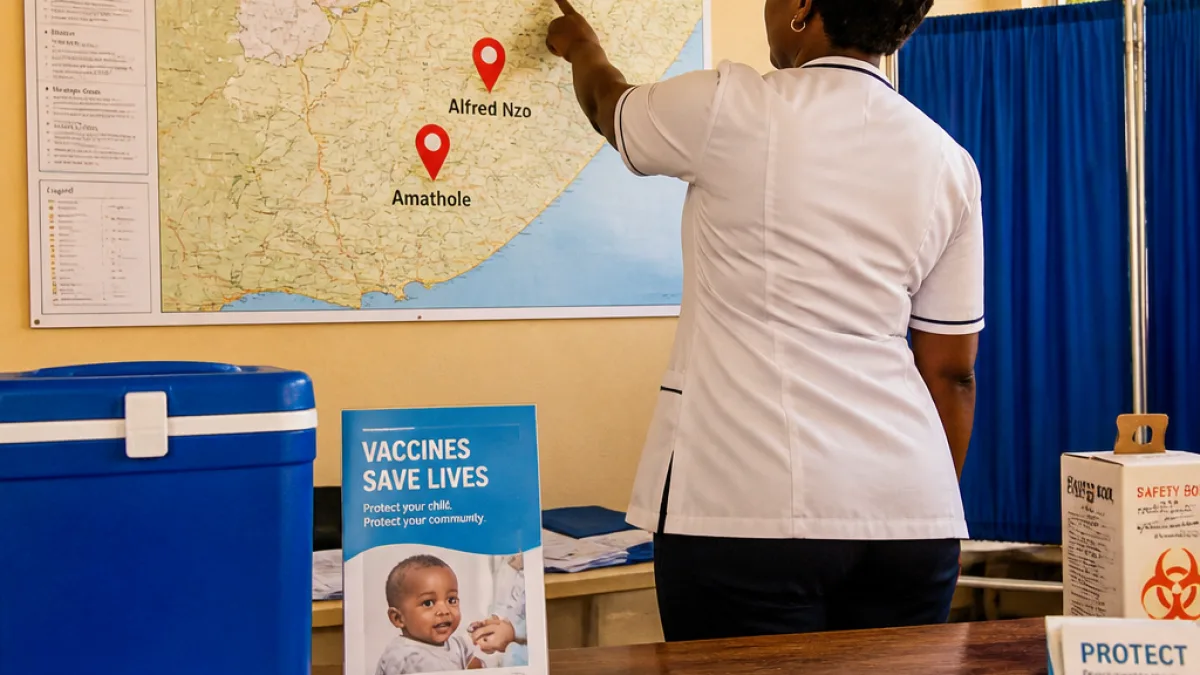
The initiative, called Immunisation for Every Child, will run from July 2026 to March 2027 and work with district health teams and facilities in OR Tambo, Alfred Nzo and Amathole. Activities will include using local immunisation data to map low-coverage areas, tracking children who miss vaccine appointments, and strengthening responses when services fail to reach communities.
Programme steps outlined by partners include an initial series of meetings with national and provincial health authorities, followed by healthcare worker training, mentoring and ongoing supervision to ensure changes are sustained.
Why the Eastern Cape is a focus
South Africa has seen a worrying decline in routine childhood immunisation. The World Health Organization (WHO) and UNICEF estimates cited by the partners show national coverage for the first dose of the DTP vaccine — the common barometer for routine access — fell from 87% in 2019 to 67% in 2025. Third-dose coverage dropped from 85% to 65% over the same period.
| Indicator | 2019 | 2025 |
|---|---|---|
| DTP1 coverage | 87% | 67% |
| DTP3 coverage | 85% | 65% |
These declines mean that, by WHO and UNICEF estimates, roughly one in three infants in South Africa may not have received a first routine DTP-containing vaccine in 2025, with an even larger share failing to complete the three-dose course. The partners note national administrative data may undercount private-sector immunisations but nevertheless signal a significant coverage gap.
How the project will operate on the ground
Sanofi and UNICEF said the programme will deploy the WHO’s Reaching Every District (RED) strategy, which is focused on improving local planning, community engagement, service delivery and monitoring to lift routine immunisation above threshold levels.
- District teams will identify wards and facilities with low coverage using local data.
- Health workers will be trained to track and follow up children who miss appointments.
- Supervision and mentoring will support facilities to maintain improved service delivery.
“Every child should have access to routine vaccines, regardless of where they live or their family's circumstances,” said Jean-Baptiste Bregeon, Country Lead for Sanofi South Africa.
UNICEF and Sanofi will coordinate with the National Department of Health and the Eastern Cape Department of Health to align the work with provincial plans and existing services. The stated RED aim is at least 80% immunisation coverage in every district and 90% nationally.
What this means for parents and clinics
For parents in the affected districts, the programme intends to make it easier to access routine vaccines by ensuring facilities know which children have missed appointments and by targeting outreach where coverage is weakest. Clinics can expect increased support around data use, follow-up systems and mentoring.
Health facilities and community health workers already familiar with outreach — door-to-door visits, school-based catch-up sessions and immunisation days — are likely to be key partners in closing the gaps. The programme’s short timetable means results will need to be rapid and measurable.
Wider context and risks
The rollout comes amid heightened concern about the erosion of herd immunity for vaccine-preventable illnesses, including diphtheria, pertussis and tetanus, which DTP protects against. Restoring routine coverage requires not only logistical fixes but rebuilding public confidence and consistent service delivery in primary care.
Observers will watch whether the initiative’s brief duration and project-based support translate into sustained improvement or whether longer-term systems strengthening is required to reverse the downward trend across South Africa.
The partners say their approach is to bolster district capacity so that gains can be continued by the health system after the project ends. For communities in OR Tambo, Alfred Nzo and Amathole, the programme offers a focused opportunity to find children who have been missed and to protect them against preventable disease.
Practical note: Parents concerned about missed immunisations should contact their local clinic or district health office to check a child’s immunisation status and arrange catch-up doses.