
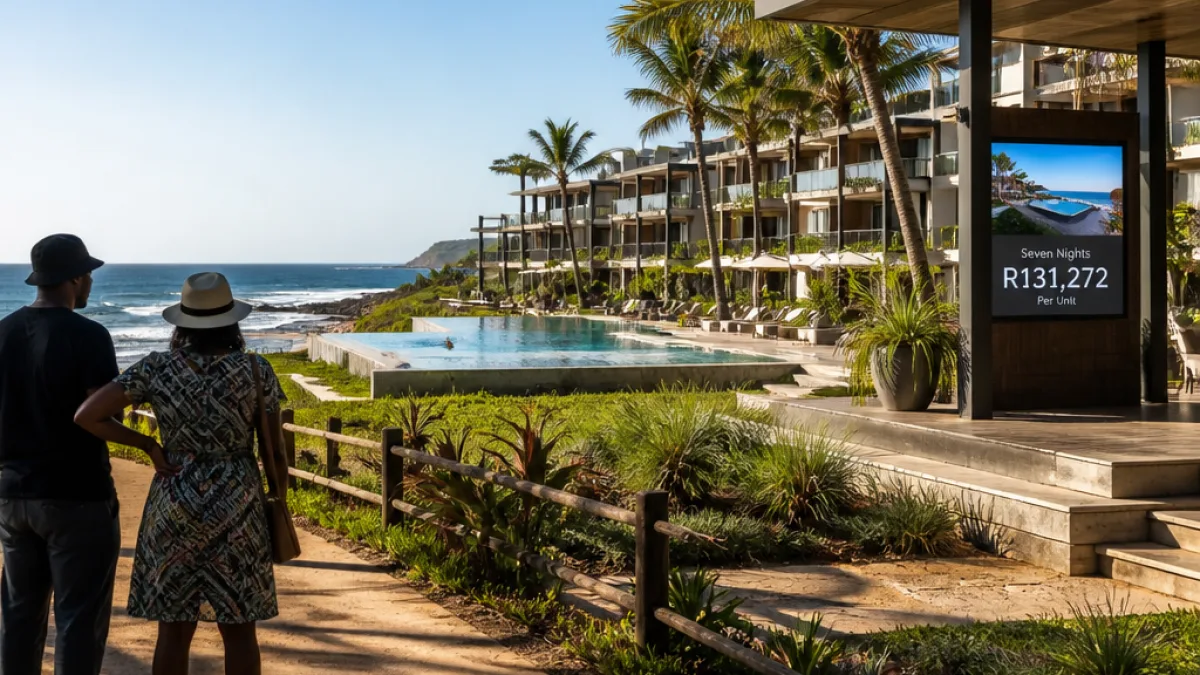
The new Club Med resort on KwaZulu‑Natal’s north coast, which opened in July 2026, is South Africa’s first property from the French all‑inclusive chain and represents a R2.1 billion investment completed over 28 months. The development — marketed as a hybrid beach and safari destination — is aimed squarely at premium travellers and international visitors, but its rates underline how boutique resort product sits well above what most local households can afford.
Price tags that catch the eye
Daily consumer checks show the resort’s high end can be expensive. A seven‑night stay for two adults in Club Med’s Exclusive Collection Space suite, from 9 to 16 January 2027, is listed at R131,272, which breaks down to about R18,753.14 per night. Many rooms, the resort’s publicity indicates, start from around R30,000 per night, though longer stays and package deals are promoted as ways to lower the effective nightly rate.
| Package | Duration | Price |
|---|---|---|
| Exclusive Collection Space suite | 7 nights (9–16 Jan 2027) | R131,272 |
| Indicative starting room rate | Per night | From R30,000 |
What the price includes
Club Med operates on an all‑inclusive model: the fee typically covers accommodation, dining, open bars, sports lessons, childcare, daily entertainment and resort activities. At the KZN property the advertised package for the Exclusive Collection suite bundles the room with sports and activities, all meals, and bar and snack services, consistent with the brand’s international offering.
- All‑inclusive features: gourmet dining, open bars, sports programmes, entertainment, childcare and on‑site activities.
- Target market: international tourists and affluent domestic travellers who value convenience and bundled services.
- Local context: the average South African salary — reported at R29,690 — makes even a single night unaffordable for most households.
Tourism recovery and local impact
The resort arrives as South Africa’s tourism sector recovers from the Covid‑19 slump. Stats SA reported that international arrivals reached 10.5 million in 2025, a 17.7% rise from 2024’s 8.9 million, signalling renewed appetite for travel to the country. Developers and provincial tourism authorities will be hoping the Club Med brand draws higher‑spending visitors to KZN’s north coast, supporting hotels, tour operators and hospitality jobs.
While the resort is likely to create employment during construction and for resort operations, the all‑inclusive model can shift some spending away from surrounding businesses because guests often consume most services on site. The precise local economic benefit will depend on how much the resort sources goods and services locally, hires staff from nearby communities and promotes off‑site excursions.
Affordability and audience
Even if marketed internationally, the pricing raises questions about accessibility for South African holidaymakers. With the national average monthly salary around R29,690, the cost of a single night in a higher‑end suite is greater than the monthly earnings of an average worker. Resorts of this scale frequently rely on international visitors or higher‑income domestic customers to fill premium inventory.
Club Med’s global footprint — the operator runs about 60 properties worldwide — means the KZN resort forms part of a strategic push to attract travellers familiar with the brand’s model. For many tourists the convenience of an all‑inclusive holiday justifies the premium; for others, a la carte hotels and self‑catered options remain more affordable.
What to watch next
Important indicators to monitor will include occupancy rates during peak and off‑peak seasons, the resort’s employment figures, and the extent to which suppliers and tour operators in KZN benefit from increased visitor numbers. Provincial tourism authorities are likely to publicise visitor numbers and economic statistics as the season progresses.
For locals considering a visit, looking at longer stays or off‑peak dates may offer more competitive nightly rates. Prospective guests should also compare what is included in the package against a la‑carte costs for dining and activities elsewhere along the north coast.
The Club Med opening is a notable vote of confidence in KwaZulu‑Natal’s tourism prospects — but it also highlights the growing market segmentation between affordable domestic travel and luxury international product.













