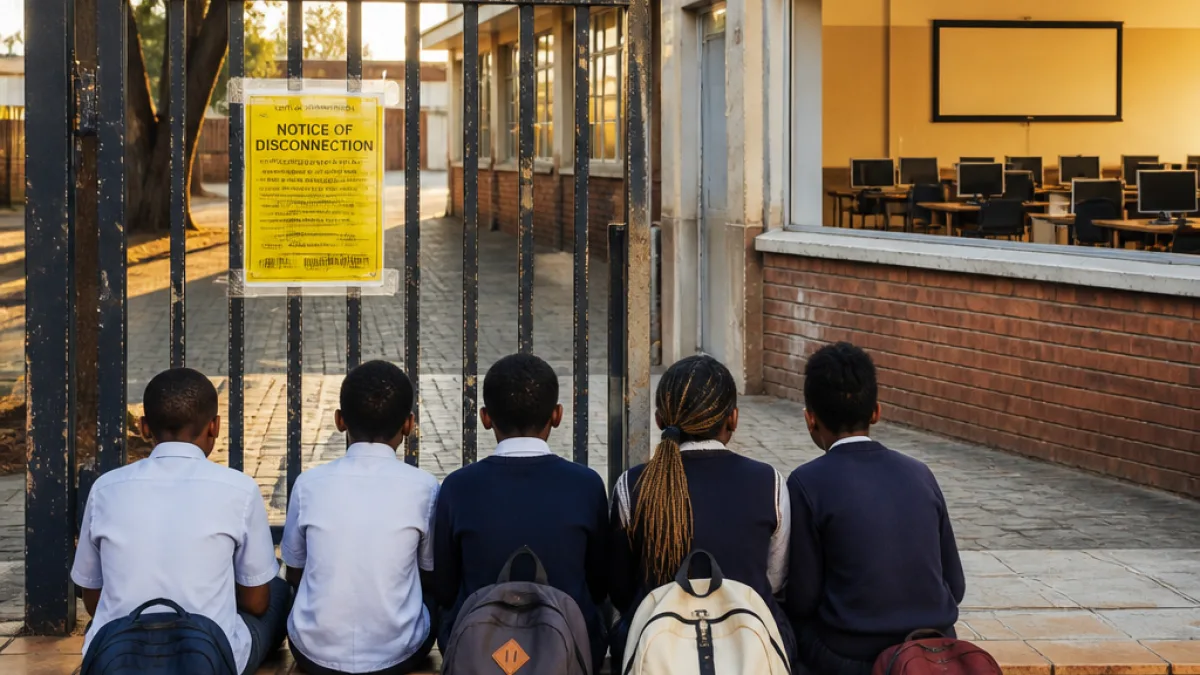
Nearly 9 000 school days were lost this year across Gauteng after roughly 240 public schools had electricity disconnected because of unpaid accounts, the provincial education department has confirmed.
Extent of the disruption
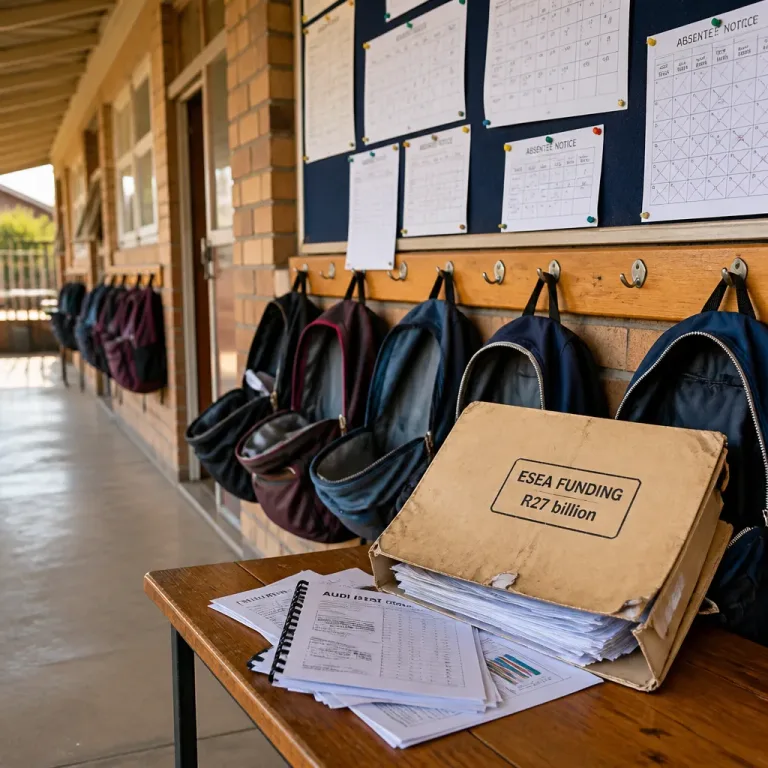
The Gauteng Department of Education (GDE) told the provincial legislature that pupils lost 8 925 school days in 2026 as a result of power cuts. The affected schools collectively owed R52.65 million to municipalities and other electricity service providers, according to a written response from Education MEC Lebogang Maile to questions tabled by the DA.
The department said most affected schools remained operational despite the disconnections, but acknowledged interruptions to teaching where schools relied on electronic tools such as smartboards, internet-enabled devices and security systems.
Political and oversight response
The DA’s Gauteng education spokesman, Michael Waters, said the party plans to submit the latest legislative responses to the Public Protector as supplementary evidence in its complaint against the GDE over electricity disconnections.
Waters criticised the department’s financial oversight, noting that the GDE admitted in another response that it does not maintain a central register showing outstanding school debts, how long they have been outstanding or the reasons for non-payment. He warned that without such systems, schools are at risk of essential services being switched off.
Operational impact at affected schools
GDE spokesman Onwabile Lubhelwana confirmed the figure of 8 925 lost school days and said the department was engaging with affected institutions. The department emphasised that while most schools continued to teach, those relying on electronic classrooms and administrative systems experienced significant disruption.
- Schools affected: about 240 public schools
- School days lost: 8 925
- Total debt reported: R52.65 million
| Metric | Figure |
|---|---|
| Schools with disconnections | ~240 |
| School days lost | 8 925 |
| Collective debt | R52.65 million |
Why this matters to parents and teachers
Loss of electricity at schools affects more than lessons. Practical and administrative functions are also hit: printing of exam papers and worksheets, access to online educational resources, school security systems and even basic lighting for late-afternoon programmes. For schools that run feeding schemes or rely on electric pumps for water, disconnections can compound hardship for learners and educators.
Parents and community members told local councillors in recent months that they were concerned about sudden disruptions to timetables and the potential long-term impact on learners preparing for subjects that depend on digital resources. Teachers reported having to adapt lessons on the fly when smartboards went dark or internet connections failed.
What the department and other stakeholders can do
Two practical measures emerge from the responses in the legislature:
- Establish a central register to monitor school debts, durations and reasons for non-payment so the department can intervene before suppliers cut power.
- Negotiate payment plans or emergency bridging funds with municipalities and service providers to prevent disruptions that affect learning.
The DA has called for stronger financial oversight and improved monitoring systems to stop essential services being disconnected, while the GDE says it is engaging with affected schools. The Public Protector will now consider supplementary material the DA plans to submit.
As the department and political parties trade responsibility for oversight failures, learners and teachers are the immediate casualties. Parents seeking clarity should approach their school governing bodies and the GDE offices for information on outstanding municipal accounts and planned interventions.
Where to get help
- Contact your school governing body for details on the school’s utility account and payment arrangements.
- Request the school to provide written confirmation of any service interruptions and steps taken to restore essential operations.
- Report unresolved disconnections to the GDE provincial office so the matter can be escalated.
Local communities and ward councillors should press for transparent reporting on school finances to prevent future disruptions and ensure learners are not denied classroom time because of unpaid bills.